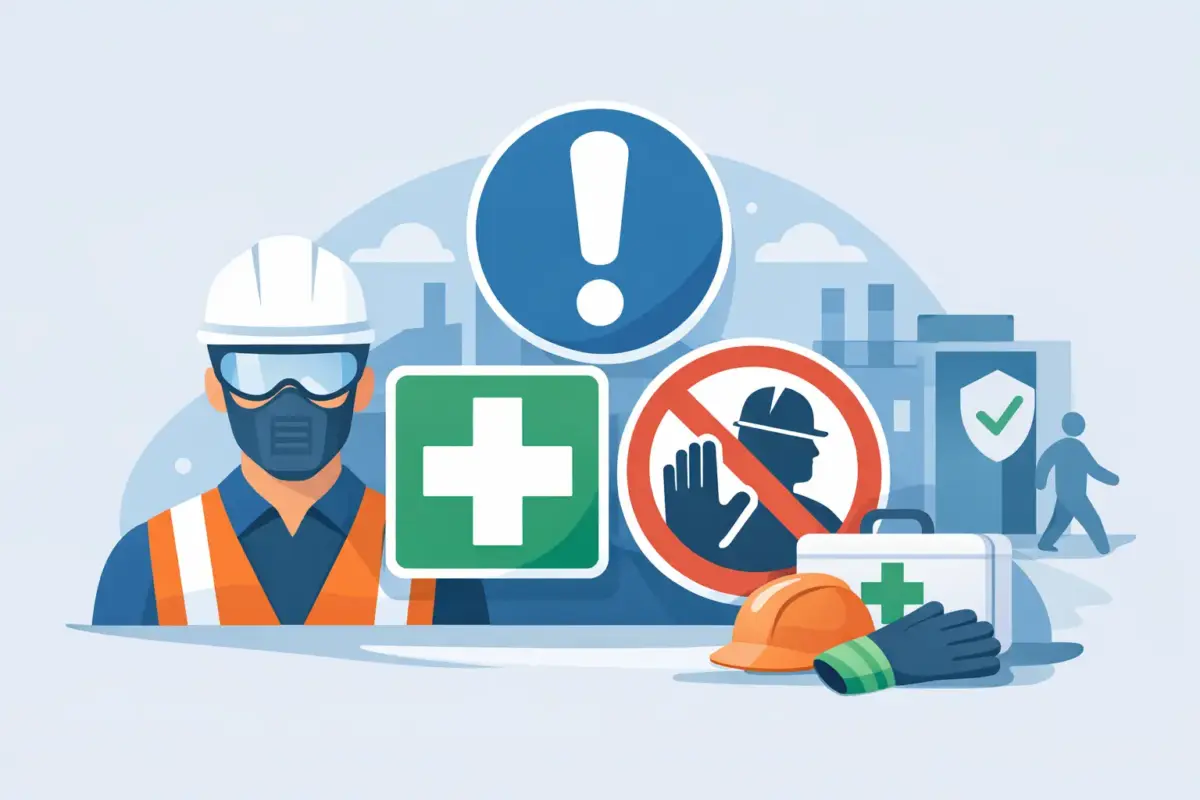
Walk onto a busy site, into a warehouse, or through the back entrance of a café and the signs usually tell you a lot before anyone says a word. Where PPE is required, where fire equipment is kept, which doors must stay shut, and which actions are prohibited should all be clear at a glance. That is where health and safety signage that is compulsory matters – not as a box-ticking extra, but as part of how a workplace communicates risk quickly and consistently.
For many businesses, the challenge is not understanding that safety signs matter. It is knowing which ones are genuinely required, which ones depend on your working environment, and how to avoid ordering signs that look right but do not suit the job. If you are responsible for a site, workshop, shop floor, yard, school, venue or shared workspace, it helps to start with the basics and work from there.
When health and safety signage that is compulsory applies
Compulsory safety signage is used when people need to be told to carry out a specific action for safety reasons. In practical terms, that usually means instruction signs such as Wear Safety Helmets, Wear Eye Protection, Wash Your Hands, or Keep This Fire Door Shut. These are different from warning signs, which alert people to a hazard, and prohibition signs, which tell people what they must not do.
The familiar compulsory sign format is a blue circle with a white symbol or instruction. That design is not just for appearance. It helps people recognise the type of message immediately, even in fast-moving environments where there is little time to read a full sentence.
Whether a compulsory sign is needed depends on your risk assessment. If a hazard cannot be avoided or adequately controlled by other means alone, signage may be required to communicate the instruction clearly. That might apply to PPE in an engineering area, handwashing in a food preparation space, hearing protection in a high-noise zone, or pedestrian routes on a mixed vehicle site.
This is where some businesses get caught out. Not every workplace needs the same set of signs, and more is not always better. If signs are irrelevant, badly placed or overly repetitive, people stop noticing them. The right approach is targeted and practical.
The main types of compulsory health and safety signs
Most compulsory signs fall into a few clear categories, and the exact mix depends on what happens on your premises each day.
PPE signage is one of the most common. Construction sites, fabrication units, warehouses and maintenance areas often need signs that instruct staff and visitors to wear hard hats, high-visibility clothing, gloves, masks, ear defenders or safety footwear. In some spaces one item is enough. In others, combined signs make more sense because several items are mandatory before entry.
Hygiene signage is another regular requirement. In catering, food processing, healthcare and washroom areas, messages such as Wash Hands, Use Hand Sanitiser or Wear Protective Clothing support procedures that need to be followed consistently. The sign does not replace training, but it reinforces the rule where it matters.
Fire door instructions also sit within compulsory signage. Signs such as Fire Door Keep Shut or Fire Exit Keep Clear are there to support fire safety systems that only work properly if people follow the instruction every time. A fire door wedged open is not a small issue, so the message needs to be clear and visible.
Site movement signs can also be compulsory in effect, especially where there is interaction between vehicles and pedestrians. Keep to Footpath, Use Handrail and Close Gate are straightforward examples. They are easy to overlook when ordering, but on many sites they are among the most useful signs you can install.
How to decide which compulsory signs you actually need
The starting point is always the activity taking place, not the sign catalogue. If your staff enter a machine area where eye protection is mandatory, that instruction needs to be displayed before they enter, not halfway through the room. If visitors arrive at a goods-in point and need hi-vis vests, the sign should be at the access point where the instruction can still be acted on.
A good question to ask is simple: what does someone need to do here to stay safe? If the answer is specific and consistent, there is a strong case for a compulsory sign.
That said, there is a trade-off. If the rule changes from one bay to another, or only applies during certain jobs, a fixed sign may need careful wording or placement. In some environments, temporary signage is the better option because it reflects the actual task in progress. For example, a maintenance shutdown or one-off contractor visit may call for short-term instruction signs rather than permanent boards.
It also helps to consider who is using the space. Staff who know the site well may need a reminder. Visitors, delivery drivers and contractors may need much clearer direction because they do not know the layout or local procedures. In these cases, larger formats, simpler wording and more obvious positioning can make a real difference.
Design, size and placement matter as much as wording
A compulsory sign only works if people can see it and understand it quickly. That sounds obvious, but it is often where the practical issues start.
Size should suit viewing distance. A small self-adhesive notice might work on a door at close range, while a larger rigid sign is better for a yard entrance, warehouse aisle or external gate. Material matters too. Indoor office areas can often use lighter-duty options, while outdoor, damp or heavy-traffic locations usually need more durable sign panels.
Placement is just as important. Put signs at the point of decision, not after it. Wear Ear Protection belongs at the entrance to the noisy area. Keep Fire Door Shut belongs directly on the door. Wash Hands belongs where handwashing should actually happen.
Clarity is another practical factor. Standard symbols do a lot of the work, but wording still needs to be plain. There is no advantage in making a sign sound formal if it becomes slower to read. Most sites are better served by direct instructions that leave no room for doubt.
Common mistakes when ordering compulsory safety signage
One common mistake is buying signs in isolation rather than looking at the site as a whole. A factory might order PPE notices but forget directional signs for visitors, fire action signage near exits, or clear instructions for delivery areas. A joined-up approach usually saves time and repeat orders.
Another issue is choosing the wrong material for the environment. Paper-based temporary notices have their place, but they do not stand up well in wet, dirty or high-contact areas. If a sign needs to stay legible and fixed in place, it is worth selecting a product designed for that setting.
There is also the problem of overcomplicating the message. A sign crammed with too much text is easy to ignore. If the instruction is mandatory, keep it prominent and readable. Extra detail can go elsewhere if needed.
Finally, businesses sometimes rely on generic signage where a more tailored sign would work better. Standard mandatory symbols cover many needs, but some sites benefit from custom wording, site-specific instructions or combined signs that match the actual workflow. That can be especially useful where several rules apply at one entry point.
Ordering signage that fits the way your site works
The fastest route is not always buying the cheapest sign in the smallest size. It is choosing signage that suits the location, the audience and the job from day one. For some buyers, that means selecting from standard compulsory safety sign ranges. For others, it means using a custom option to match internal wording, add branding where appropriate, or create a sign set that covers several site rules clearly.
If you are managing multiple premises, consistency is worth thinking about as well. Using the same formats, symbols and wording across different locations makes it easier for staff to recognise instructions quickly. It also makes reordering simpler when signs need updating or replacing.
This is where a practical supplier matters. The SignBuilder supports straightforward ordering whether you want to choose from standard health and safety products, upload your own artwork, or request a custom sign that fits a specific site requirement. For businesses that need signs to work hard rather than just fill a wall, that flexibility saves time.
Compulsory safety signs do a simple job, but they do it at moments that matter. If the instruction is clear, well placed and suited to the environment, people are more likely to act on it straight away – and that is exactly what good signage is there for.