A sign that looks right on screen can still fail on site. It might be too small to read from the gate, too lightweight for an exposed wall, or supplied without the fixing holes you assumed were included. That is usually where confusion starts, so if you are working out how to order custom rigid signs, the best approach is to begin with the job the sign needs to do, not the artwork.
Rigid signs are used across building sites, car parks, shops, warehouses, schools, offices and events because they are durable, easy to fit and available in a wide range of sizes and materials. But there is no single best option for every use. A temporary event notice, a branded shop fascia panel and a health and safety board all need slightly different specifications.
How to order custom rigid signs without guesswork
The quickest way to get the right product is to narrow down four things early: where the sign will be used, how long it needs to last, how it will be fixed, and what information it must show clearly. Once those points are decided, the rest of the order becomes much more straightforward.
If the sign is going outdoors, material choice matters more than many buyers expect. Foamex is a popular option for general-purpose rigid signage because it is lightweight, printable and suitable for many indoor and outdoor applications. Aluminium composite is a stronger choice where you need extra durability and a more rigid finish. Correx is often used for short-term signage such as site boards, promotions or temporary directional signs where low cost and fast turnaround matter more than long service life.
That trade-off is worth getting right. Ordering a premium material for a short campaign can add unnecessary cost. Going too light for a permanent exterior sign can mean replacing it earlier than planned.
Start with the application
Before you choose a board, pin down the setting. A retail sign inside a shopping centre has different demands from a roadside notice or a construction site board. Think about viewing distance, weather exposure and whether the sign is for compliance, branding, directions or promotion.
For example, a health and safety sign usually needs clear text, standard symbols and strong contrast. A promotional board may lean more heavily on imagery and brand colours. A car park sign needs to stay readable at a glance, often from a moving vehicle, so layout and font size matter just as much as print quality.
This is also the point to decide whether you need one sign or a set. Many businesses order rigid signs in matched sizes for different areas of a site, or in several versions with the same branding but different messages. Planning the group together keeps the look consistent and can save time when you place the order.
Choosing the right material and thickness
Most rigid sign orders come down to matching durability with budget. Foamex is often chosen for estate agent boards, display panels, indoor signs and general business signage because it gives a clean printed finish and works well in many standard applications. Correx suits short-term use, especially where signs may need to be replaced after a campaign or project. Aluminium composite is commonly selected for longer-term external signage, commercial premises and locations where a more hard-wearing board is needed.
Thickness also affects performance. A thinner board may be perfectly suitable for indoor wall mounting, but large outdoor signs usually benefit from a thicker, more stable material. If the sign is going on railings, fences or posts, wind loading and movement should be considered. Bigger signs need more support, and the wrong combination of size and board type can lead to bowing or premature wear.
If you are unsure, it helps to think in practical terms rather than technical ones. Ask yourself whether the sign is temporary or permanent, sheltered or exposed, and whether appearance or low-cost replacement is the priority.
Get the size right before you upload artwork
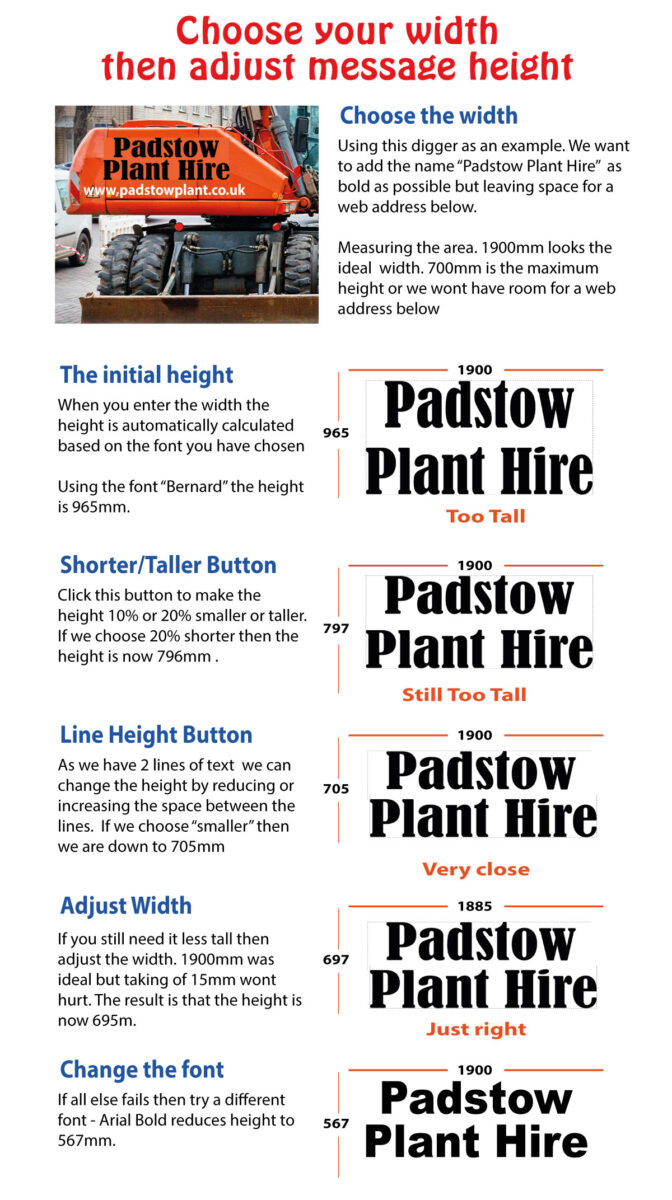
One of the most common ordering mistakes is designing first and sizing later. It is usually better to decide the finished size based on viewing distance and fitting space, then prepare the artwork to match.
A small sign on a long boundary wall may technically fit, but if the message cannot be read until someone is already at the entrance, it is not doing the job. Equally, oversized boards can look awkward indoors or overwhelm a shopfront display. Measure the installation area properly and allow for edges, frames, posts or surrounding fixtures.
If several people need to approve the sign, share the actual dimensions in millimetres rather than saying small, medium or large. That avoids misunderstandings and makes re-orders easier later.
Prepare artwork that prints clearly
When ordering custom rigid signs, artwork quality has a direct effect on the finished product. Low-resolution logos, screenshots pasted into a document and colours pulled from different sources can all cause delays or disappointing print results.
For the best outcome, use original artwork files where possible. Vector files are ideal for logos and text because they scale cleanly. If you are supplying images, make sure they are high enough quality for the final print size. It also helps to keep text away from the very edges unless the design is meant to run full bleed.
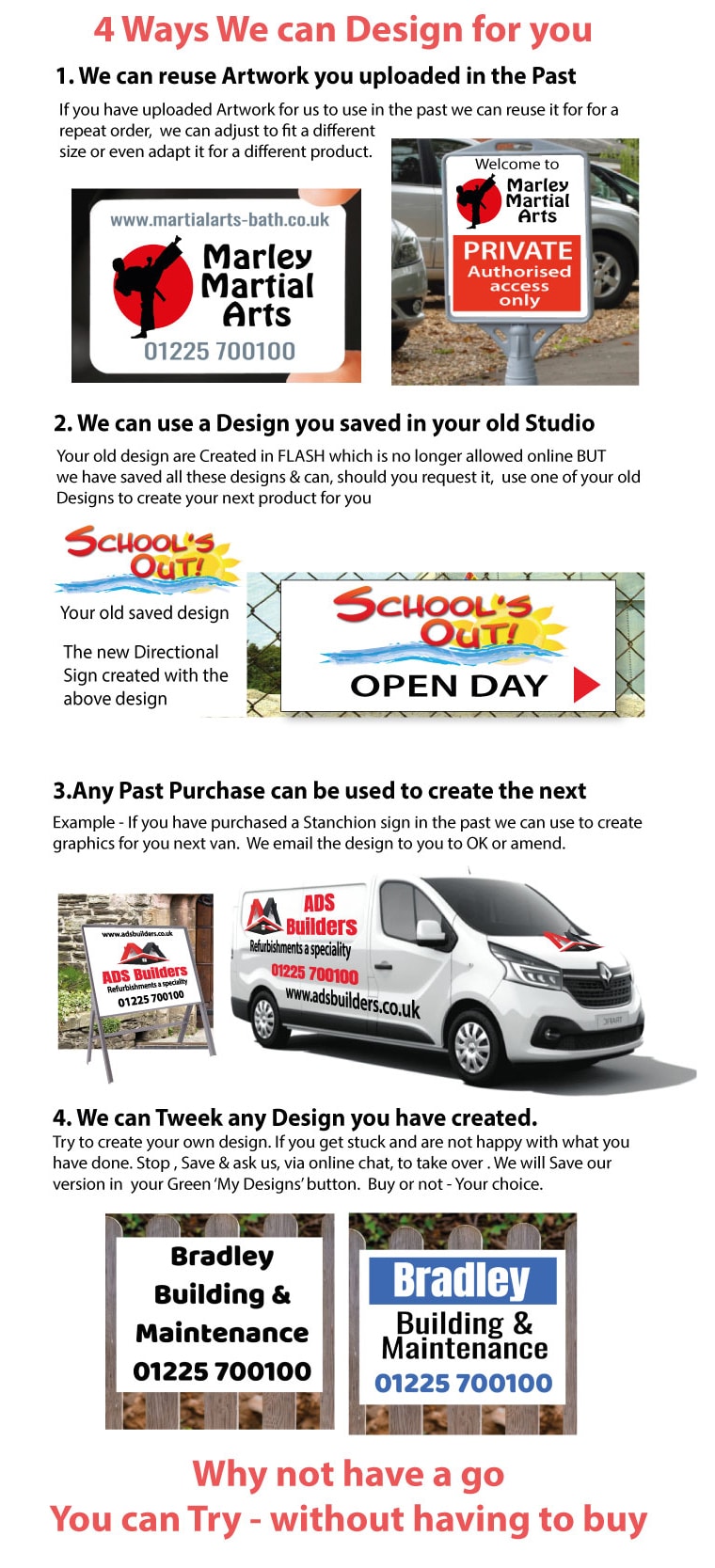
If you do not have finished artwork, that does not stop the order. Many buyers prefer to use an online design tool, upload a draft for checking, or ask for design support. The right route depends on how confident you are and how bespoke the sign needs to be. A straightforward parking notice may be easy to build online. A branded sign set for multiple locations may need a bit more preparation.
Fixings, drilling and finishing details
This is where practical orders are often won or lost. A sign is not ready to use just because it is printed. You need to know how it will be installed.
Wall-mounted signs may need drilled holes in specific positions. Fence signs might be cable-tied. Post-mounted boards may require a different size, substrate or fitting method altogether. If the sign is for an exhibition or internal display, you may want a cleaner finish without visible fixings.
Finishing details should always be confirmed at ordering stage. If you need holes, say where. If orientation matters, make that clear. If several signs must align across a site, keep fixing positions consistent. These details can seem minor on a single order, but they save time and frustration during fitting.
How to place the order in the simplest way
The easiest ordering process depends on what you already have. If your design is ready and correctly sized, uploading artwork is usually the fastest option. If you want to build from scratch using standard text, logos and layouts, an online design route makes sense. If the job is more complex, requesting help before production is often the better choice.
This matters for trade buyers and busy site teams in particular. Speed is useful, but not if it creates avoidable revisions. A clear specification at the start usually beats a rushed order that needs to be corrected afterwards.
A good order should include the material, size, quantity, artwork, fixing requirements and any notes about use. If the signs are part of a repeat job, mention that too. Re-orders are much easier when the product spec is consistent.
Check these points before approving production
Before final approval, review the sign as if you were seeing it in place for the first time. Check spelling, phone numbers, postcodes, opening times, safety wording and logo use. Confirm orientation, dimensions and quantities. If the sign is part of a compliance or directional system, make sure the wording is clear and suitable for the location.
It is also worth checking whether the sign will still make sense from a distance. Dense paragraphs may look fine on a proof but become unreadable once installed. Short, direct wording almost always performs better on rigid signage.
For larger orders, consistency matters. Make sure repeated elements such as colours, headers, icons and contact details match across every board.
When it makes sense to ask for advice
Some orders are simple. Others need a quick conversation first. If you are choosing between materials, unsure about outdoor lifespan, ordering for multiple sites or trying to match an existing sign system, asking before production can save both money and delay.
That is especially true if you are responsible for a busy premises, event rollout or fleet yard where signage needs to be right first time. A dependable supplier should be able to guide you towards the most suitable product without overcomplicating the order.
The practical way to order rigid signs is to stay focused on use, not just appearance. Once you know where the sign is going, how it will be fixed and what it needs to communicate, the rest falls into place quickly – and the finished sign is far more likely to work properly on the day it arrives.