A banner that looks fine on screen can end up too small on site, too large for the fixing points, or impossible to read from the distance people actually see it. If you are asking what size banner do I need, the right answer depends on where it will hang, how far away people will be, and what job the banner needs to do.
Choosing the right size is less about picking a standard option at random and more about matching the banner to the space. A shopfront promotion, a fence banner on a building site and an exhibition display all need different proportions. Get the size right and the banner works harder. Get it wrong and even good artwork struggles.
What size banner do I need for the space?
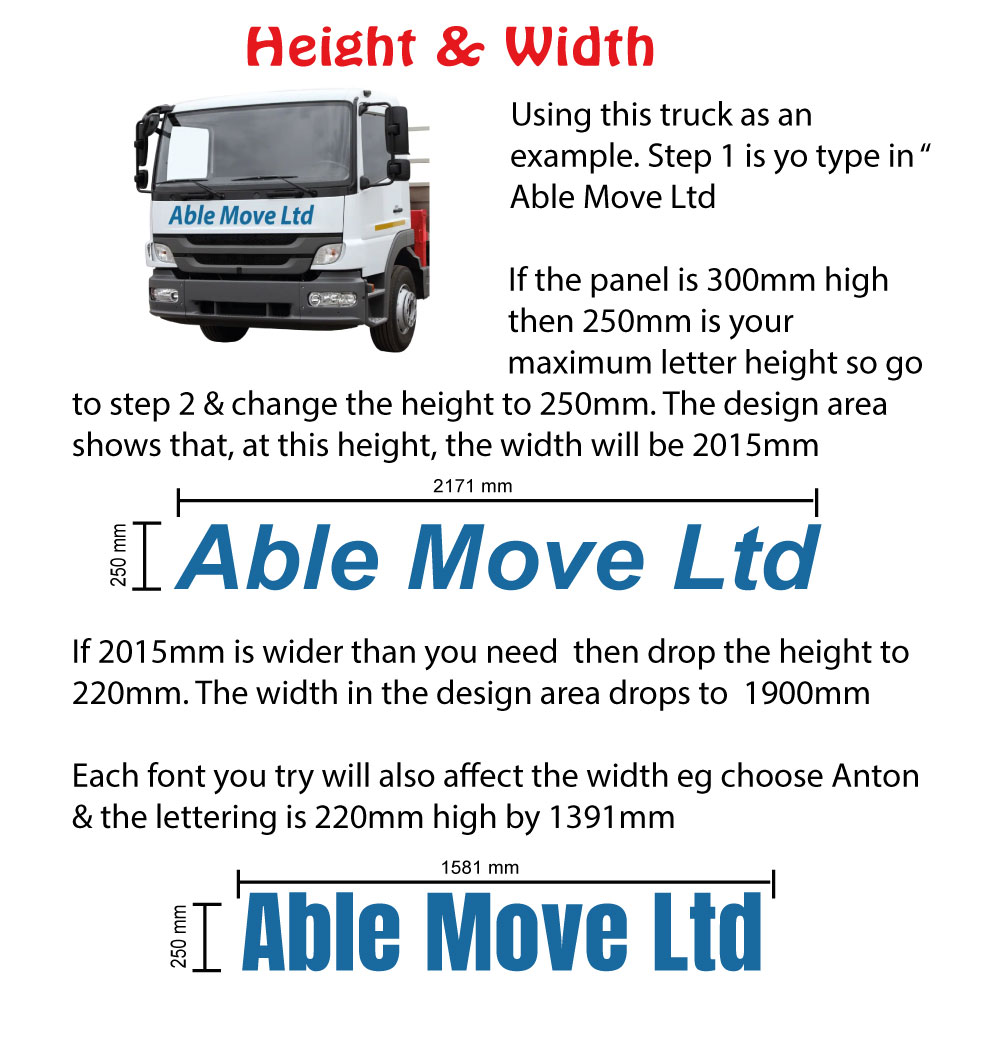
Start with the physical area, not the design. Measure the width and height available, then leave some breathing room around the edges. A banner fitted wall to wall or fence post to fence post can look cramped and may be harder to install neatly.
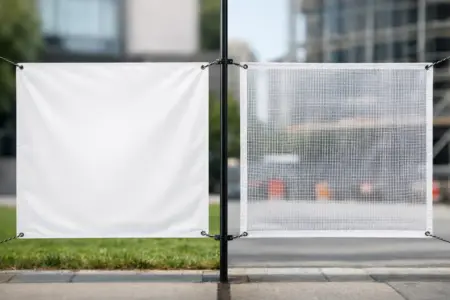
If the banner is going on railings, fencing or scaffolding, check for obstructions such as poles, ties, uneven sections or access points. A banner may technically fit the area but still be the wrong size once you account for eyelets, bungee cords and the need to tension it properly.
For indoor use, such as a hall, showroom or event space, ceiling height matters just as much as wall width. A banner that is too tall can sit awkwardly behind tables or displays. One that is too short may disappear into the background.
If you already know the available space, a custom size is often the simplest route. It avoids forcing your design into a format that does not suit the location.
Match banner size to viewing distance
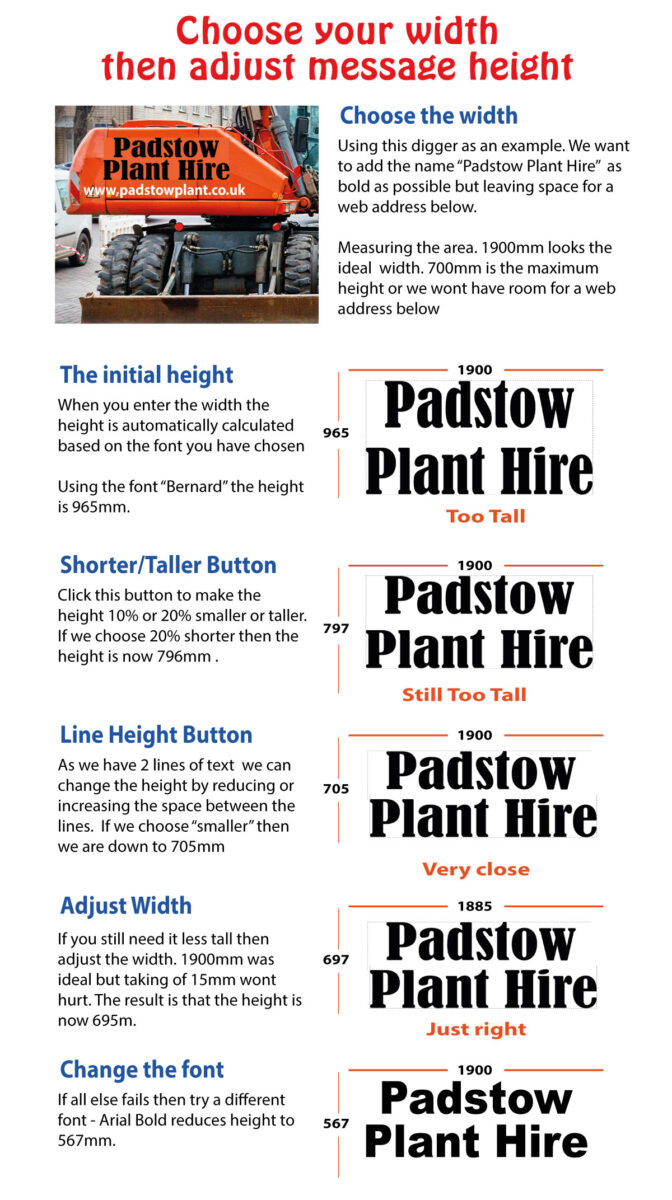
This is where many banner orders go wrong. The further away your audience is, the larger the banner usually needs to be. That does not only mean larger overall dimensions. It also means larger text and fewer words.
For close viewing, such as outside a café, at a market stall or inside a reception area, smaller banners can work well because people are within a few metres. In those settings, a compact banner with a clear headline and strong branding is often enough.
For medium-distance viewing, such as forecourts, car parks or roadside positions where drivers or pedestrians approach from further out, you need more surface area. This gives your message space to breathe and helps the main wording stand out.
For long-distance viewing, such as site fencing, sports grounds or large event perimeters, small banners quickly become wasted print. If people need to spot the message before they are close enough to read detail, the banner should be wider, simpler and more direct.
A useful rule is this: the more distance involved, the more your banner should prioritise one message rather than several.
Common banner sizes and when they suit
Standard sizes are popular because they fit common uses and are usually straightforward to design. That said, standard does not always mean suitable.
A 2ft x 4ft banner is often enough for short-range messaging, temporary notices or compact promotional spaces. It suits areas where the audience is already nearby and the message is brief.
A 3ft x 6ft banner is one of the most flexible options for general business use. It works well for fence panels, pop-up promotions, trades, seasonal offers and event branding where you need visibility without taking over the whole space.
A 4ft x 8ft banner gives you more impact for roadside promotions, wider fence runs and larger venues. If your artwork includes a logo, a headline and a few supporting details, this size often gives a better layout than trying to squeeze everything into a smaller format.
Larger banners, including long horizontal fence banners or oversized building displays, are best when visibility is the priority and the location can physically support the material. These are useful for construction sites, outdoor events and larger commercial premises.
What size banner do I need for different jobs?
The intended use should guide the size just as much as the location.
For promotions, the aim is usually to grab attention quickly. A wider banner tends to work better than a tall one because it is easier to read at a glance and often suits shopfronts, railings and roadside positions.
For directional or informational use, size depends on how much information must be included. If the banner needs arrows, opening times, safety instructions or multiple lines of text, going slightly larger improves legibility and layout.
For branding at events, proportions matter. A banner behind a table, stage or stand should frame the space without overpowering it. In these cases, height can be as important as width.
For site boards and perimeter messaging, repeated long banners can be more effective than one single oversized panel. This keeps the message visible across the full boundary and makes fitting easier if the fence line is broken up.
Design affects the size you need
A crowded design often creates the impression that you need a bigger banner, when what you really need is a cleaner message. Before increasing the size, ask whether the content can be simplified.
If your banner needs only a business name, phone number and short headline, a modest size may do the job well. If you want to include services, social details, product photos, opening hours and several calls to action, you will need more space – but you may also need to edit.
Logos with fine detail, pale text on light backgrounds, and long lines of copy all reduce readability. Strong contrast, larger type and a clear hierarchy make better use of any banner size.
This matters especially outdoors, where people rarely stop and study a banner. They glance at it while walking past, driving by or working nearby. In practice, simple artwork often outperforms detailed artwork even on a larger banner.
Consider fixing, wind and material
Banner size is not only a visual decision. It is also a practical one.
The bigger the banner, the more wind load it can catch outdoors. On exposed fencing or open sites, a very large banner may need stronger fixings, suitable spacing and the right material choice. In some cases, using multiple smaller banners is the safer and more manageable option.
You also need to think about how the banner will be mounted. Eyelets around the edge need room for tying off. If the banner sits inside a frame, the finished size may need to account for trim or tensioning. If it hangs on a wall, the surface must support both the dimensions and the weight.
A banner that is the correct size on paper can still be awkward to install if access is limited or the fitting points are poorly placed. That is why measuring the space and the fixing method together saves time.
When custom sizing is the better choice
Standard sizes are convenient, but many banner locations are not standard. Railings vary, wall spaces are rarely exact multiples of common formats, and event positions often come with awkward limits.
Custom sizing makes sense when you need to fit a precise span, fill a recess neatly or work around fixed structures. It can also help preserve the design. Rather than stretching or shrinking artwork to fit a stock size, you can order the banner to suit the message and the mounting area together.
For businesses ordering regularly, custom sizes can also create consistency across different sites. If each location has slightly different dimensions, it may still be possible to keep branding aligned while adjusting the final size to fit.
A quick way to decide
If you need a practical starting point, ask four questions. How far away will people see it? How much space do you actually have? What is the single main message? How will it be fixed?
If the audience is close and the message is short, a smaller banner is often enough. If the audience is further away, the space is wide, or the message must work in passing traffic, go larger and simplify the design. If the area is awkward, choose a custom size rather than forcing a standard one.
That usually gets you to the right answer faster than starting with artwork dimensions alone.
A good banner does not need to be the biggest one available. It needs to be readable, fit for the location and easy to install properly. If you size it around the real-world job it has to do, ordering becomes much simpler – and the finished result works from the moment it goes up.