A bright shopfront or office can be an asset, so it is reasonable to ask: do window decals block light? The short answer is yes, but the amount depends on the material, printed coverage, colour and area of glass covered. A small logo in one corner has very little effect. Full-colour graphics across a large window will noticeably reduce daylight.
For businesses, the right choice is rarely about making a window completely clear or completely covered. It is about getting the branding, privacy or promotion you need without making the space feel darker than it needs to be.
Do window decals block light in every application?
All window decals affect light to some degree because they place material on the glass. However, the difference between a simple cut vinyl message and a full printed graphic is substantial.
Cut vinyl lettering, such as opening hours, a company name or directional wording, covers only the areas where the letters and shapes sit. Most of the glass remains uncovered, so daylight and outward visibility are largely retained. This makes it a practical choice for reception doors, retail windows, office partitions and vehicle glass where a clear view remains useful.
Printed window decals normally cover more of the surface. A design with a white background, dense photographs or solid brand colours will reduce the amount of light passing through more than lettering alone. Dark colours can also make the effect feel stronger, particularly on a north-facing shopfront or in a smaller room with limited natural light.
The key point is coverage. A decal does not need to cover the entire pane to do its job. A well-sized logo, a promotion panel or a band of frosted vinyl can give a professional result while leaving useful clear glass around it.
How different window decal materials affect daylight
The material selected has as much influence as the design. It is worth deciding what the window needs to achieve before choosing a finish.
Clear vinyl decals
Clear vinyl is commonly used when a design needs to appear directly on the glass without a solid coloured background. Only the printed areas alter the view and light level. Light-coloured artwork and open areas generally keep the window feeling bright, while dark printed sections will still create visible shading.
Clear decals work well for logos, opening times, short messages and retail promotions where natural light is a priority. They are not the best option when privacy is the main requirement, as people can still see through the unprinted parts of the window.
White vinyl decals
White vinyl provides a solid base for colour printing, which often makes artwork appear stronger and more consistent. The trade-off is that it blocks light wherever it is fitted. A small white decal will have little practical impact, but several large panels can make a glazed frontage noticeably darker.
For a café, salon, showroom or high-street retailer, white vinyl can be effective for seasonal offers and clear window branding. Keeping the layout selective, rather than filling every pane, helps preserve the openness of the premises.
Frosted and etched-effect vinyl
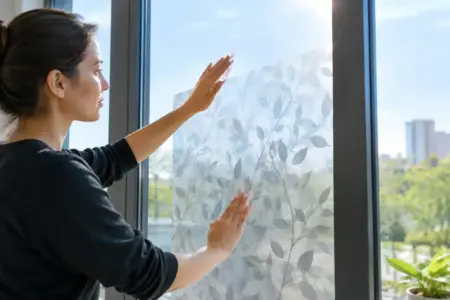
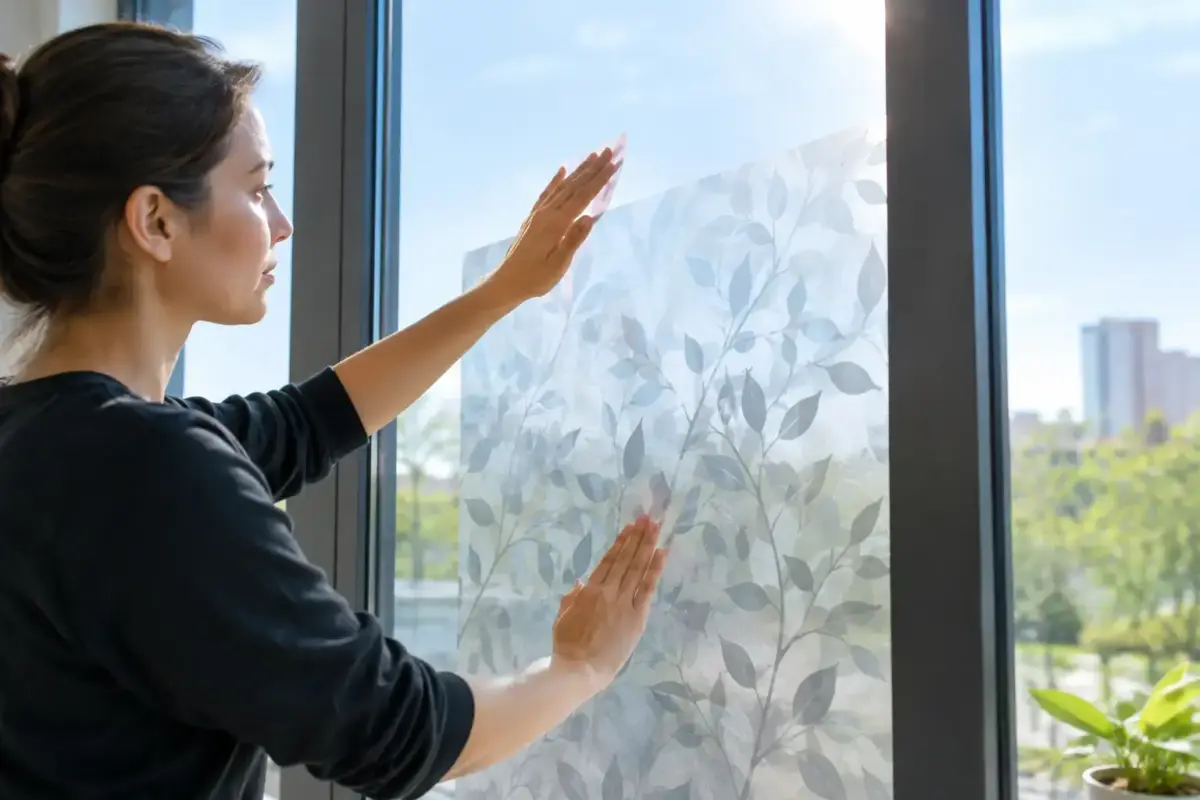
Frosted vinyl softens light rather than shutting it out completely. It allows daylight through but obscures detail, making it a useful option for privacy on office windows, meeting rooms, treatment spaces and internal glazed doors.
This material is especially useful where staff need a brighter working area but do not want visitors or passers-by looking directly into the room. A full frosted panel will reduce clarity of view, but it usually feels much lighter than a solid printed decal. It can also be cut into bands, patterns or logos to balance privacy with an open appearance.
Perforated window vinyl
Perforated window vinyl has small holes across its surface. From one side, it can display a printed image; from the other, it can allow a degree of visibility through the glass. It is often used on rear windows and large shopfront panels where promotional impact is needed without fully losing the view out.
It does reduce incoming light, and the printed side can look darker from indoors than clear glass. Performance also changes with lighting conditions. In daylight, the brighter side of the glass tends to dominate the view. At night, when interior lighting is stronger than outside light, visibility through the material can be reduced. This should be considered carefully for premises that trade after dark.
Design choices that make a window feel darker
Two decals of the same size can have very different results. Dense artwork is the main reason a window feels shaded after graphics are installed.
Large blocks of black, navy, deep red or other dark colours absorb more visible light than pale tones. Full background images have a similar effect, particularly when they run from edge to edge. White ink and opaque white vinyl will also block daylight behind the printed area, even if the rest of the design uses lighter colours.
A layout with clear margins, separated graphics and readable lettering often performs better than a design that uses every available centimetre. It can look more deliberate too. From the pavement, customers need to understand the message quickly. More coverage does not always mean more impact.
When planning a promotion, consider whether the window needs to support people working inside, customers browsing products near the glass, or displays that rely on natural light. A bold sale message may be worth temporary shading. For permanent branding, a lighter-touch approach is often more practical.
Privacy, glare and heat are different questions
Light blocking is sometimes confused with privacy, glare reduction and solar control. They overlap, but they are not the same thing.
A frosted decal can give privacy while still admitting a good amount of diffused daylight. A dark printed decal may reduce light but leave gaps where people can see inside. Perforated material can offer a one-way visual effect in brighter conditions, but it should not be treated as complete privacy at all times.
Glare is also influenced by the direction of the window, the time of day and reflective surfaces indoors. A decal may soften direct brightness in one area, yet it will not perform like a purpose-made solar-control film across an entire glazed elevation. If heat build-up or persistent glare is the concern, assess that separately from the branding requirement.
Choosing the right coverage for your premises
Start with the job the decal needs to do. For opening hours, contact details and a logo, cut lettering or a compact clear decal usually keeps the most light. For meeting-room privacy, frosted vinyl is often the sensible option. For a campaign, product launch or prominent shop window display, printed vinyl can carry the message clearly, provided enough open glass remains.
It also helps to look at the window from both sides. Outside, check the viewing distance and any existing signage. Inside, consider sightlines, daylight, shelving and access. A design that looks excellent on a screen can feel too heavy once applied to a narrow entrance or a naturally dim room.
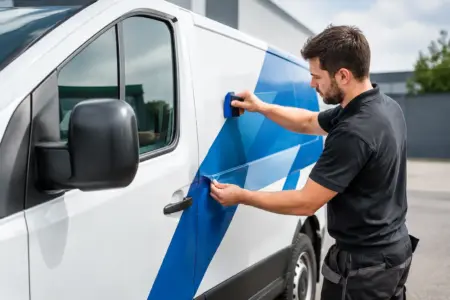
For vehicle windows, driver and passenger visibility must come first. Graphics should never obstruct a safe view of the road, mirrors or surroundings. Rear-window graphics need careful positioning and material selection, especially for fleet vehicles that spend long hours on the road.
Get the artwork and material working together
A practical window graphic begins with accurate measurements and a clear installation area. Measure the visible glass, note frames, handles, safety markings and any areas that must stay clear. Then decide whether the artwork is temporary, long-term, viewed close up or intended to attract attention from across a car park or high street.
The SignBuilder can produce window graphics for straightforward messages, branded glass and promotional displays. Supplying clear artwork or using a design service makes it easier to select a layout that suits the window rather than simply filling it.
The best window decal is one that earns its space: visible to the right people, suited to the light in the room and practical for everyday use. Before ordering, stand inside the premises and decide how much daylight you are genuinely prepared to trade for a stronger message.