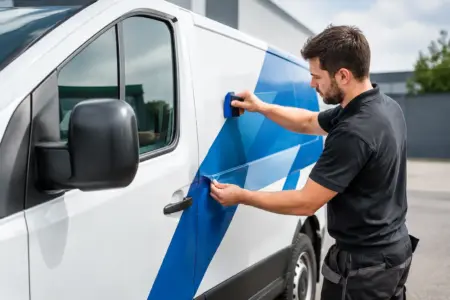
A phone number placed across a rear door can turn a van into a useful sales tool. Place the same lettering over a lamp, reflector or registration plate, and it can create a roadworthiness problem instead. UK vehicle lettering regulations are less about restricting business branding and more about ensuring graphics do not interfere with identification, lighting, driver visibility or specialist safety markings.
For most tradespeople and fleet operators, there is no single approval process before lettering a vehicle. The responsibility sits with the vehicle keeper and operator to make sure the finished vehicle remains legal, safe and suitable for its intended use. A sensible design and careful fitting avoid the issues that can lead to an MOT failure, enforcement attention or an avoidable insurance query.
What UK vehicle lettering regulations actually cover
Vehicle lettering can include cut vinyl text, logos, contact details, service lists, reflective graphics and magnetic signs. The rules affecting these items come from several areas of road traffic law, vehicle lighting requirements, MOT standards and, in some cases, sector-specific conditions.
The core principle is straightforward: graphics must not obscure, alter or imitate anything that drivers and enforcement officers need to see clearly. That includes registration marks, obligatory lamps, reflectors, indicators, high-level brake lights and required warning panels.
A clean layout also makes commercial sense. Details that are easy to read at a sensible distance are more useful than a busy design covering every available panel.
Registration plates must remain fully clear
Your registration plates must be visible, legible and compliant with the required character style, spacing and background colours. Do not apply lettering, logos, borders, film or protective material that covers any part of a plate or makes it harder to read.
This applies to more than the main face of the plate. Avoid placing graphics so close to it that dirt gathers around the edges or a design visually interferes with the characters. Number plate rules are tightly prescribed, so branding should always sit well away from the plate area.
Keep lamps, reflectors and cameras unobstructed
Rear doors and tailgates are popular locations for business details, but they also carry lights, reflectors, reversing cameras and brake lamps on many vans. Vinyl must not cover any of these components, even partially.
The same applies to front lights, side repeaters and reflectors along the side of a vehicle. A graphic that runs behind a lamp can look neat, but it should be cut accurately around the unit rather than laid across it. If a light is damaged or needs replacement later, properly separated graphics are also easier to maintain.
Driver visibility and window lettering
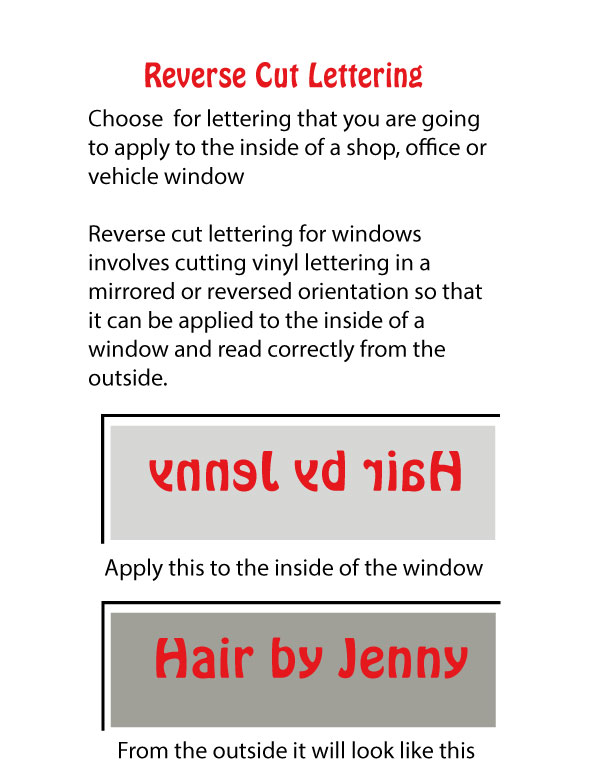
Window graphics need more care than solid-panel lettering. The driver must have an adequate clear view of the road, mirrors and surrounding traffic. Avoid placing text, logos or opaque vinyl in the driver’s forward field of vision, including areas swept by the windscreen wipers.
The front windscreen and front side windows are also subject to light-transmission requirements. As a general rule, the windscreen must let through at least 75% of light and the front side windows at least 70%. Added decals or perforated window film can reduce light transmission, so fitting them to these areas can create a compliance issue.
Rear side windows and rear screens offer more scope, but the practical test still matters. Rear window lettering should not prevent the driver from seeing safely when manoeuvring, and it must not block cameras, sensors or heated-screen elements. If rear visibility is limited, make sure legally required mirrors are present and usable.
For fleet vehicles, it is worth agreeing a window-graphics policy before ordering. A consistent rule, such as keeping all branding on body panels unless a design has been checked, prevents one-off decisions that create inconsistent or unsuitable results.
Business names, contact details and claims
There is no general rule requiring every business to put its company name, address, VAT number or telephone number on a vehicle. Many operators choose to show a trading name, website, phone number and key service because it is effective local advertising, not because the law demands it.
That said, the information you do display must be accurate. Do not use another firm’s name, logos or credentials without permission, and do not make claims you cannot support. Phrases such as “approved”, “certified”, “emergency”, “official” or “24-hour response” can carry particular weight where they imply a qualification, public authority connection or service level.
Limited companies and sole traders have separate rules about business names on correspondence, invoices and websites. Vehicle lettering is not usually the place where those disclosure requirements are assessed, but it should still present the business honestly and consistently.
If your work is regulated, check the requirements of the relevant authority or contract. Private hire vehicles, school transport, waste carriers, security providers, highways contractors and firms carrying dangerous goods may need specific identifiers, licence details or safety markings. These requirements can vary by local authority, vehicle class and type of work.
Reflective lettering, chevrons and safety markings
Reflective vinyl can improve visibility after dark, particularly for roadside and mobile service vehicles. It is not, however, a material to apply without considering the finished layout. Reflective colours, placement and intensity can be restricted where they resemble emergency-service markings, vehicle lights or official road traffic signs.
Do not use blue reflective graphics that could be mistaken for emergency lighting. Be cautious with combinations and layouts associated with police, ambulance or fire vehicles. The issue is not simply colour – it is whether the overall appearance could mislead other road users.
Rear chevrons are another area where the correct product depends on use. Red and fluorescent yellow chevrons are commonly specified for highway maintenance, traffic management and certain site operations. They are not automatically required for every van, and a generic rear chevron design may not meet a client’s specification or an industry standard.
Where a contract, fleet policy or roadworks requirement calls for conspicuity markings, confirm the standard, material class, dimensions and layout before production. Goods vehicles may also have mandatory rear or side markings under separate rules. Required markings must remain visible, clean and undamaged after any new graphics are fitted.
Advertising vehicles and where they are parked
Ordinary business lettering on a vehicle used for normal work is generally treated differently from a vehicle parked mainly to display advertising. A signwritten van visiting customers, carrying tools or moving between jobs is a normal commercial vehicle. A vehicle left in one prominent location for long periods mainly as an advert may attract local authority attention.
This is particularly relevant for trailers, display vehicles and vehicles repeatedly parked near busy roads, retail parks or event sites. Local planning and advertising controls can apply depending on the circumstances. If the vehicle’s main purpose is promotional display rather than transport, check with the relevant council before relying on it as a fixed advert.
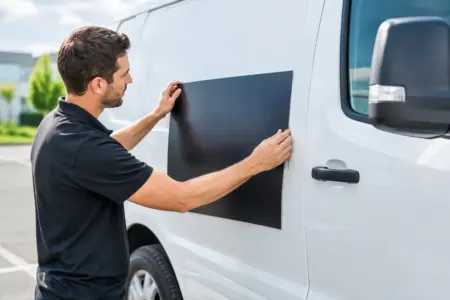
Magnetic signs deserve the same practical care as permanent lettering. They must be securely fitted to a clean, flat ferrous panel, placed away from lights and plate areas, and removed regularly for cleaning. A loose sign is a safety risk, while trapped dirt can mark the paintwork.
MOT, insurance and day-to-day checks
An MOT tester will not judge whether your logo is attractive, but they can fail a vehicle where graphics contribute to an obscured registration plate, impaired driver view, hidden lamp or reflector, or another roadworthiness defect. Check the vehicle again after fitting, not just while the design is on screen.
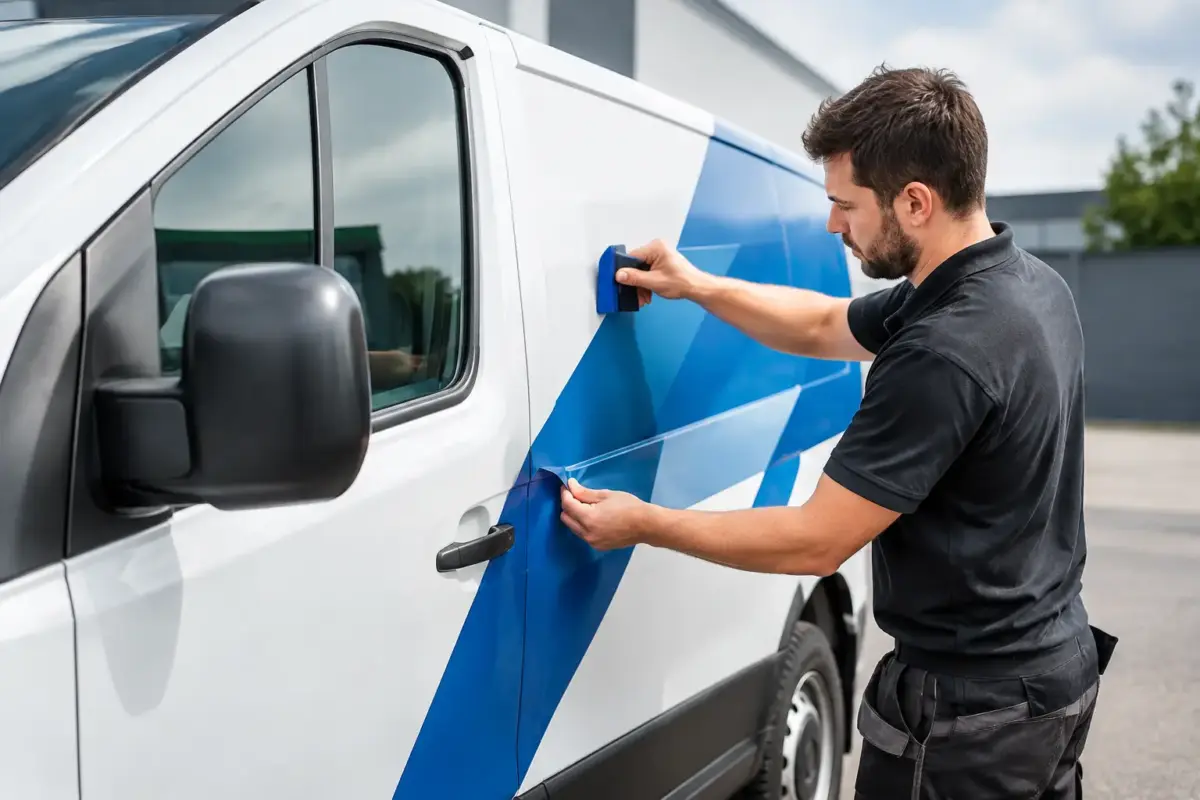
Walk around it in daylight and at night. Confirm that registration plates, lights, reflectors, cameras and mandatory labels are fully visible. Open rear and side doors to make sure lettering does not tear, catch or leave awkward gaps around handles and hinges. On a fleet, add this check to handover and routine inspection procedures.
Tell your insurer about substantial changes to a vehicle’s appearance where required by your policy. Basic business lettering is often straightforward, but insurers need the correct use recorded, particularly where a vehicle moves from private to business use or carries valuable equipment. Keeping photographs and artwork records can help if there is a claim or a replacement vehicle needs matching graphics.
Getting the layout right before production
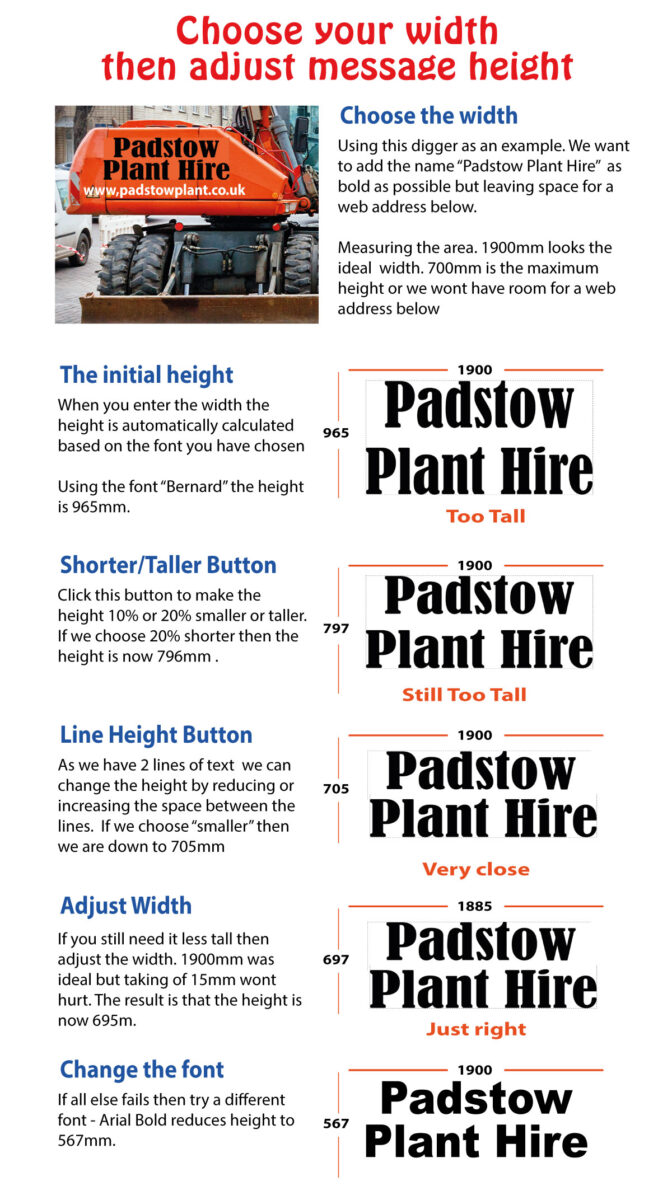
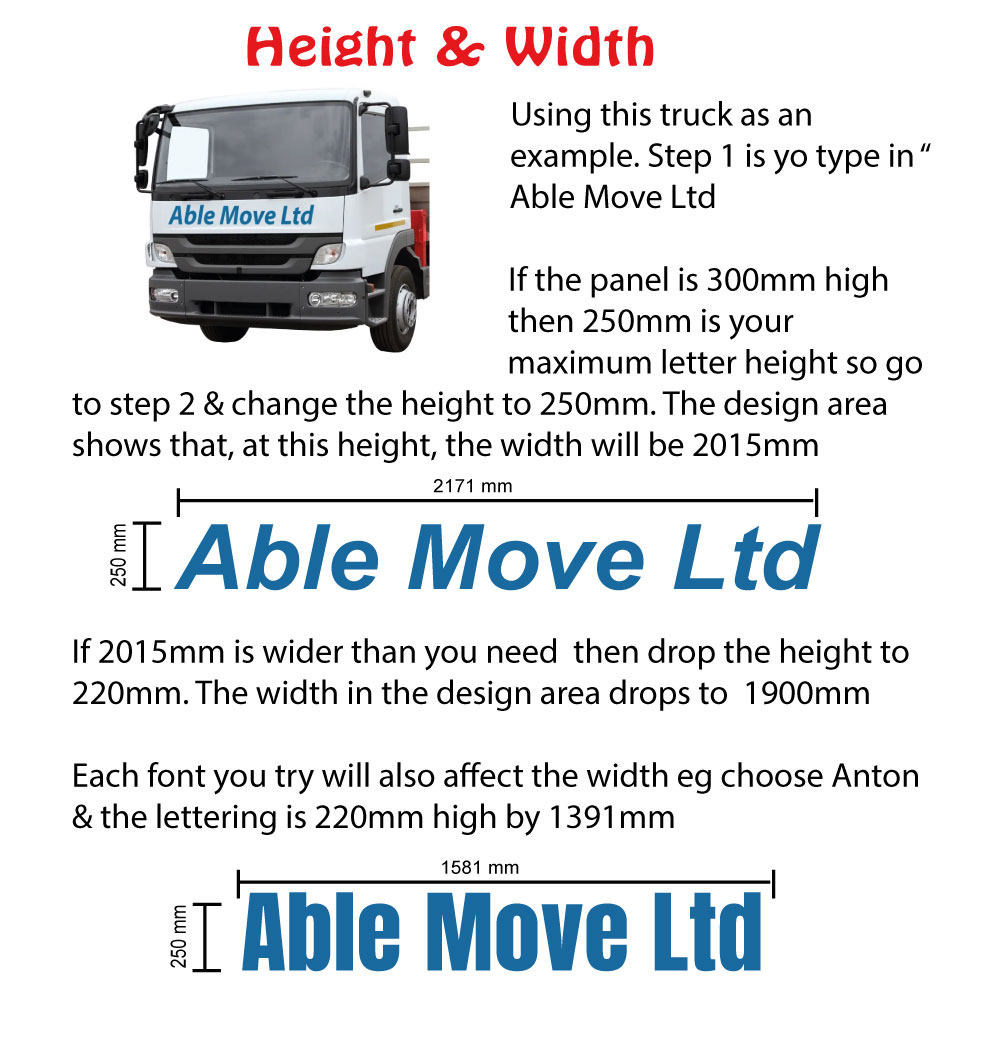
Good vehicle lettering starts with the correct vehicle template, accurate dimensions and a clear view of fittings on each panel. Door handles, fuel caps, mouldings, sliding-door tracks and sensors all affect where text can sit. A design that works on one model of van may need adjusting for another wheelbase or model year.
Keep the most useful information prominent: business name, main service and one reliable way to make contact. Large, well-spaced lettering is normally more readable than a long list of services in small type. If you operate several vehicles, use a repeatable layout so customers recognise the business from one job to the next.
The SignBuilder can prepare vehicle lettering from supplied artwork, an online design or a request for design support. Before approving artwork, provide the exact make, model, year and body style, then flag any existing safety markings or local licence conditions.
A compliant vehicle does not need to look cautious or plain. It needs lettering that works with the vehicle, stays clear of the parts that matter and gives customers a clear reason to call when they see you on the road.