A sign that looks right on screen can fail quickly once it is fixed to a wall, fence, shopfront or vehicle. That is why a business signage material guide matters before you place an order. The material affects lifespan, print quality, fixing method, weight, cost and how professional the finished sign looks in day-to-day use.
If you are buying for a building site, retail unit, hospitality venue, school, fleet or event, the best option depends less on the design and more on where the sign will go and what it needs to do. A temporary promotion has different demands from a permanent fascia panel. A health and safety sign has different priorities from a branded reception display. Getting the material right early saves reprints, poor fitting and avoidable replacement costs.
How to use this business signage material guide
Start with the job, not the product name. Ask four practical questions. Is the sign going indoors or outdoors? How long does it need to last? Will it be fixed permanently, moved regularly or used for a short campaign? And does appearance matter more than price, or the other way round?
Those questions narrow the choice quickly. Lightweight board may be ideal for a short-term estate development notice or event sign, but not for a polished interior brand panel. A premium rigid substrate may look excellent in reception, but it may be more than you need for temporary directional signage. The right material is the one that suits the environment and the purpose without overspending.
Rigid sign materials and where they work best
Correx for short-term outdoor signs
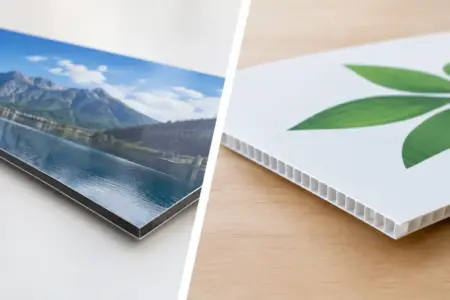
Correx is a fluted plastic board often used for temporary outdoor signage. It is lightweight, economical and easy to fix to fences, gates, railings and posts. That makes it a practical choice for site boards, event signage, parking signs, promotional boards and development notices.
Its main advantage is cost-effectiveness. If you need multiple signs across a site or campaign, correx keeps the budget under control. The trade-off is rigidity and finish. It is not the strongest premium-looking board, and in exposed conditions it will not give the same solid feel as more substantial materials.
Foamex for indoor displays and general-purpose signage
Foamex is a PVC foam board with a smooth print surface and a more substantial feel than correx. It is widely used for indoor displays, retail signage, exhibition graphics, menu boards and presentation panels. It can also be used outdoors for shorter to medium-term applications depending on placement.
Foamex sits in a useful middle ground. It looks cleaner and more solid than lower-cost temporary board, while remaining affordable and easy to handle. If you want a good printed finish without moving into more premium materials, it is often the sensible option.
Aluminium composite for long-term outdoor use
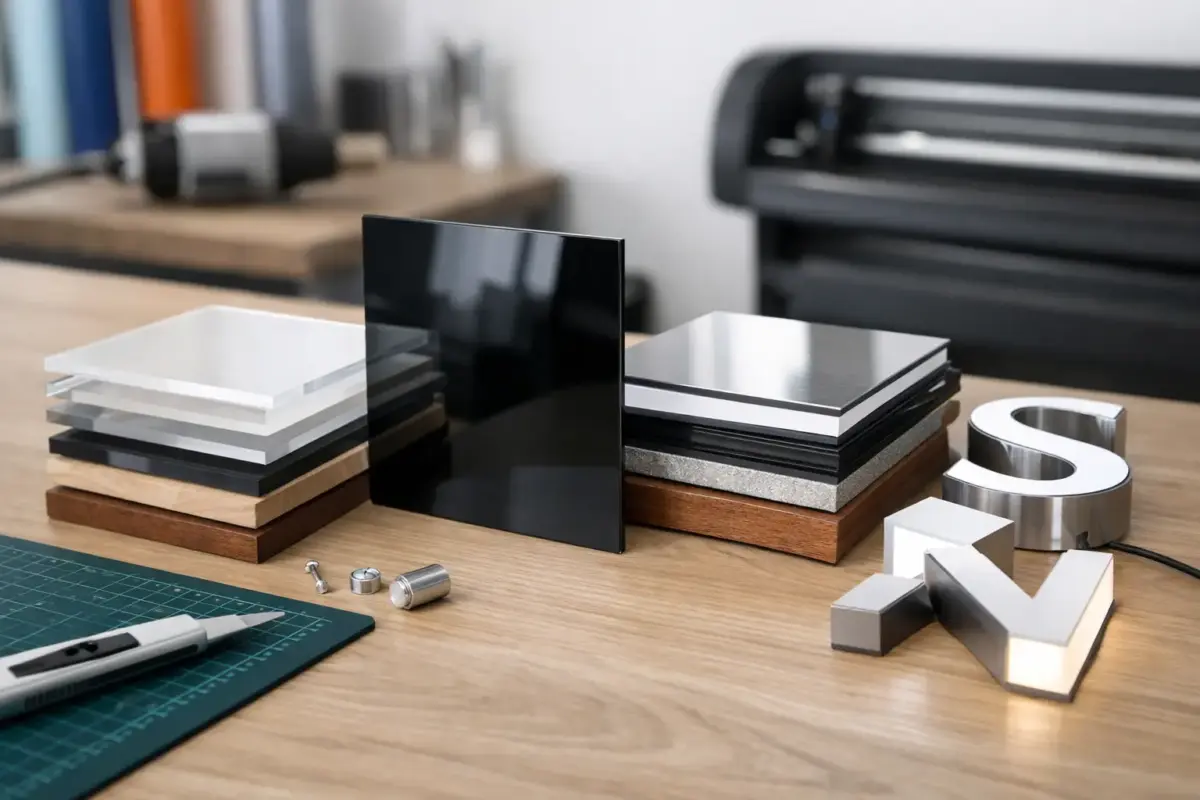
Aluminium composite is one of the strongest all-round choices for permanent or longer-term outdoor signage. It consists of a solid core with aluminium faces, producing a flat, durable panel that handles weather well and keeps a professional appearance over time.
This makes it suitable for shop signs, business premises boards, directional signs, parking notices, industrial signage and branded panels mounted externally. It costs more than correx or Foamex, but for outdoor longevity it usually earns that extra spend. If a sign needs to stay put and still look sharp, aluminium composite is often the safer choice.
Acrylic for a polished interior finish
Acrylic is chosen when appearance carries more weight. It has a smooth, high-end look and works well for reception signs, branded wall panels, wayfinding in customer-facing spaces and display graphics where presentation matters.
The finish is cleaner and more premium than many standard boards, but acrylic is not always the practical answer for every setting. It can be less forgiving in rough environments, and the cost is higher. For front-of-house branding, that may be worthwhile. For a back-yard safety notice, it usually is not.
Flexible materials for promotions, windows and vehicles
PVC banners for events, offers and temporary messaging
PVC banners are built for visibility at a sensible cost. They work well for event promotions, seasonal offers, sporting events, school functions, market stalls and temporary outdoor advertising. They roll for storage, cover larger areas easily and can be finished with eyelets for straightforward fixing.
They are a strong option when you need scale without the weight and expense of rigid panels. The trade-off is finish and structure. A banner will not give the same fixed, formal look as a rigid sign, so it suits promotional and temporary use better than permanent branding.
Self-adhesive vinyl for windows, walls and smooth surfaces
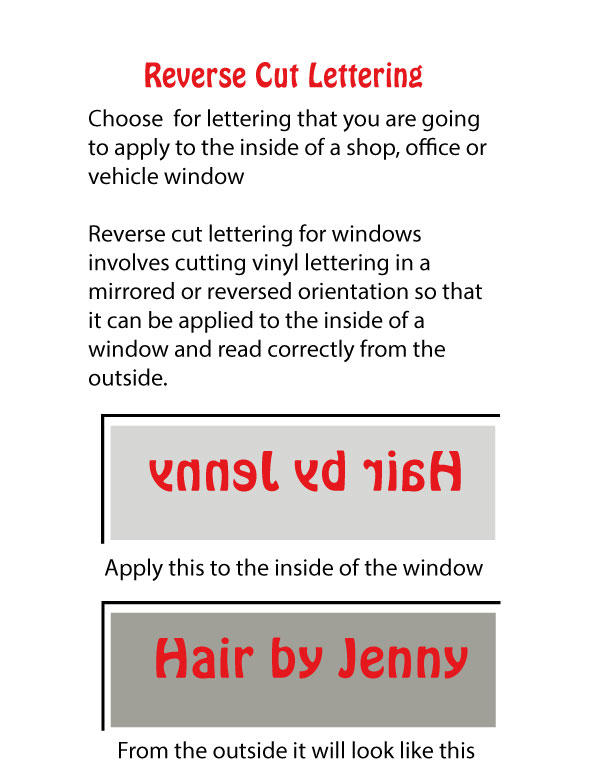
Vinyl is one of the most versatile signage materials because it can be applied directly to suitable surfaces. Printed vinyl works well for window graphics, wall branding, promotional decals and product messaging. Cut vinyl lettering is especially useful for business names, opening times, directional text and clean, professional window displays.
The main benefit is flexibility. You can brand existing surfaces without fitting a panel over them. Results depend heavily on the application surface, though. Clean, smooth surfaces give the best finish, while textured or poorly prepared areas can reduce adhesion and lifespan.
Magnetic signs for removable vehicle branding
Magnetic signs are useful for businesses that need branding on a vehicle without making it permanent. They suit sole traders, part-time operators and businesses using multi-purpose vehicles. They can be applied when needed and removed when the vehicle is used privately.
They are practical rather than permanent. Because they are removable, they do not give the same long-term fitted finish as applied graphics. They also rely on proper placement and regular cleaning. For flexible use, though, they solve a common problem neatly.
Choosing by location, not just by material
Indoors
Indoor signage gives you more freedom because weather is less of a factor. Foamex, acrylic and vinyl are often the strongest options depending on the finish you want. For stockrooms, offices, schools and internal wayfinding, function usually comes first. For reception areas, showrooms and hospitality venues, appearance tends to matter more.
Outdoors
Outdoor signs need to deal with rain, sun, dirt and wind. Aluminium composite, correx and PVC banners are common choices, but each suits a different level of permanence. If the sign is going on a wall for years, choose a material built for that. If it is for a sale weekend or a temporary site message, there is no need to over-specify.
On vehicles
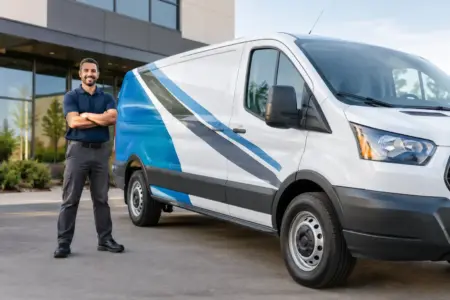
Vehicle signage needs material that suits movement, exposure and cleaning. Applied vinyl and removable magnetic signs are the typical choices. The right option depends on whether you want a fixed branded look or the ability to remove the sign between jobs.
Budget, lifespan and finish – the real trade-offs
Most buyers are balancing three things: what the sign costs now, how long it needs to last and how smart it needs to look. Usually, you can optimise two more easily than all three.
If price is the priority, correx and banners often make sense for temporary work. If lifespan matters most, aluminium composite is usually stronger value over time. If appearance is critical, acrylic or well-finished Foamex may be the better fit indoors. That is why there is no single best material across every sign category.
Print quality also plays a part. Smoother, denser surfaces often produce a cleaner visual result, especially for branding, photography and detailed graphics. For simple warning text or directional information, that extra finish may not be necessary.
A practical way to order the right sign
Before ordering, gather the basics: size, location, fixing method, artwork and expected lifespan. If you are replacing an existing sign, check what failed last time. Was it fading, bending, peeling or simply the wrong size? That usually points you towards a better material choice.
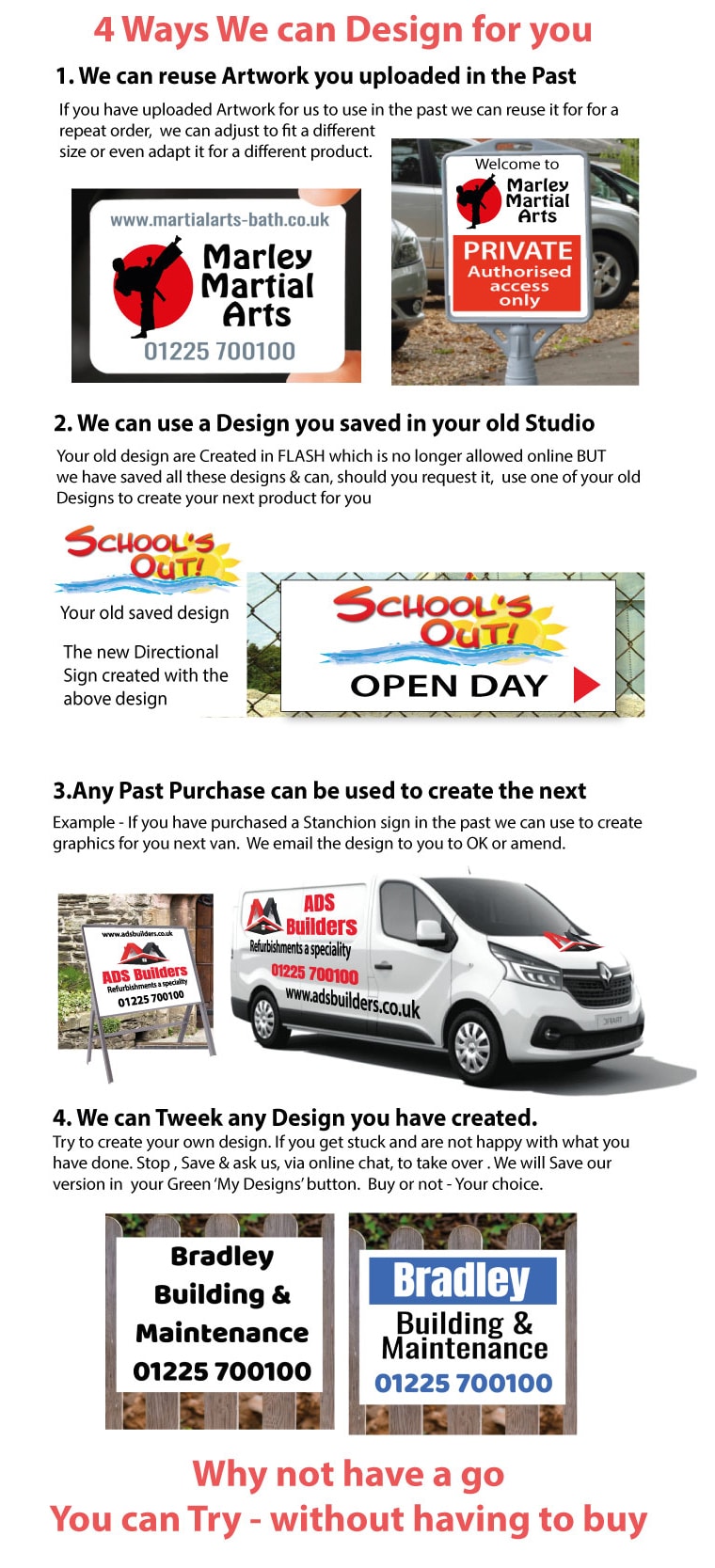
If you already have artwork, make sure it suits the final product and scale. If not, start with the sign type and use a straightforward route to design online, upload your own design or request help. For many businesses, the fastest ordering process is the best one, but speed only helps if the product specification is right.
A good business signage material guide should make the decision simpler, not more technical. Match the material to the job, allow for real conditions on site, and choose a finish that reflects how visible the sign will be. If you do that, the sign is more likely to last, fit properly and do its job from day one.