A missing warning sign rarely feels urgent until somebody walks through the wrong gate, skips PPE, or enters an active work area. Health and safety signage for construction sites is there to prevent those avoidable moments – not just to tick a box, but to keep a busy site readable, controlled and safer to work on.
Construction sites change quickly. Access points move, deliveries arrive, trades overlap and hazards shift as work progresses. That makes signage different from many other workplace requirements. It has to be visible, relevant and kept up to date, otherwise even well-made signs stop doing their job.
What health and safety signage for construction sites needs to do
On a live site, signage has three practical jobs. It needs to warn people about risk, direct them properly and reinforce site rules clearly enough that nobody has to guess. If a driver, subcontractor or visitor has to stop and work out what a sign means, the sign is already doing less than it should.
Good signage also supports site management. It helps reduce repeated verbal instructions, improves consistency across the site and gives contractors a straightforward way to communicate standards. That matters on projects where multiple firms are working side by side and not everyone is familiar with the layout.
There is also a difference between having signs and having the right signs in the right places. A crowded entrance board packed with too much information may meet an internal checklist, but it will not help somebody find the pedestrian route or understand which PPE is mandatory before entering.
The main types of construction site signage
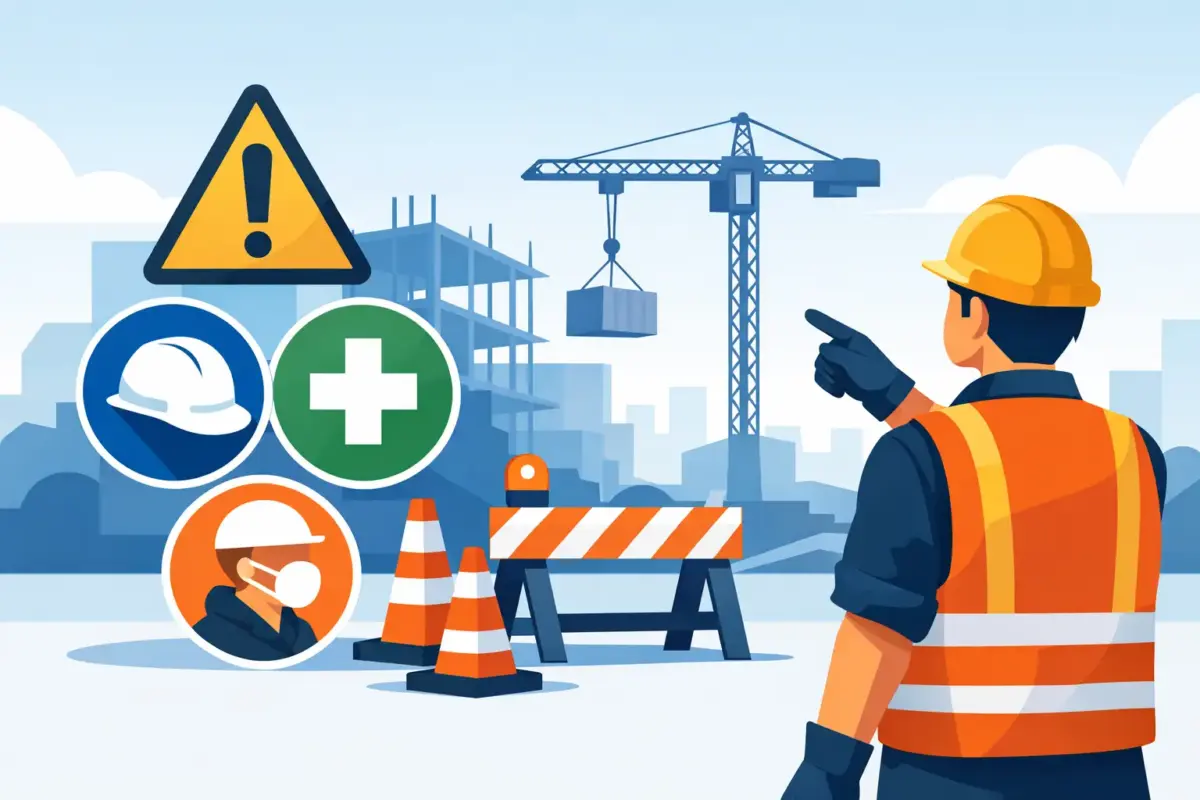
Most construction sites use a mix of standard safety categories. Each one has a specific role, and the balance depends on the nature of the work.
Mandatory signs
These tell people what they must do. Common examples include safety helmets must be worn, high visibility clothing must be worn and eye protection must be worn. On construction sites, these are often the most visible day-to-day signs because PPE requirements need to be obvious at the point of entry and at task-specific areas.
Warning signs
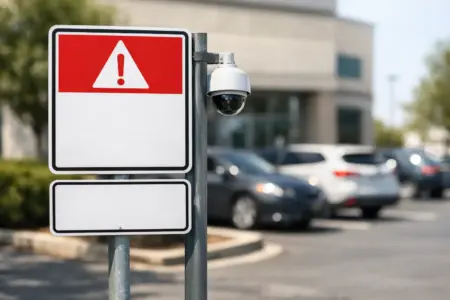
Warning signs highlight hazards such as deep excavations, overhead loads, uneven surfaces, fragile roofs or moving vehicles. These are especially important where risks are temporary or localised. A warning sign should be close enough to the hazard to be useful, but not so close that it gives people no time to react.
Prohibition signs
These show what is not allowed, such as no unauthorised access, no smoking or no pedestrian access. They are often overlooked when planning a sign pack, yet they play a key role in controlling behaviour around plant routes, restricted zones and welfare areas.
Safe condition signs
These signs identify first aid points, fire exits, assembly points and emergency routes. On larger or more complex sites, these are essential for making emergency information easy to follow under pressure.
Site boards and information signs
Beyond individual safety symbols, many sites need larger boards that communicate site rules, contact details, induction information, traffic management or project-specific instructions. These signs often sit at entrances, compound areas and delivery points where people need a quick overview before moving further into the site.
Choosing signs that suit the site, not just the checklist
The right product depends on where the sign will be used, how long it needs to last and who needs to see it. A short-term refurbishment project in a controlled city-centre location will usually need a different sign setup from a long-duration groundworks site exposed to wind, mud and frequent vehicle movement.
Material matters here. Rigid signs are a common choice for fences, hoardings, gates and permanent or semi-permanent site positions because they give a solid, professional result and stand up well outdoors. Temporary notices may suit lighter options, but they still need to stay legible in poor weather and on rough surfaces.
Size matters just as much. A sign that works on a pedestrian gate may be useless at a vehicle entrance. If a message needs to be read from distance, while approaching, or from inside a cab, it has to be scaled accordingly. Going too small is one of the most common ordering mistakes because buyers focus on wording rather than viewing conditions.
There is also the issue of site pace. On fast-moving jobs, it can be worth ordering signage that covers both core compliance needs and likely changes later on. That might include spare warning signs, additional directional signs or extra copies of key PPE notices so the site can adapt without delay.
Where signs are usually needed most
Construction sites can end up with clusters of signage in low-value areas and not enough where decisions are actually made. The best approach is to think in terms of movement.
The site entrance is the obvious starting point. This is where workers, visitors and delivery drivers first need to understand site rules, PPE requirements and who to report to. Entrance signage should be clear and immediate, not overloaded with every possible message.
After that, focus on transition points. Gates, walkways, scaffold access points, loading zones, plant routes and welfare entrances are all places where people change direction, behaviour or level of risk. That is where signs carry the most weight.
Hazard-specific areas also need local signage, especially where conditions can catch someone out quickly. Excavations, overhead works, electrical hazards and traffic segregation zones all benefit from direct, visible marking rather than relying on site induction alone.
Why custom signage can be the better option
Standard signs cover a lot of ground, but they do not solve everything. Many construction sites need signs that include a company name, site contact number, bespoke site rules, directional arrows, delivery instructions or branded project information.
That is where custom signage becomes useful rather than cosmetic. A tailored site board can combine compliance messaging with practical instructions people actually need. For example, a delivery sign that includes reporting details, unloading directions and PPE requirements can reduce confusion far better than three smaller signs placed apart.
Customisation also helps on repeat jobs. Contractors and site managers often need the same core sign layout across multiple projects with only a few details changed. Using a supplier that allows you to design online, upload your own design or request artwork support can make repeat ordering quicker and more consistent.
Common mistakes that cause signage problems
Most site signage issues do not come from buying the wrong category of sign. They come from gaps in planning and maintenance.
One common problem is signs staying in place after the risk has changed. A no entry sign on a route that is now open, or a warning notice left beside a removed hazard, undermines trust in every other sign on the site. Workers stop paying attention when signage looks outdated.
Another issue is poor positioning. Signs hidden behind stacked materials, tied to moving barriers or fixed at the wrong height are easy to miss. A well-printed sign still fails if nobody sees it in time.
Overloading signage is another trap. Too many messages in one area create visual noise, especially around entrances. If everything is emphasised, nothing is. It is usually better to separate essential immediate instructions from secondary information.
Durability can also be underestimated. Construction sites are hard on signage. Rain, dirt, impact and repeated handling all reduce readability over time. If the sign looks worn too early, it may need a more suitable material or fixing method.
Ordering with less delay and less guesswork
For many buyers, the challenge is not knowing they need signage. It is getting the right mix ordered quickly enough to keep the job moving. That is why it helps to break the requirement into practical groups: entrance signage, PPE signs, hazard warnings, traffic and access signs, emergency information and any custom site boards.
From there, think about quantities, sizes and whether the site needs standard wording or project-specific details. If you already have artwork, uploading it can speed things up. If you need a straightforward layout prepared for you, that route often saves time compared with trying to build everything from scratch.
For businesses managing multiple jobs, consistency matters as much as speed. Using one supplier for rigid signs, site boards, stickers and related printed products can make future re-orders simpler and reduce variation between sites. For practical buyers, that is often just as valuable as the sign itself.
The SignBuilder approach reflects that reality – making it easier to choose standard products where they fit and add custom details where they are needed.
Construction sites are busy enough without people second-guessing where to go, what to wear or which risks apply. Clear signage gives the site one less thing to explain over and over, and that alone makes it worth getting right.