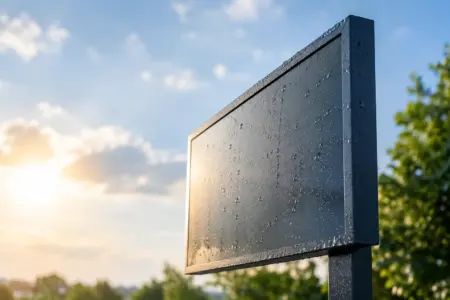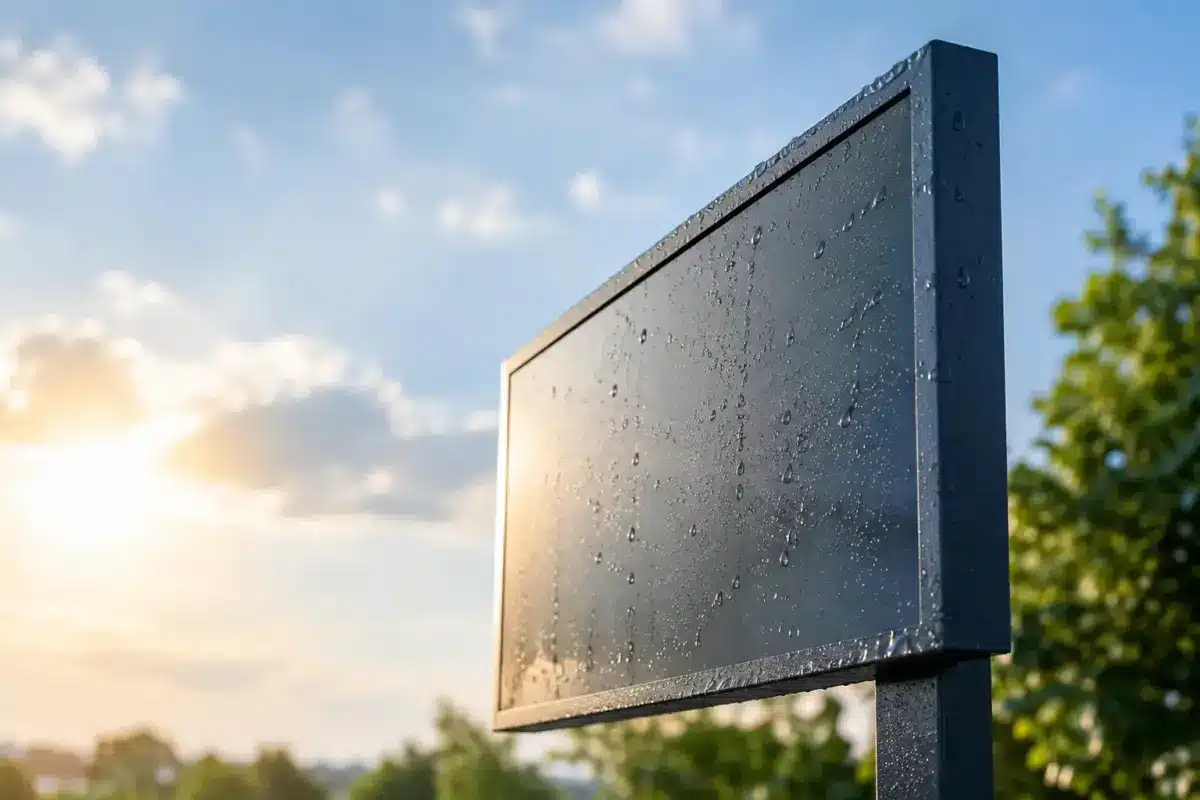
A sign installed outside has a harder job than simply displaying a message. It may face rain, strong sun, frost, wind, road spray, dirt and regular handling. Understanding what makes signs weatherproof helps you choose a product that stays clear, secure and professional for the conditions it will actually face.
Weatherproofing is not one feature or coating. It is the combined performance of the sign material, print method, protective finish, fixings and installation location. A well-made outdoor sign needs all of these elements to work together.
What makes signs weatherproof in practice?
A weatherproof sign is made to resist deterioration caused by normal outdoor exposure. That usually means it can cope with rain without swelling or breaking down, sunlight without rapid fading, and changing temperatures without warping, splitting or losing its printed finish.
The right level of weather resistance depends on the job. A short-term estate agent board, a site safety sign used for several years, and permanent shop fascia lettering do not need exactly the same materials. Exposure matters too. A sign fixed under a canopy has far less to contend with than one facing prevailing wind and rain on an open industrial estate.
For most business applications, outdoor performance comes down to five practical areas:
- A suitable rigid board, banner material or vinyl for the intended lifespan.
- Printed inks designed to hold their colour in daylight.
- A protective laminate or surface finish where extra resistance is needed.
- Edges, corners and drilled holes prepared to prevent early damage.
- Secure, compatible fixings that keep the sign stable in wind and rain.
Choosing a material only because it is cheap can create a false economy. If a sign fades, cracks or comes loose early, replacement, refitting and lost visibility soon cost more than selecting the right specification from the outset.
Start with the sign material
The base material is the foundation of outdoor durability. It determines how the sign handles moisture, impact, movement and temperature changes.
Aluminium composite for long-term outdoor signs
Aluminium composite board is a popular choice for permanent and semi-permanent outdoor signage. It has aluminium faces around a solid plastic core, creating a flat, rigid panel that resists moisture and does not rust in the way untreated steel can.
It suits shop signs, directional signs, parking notices, site boards, property signs and branded panels. It also provides a stable surface for printed graphics, which helps lettering and logos remain sharp. For signs that need to look professional for years rather than weeks, aluminium composite is often a sensible option.
Foamex for practical everyday signage
Foamex is a rigid PVC board commonly used for business signs, promotional displays and site information. It is lightweight, easy to fit and available in different thicknesses. It can perform well outdoors, particularly for shorter to medium-term use, but its lifespan will depend on thickness, exposure and how it is fixed.
A thin board may be suitable for a sheltered wall-mounted notice, while a thicker board is better for larger signs or exposed locations. Foamex can be a cost-effective choice, but it is not always the best option for a large panel in a very windy position.
Corrugated plastic for temporary requirements
Corrugated plastic, often known as correx, is light and economical. It is useful for temporary event signs, property boards, short-term promotions and construction notices. Its fluted structure makes it easy to handle and install, although it is less rigid than solid board materials.
It can withstand rain for temporary outdoor use, but it is not designed to offer the same long-term strength or premium finish as aluminium composite. Where wind exposure is high, the panel size and fixing method need careful consideration.
PVC banners for flexible outdoor displays
A properly specified PVC banner is built for outdoor promotion. The material is flexible, waterproof and suited to large-format messages such as event advertising, building frontage banners, sports club displays and temporary sales campaigns.
For exposed locations, mesh banner may be the better option. Its small perforations allow some wind to pass through, reducing pressure on the banner and its fixings. The trade-off is that it is slightly less solid in appearance at close range, so viewing distance should guide the choice.
UV-resistant printing protects colour and detail
Sunlight is one of the main reasons outdoor graphics lose their impact. Ultraviolet light gradually breaks down colour pigments, particularly on signs exposed to direct sun for long periods. Reds, yellows and bright brand colours can be especially noticeable when fading occurs.
Weatherproof signs use outdoor-suitable print processes and inks intended to withstand UV exposure. This does not mean the colours will remain unchanged forever. Every printed sign will age over time, especially on south-facing elevations or in open areas with little shade. It does mean the print is selected to give a useful outdoor service life rather than fading quickly after installation.
Artwork also affects how well a sign continues to read. Strong contrast, clear typefaces and adequate letter size give a sign more tolerance as it weathers. Fine pale text on a light background may look acceptable when new but become difficult to read sooner than bold, high-contrast wording.
Lamination adds a working layer of protection
A clear laminate can be applied over printed vinyl or graphics to protect the surface. This is particularly useful for signs likely to receive regular contact, cleaning or abrasion, such as vehicle graphics, outdoor information panels and signs near entrances.
Lamination helps protect against scratches, grime and moisture reaching the printed surface. It can also improve resistance to fading by adding another barrier against UV exposure. Gloss laminate can make colours appear brighter, while matt laminate reduces glare and may be easier to read under strong light.
It is not essential for every product. For a temporary banner or short-lived promotion, adding laminate may not be necessary. For a long-term branded sign, it can be worthwhile protection, especially where presentation matters as much as durability.
Edges, holes and corners need attention
The weakest point of an outdoor sign is often not the printed face. It is an untreated edge, a poorly drilled hole or a corner that catches the wind.
Rigid boards should be cut cleanly and fixed with enough support to prevent flexing. Large panels may need additional fixing points so they do not bow or vibrate. If a sign moves repeatedly in the wind, holes can enlarge and the board may crack around the fixings.
Banners need reinforced hems and eyelets positioned to spread the load. A banner secured only at a few points can pull, tear or sag. Using appropriate cable ties, bungee cords or banner fixings allows the material to be held securely without placing excessive strain on the eyelets.
Corners can also make a difference in public-facing areas. Rounded corners are less likely to catch clothing or cause injury and can reduce the chance of corner damage during handling. For safety signs and busy commercial premises, that small detail can be worthwhile.
Fixings are part of the weatherproof system
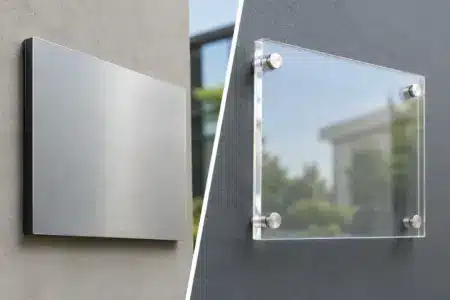
Even the most durable board will not perform properly if it is fixed with unsuitable hardware. Outdoor fixings need to resist corrosion and hold securely in the surface being used, whether that is brick, timber, metal fencing or a sign frame.
Stainless steel screws, suitable washers and correctly sized plugs are common choices for wall-mounted signs. Washers spread pressure over a wider area, reducing the risk of the screw head damaging the board. For signs mounted to railings or fences, the fixing should be strong enough to prevent movement but not so tight that it distorts the material.
Consider access for maintenance as well. A sign installed where it cannot be cleaned, checked or replaced safely may become an unnecessary problem later. This is especially relevant for high-level fascia panels, commercial estates and busy sites.
Match the sign to its exposure and lifespan
There is no single material that is best for every outdoor job. A weatherproof sign should be specified around where it will go, how long it needs to last and what it needs to achieve.
A temporary event organiser may need economical corrugated plastic signs and PVC banners that remain clear through a weekend of rain. A tradesperson may need vehicle lettering and magnetic signs that cope with road dirt, washing and daily use. A site manager may need rigid health and safety signs that stay legible through a long project. A retailer may need a branded panel that continues to represent the business well season after season.
Before ordering, check the intended location, dimensions, fixing surface, likely wind exposure and viewing distance. Then choose the material and finish to suit. If you have artwork ready, use an upload option; if not, a simple online design route or artwork support can help produce a sign that is both readable and fit for purpose.
The most reliable outdoor sign is not necessarily the thickest or most expensive one. It is the one built from the right material, printed for outdoor use and fitted properly for the job it has to do.