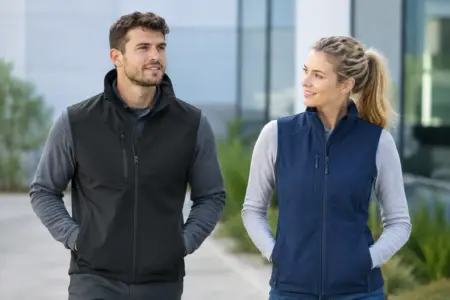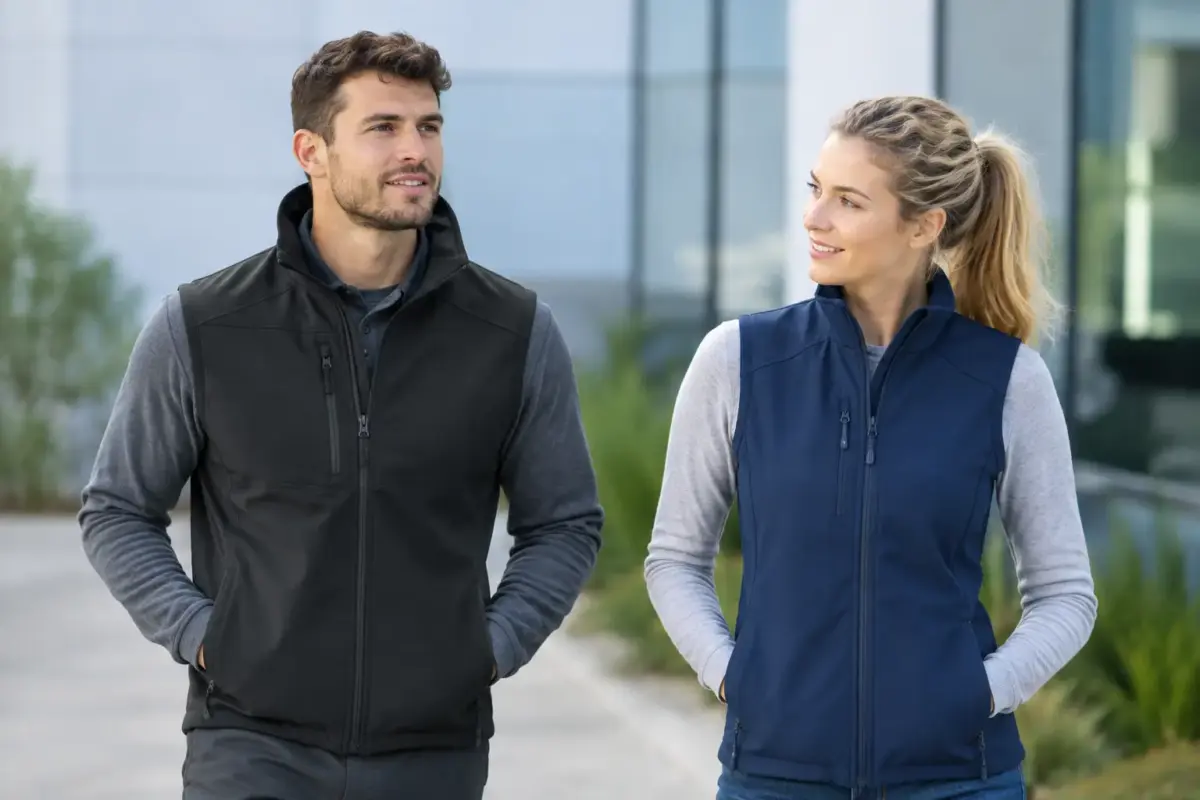
A bodywarmer earns its place when a full jacket feels too restrictive but a sweatshirt is not enough. Branded softshell bodywarmers give staff a practical extra layer for early starts, changing weather and active roles, while keeping your company name visible wherever the work takes them.
For trades, delivery teams, site staff, hospitality workers and event crews, the appeal is straightforward. The core stays warm, arms can move freely, and a clearly printed garment helps present a consistent, professional team. The right choice depends on how and where it will be worn, not simply on colour or price.
Why choose branded softshell bodywarmers?
Softshell bodywarmers are designed for everyday movement. They are often a useful middle layer between a polo shirt or hoodie and a heavier outer coat, particularly for workers moving between vehicles, stores, workshops and outdoor areas. Removing the sleeves reduces bulk around the shoulders, which can make lifting, driving and using tools more comfortable.
They also give businesses a strong branded garment without making every member of staff wear the same heavy jacket all year. A bodywarmer can be put on at the start of a cold shift, taken off during physical work, and worn again when the temperature drops. That flexibility matters for teams whose working day does not stay in one place.
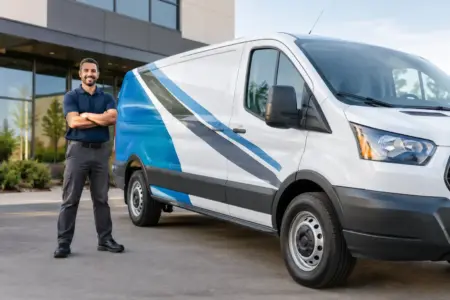
For customer-facing roles, a coordinated bodywarmer makes a uniform look more considered. A clean logo on the chest or back can help customers identify staff quickly at a trade counter, outdoor event, car park, depot or delivery address. It is a simple way to carry the same identity across workwear, vehicle graphics and site signage.
Start with the working environment
The most suitable bodywarmer is the one that matches the job. A sales team attending a winter exhibition may prioritise a smart fit and a neat logo position. A landscaping or construction team is more likely to need a hard-wearing fabric, useful pockets and room to layer clothing underneath. For drivers, a shorter cut and low-bulk construction can make sitting behind the wheel more comfortable.
Softshell fabrics generally offer a practical balance of warmth, breathability and light weather protection. They are well suited to cool, breezy conditions and light showers. They are not a replacement for dedicated waterproof clothing during sustained rain, nor are they likely to provide enough insulation for long periods of inactivity in severe cold. Where staff spend full days exposed to the elements, issue bodywarmers as part of a sensible clothing system rather than relying on one garment for every condition.
Think about the day-to-day realities too. Darker colours can be more forgiving around dust, mud and vehicle work. Lighter colours may suit retail, hospitality or promotional teams where a brighter, cleaner appearance is the priority. If high visibility is required for a particular task or site, select garments that meet the relevant requirements rather than assuming a bright-coloured bodywarmer is sufficient.
What to check before ordering
A product photograph cannot show everything that affects wearability. Before placing a larger order, check the specification and consider ordering samples or a small initial run where possible. The following details make a noticeable difference once garments are in regular use:
- Fabric weight and lining, which affect warmth and how substantial the garment feels.
- Water resistance and breathability, especially for teams working outdoors or moving between heated and unheated spaces.
- Pocket layout, including secure zipped pockets for mobile phones, keys, paperwork and small tools.
- Size range and fit, so the garment works for different body shapes and allows for layers underneath.
- Print areas, so your logo remains clear without sitting across zips, seams or pockets.
Do not treat sizing as an afterthought. Workwear is worn for long shifts, often over other clothing, and an overly close fit can limit movement. A bodywarmer that is too large can look untidy and leave printed branding less well positioned. Use the supplier’s size guide, gather staff sizes early and allow for the garments people normally wear underneath.
Getting the branding right
A branded bodywarmer has limited space compared with a jacket or T-shirt, so logo placement needs to be purposeful. The left chest is a familiar option for a company logo and works well when staff are speaking to customers face-to-face. A larger back print may be more effective for teams working on site, at events or around vehicles, where they are often seen from behind.
The best choice depends on viewing distance and the detail in your artwork. Fine text, small telephone numbers and intricate lines can become difficult to read on fabric. In many cases, a simplified logo or a bolder version of your artwork will produce a cleaner result. Keep the most important element – usually your business name or recognisable mark – at a useful size.
Colour contrast is equally important. A dark print on a dark navy or black garment may be technically present but hard to see from more than a few steps away. White or light-coloured artwork often stands out strongly on darker bodywarmers, while darker artwork can work well on grey, beige or lighter garments. If you operate across several branded products, use the same approved logo files and colours where practical to keep everything consistent.
Artwork preparation should happen before production, not after the order is needed. Supply a high-quality file where available and check the artwork proof carefully for spelling, position and scale. This is especially worthwhile when ordering for multiple departments, franchise locations or a growing team. A saved, approved design also makes repeat ordering faster and helps avoid small variations between batches.
Plan quantities for the real working year
Ordering exactly one garment per current employee can create problems quickly. New starters, replacement needs and seasonal peaks are common, particularly for trades, venues, logistics teams and event organisers. Holding a small number of unbranded spare garments in common sizes can help, while branded items can be ordered in planned batches once staff details are confirmed.
There is a balance to strike. Ordering in bulk may improve unit value and ensures a consistent garment style, but it can leave you with unused stock if staff numbers change or your branding is updated. For a small business, a shorter run with a clear re-order process may be the more sensible approach. Larger organisations may benefit from setting a standard bodywarmer specification, approved colours and fixed logo positions for every location.
It also helps to decide who owns garment ordering. When managers order separately without agreed artwork and garment details, teams can end up looking mismatched. A simple internal record of product name, colour, logo position, print size and approved artwork keeps future orders on track.
Care affects how long the garment represents you
Workwear is a visible part of your business, so its condition matters. Follow the care label and give staff straightforward washing guidance when garments are issued. Washing at the appropriate temperature, turning garments inside out where recommended and avoiding unnecessary high heat can help maintain the fabric and printed design.
For dirty roles, provide enough garments for a sensible rotation. Asking someone to wear the same bodywarmer through a full working week may save on the initial order, but it can shorten its usable life and affect the impression made on customers. A clean, well-fitting garment is more likely to be worn properly and appreciated by the person wearing it.
A practical addition to a coordinated workwear range
Branded softshell bodywarmers work best when they solve a clear problem: keeping teams comfortable through variable conditions while making them easy to recognise. They are not the right answer for every weather forecast or every role, but they are a dependable option for active staff who need warmth without restricted movement.
Choose the garment around the work, keep the branding clear and order with re-use in mind. When staff can pull on a bodywarmer that fits well and looks like part of the same business as the van, sign and uniform, the result is practical kit that also does its job for your brand.