A builder’s board outside a live site, a letting sign on a busy road and a weekend event direction sign may all carry the same logo, but they do not need the same material. The decision between aluminium composite versus Correx affects how long a sign lasts, how it looks after rain and wind, how easily it can be fitted, and what it costs to replace.
For many business buyers, the practical question is simple: do you need a sign that will stay put and keep its appearance for months or years, or one that needs to do its job for a shorter campaign at the lowest sensible cost? Aluminium composite and Correx are both useful printed sign boards. They simply suit different conditions.
Aluminium composite versus Correx: the main difference
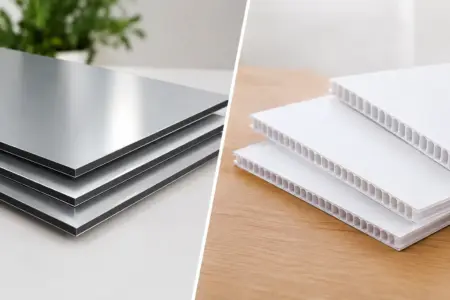
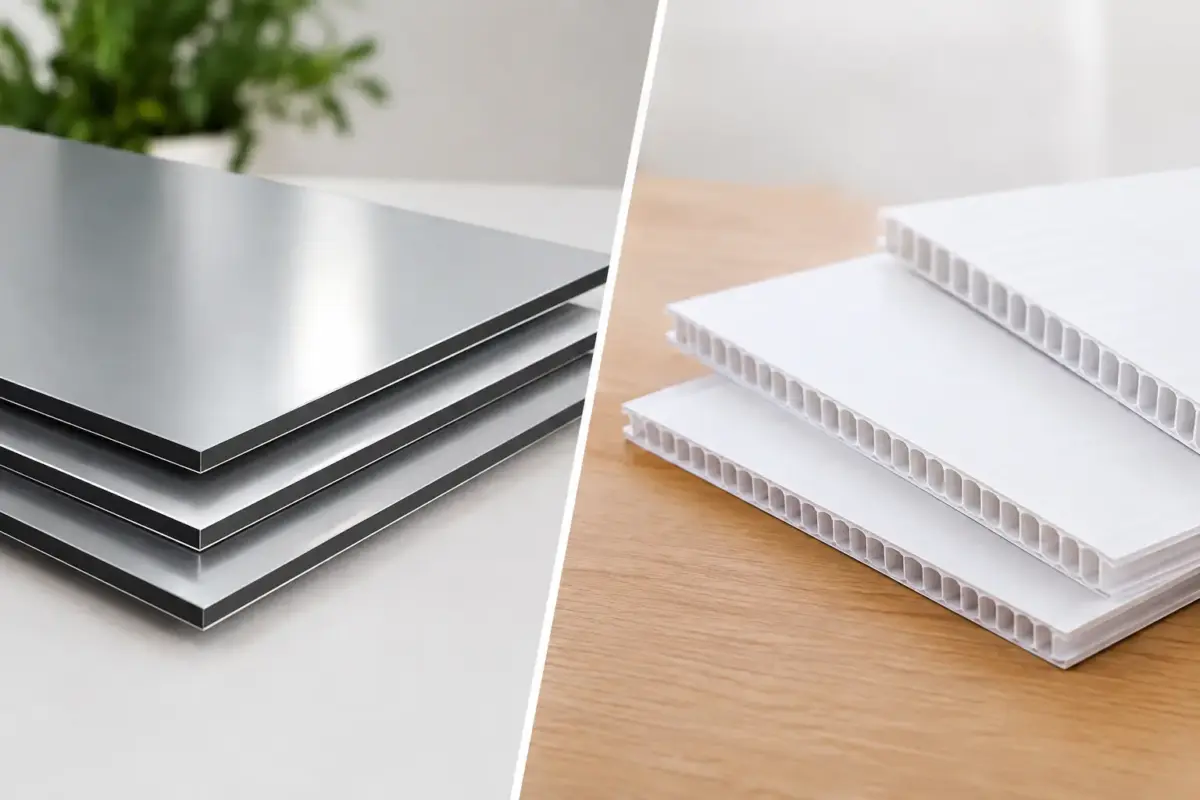
Aluminium composite is a rigid panel made with aluminium outer skins and a solid plastic core. It has a smooth, flat face that gives printed graphics a clean, professional finish. It is commonly used for permanent business signage, shop signs, site boards, parking notices, directional signs and branded boards fixed to walls or fencing.
Correx is a lightweight fluted polypropylene board. Its internal channels make it easy to carry, cut and fix, while keeping the material cost lower. It is a common choice for estate agent boards, temporary site signage, event notices, short-term offers, election boards and promotional campaigns.
Neither is automatically the better option. The right choice depends on the job, the location, the fitting method and the period you expect the sign to remain in use.
When aluminium composite is the better sign board
Choose aluminium composite when the sign is part of your premises, needs to remain presentable for a long period, or will face regular outdoor exposure. It is much more rigid than Correx, so it stays flatter over larger sizes and is less likely to flex in the wind.
That rigidity matters on a shopfront, industrial unit, trade counter or car park. A printed aluminium composite sign gives a more permanent appearance and holds its shape well when fixed correctly to a wall, post, gate or fence. The smooth surface also suits detailed artwork, smaller text and professional logos where a crisp finish is a priority.
For tradespeople and fleet operators, aluminium composite is often useful for fixed site boards, office signs, loading-area instructions and safety information. It is a sensible option where the same message will be seen every day by customers, visitors, staff and delivery drivers.
Aluminium composite does cost more than Correx, and it is heavier to handle. That extra cost is usually worthwhile where replacing a faded, bent or damaged temporary board would be inconvenient or would reflect poorly on the business. It is not always worthwhile for a one-week promotion or a campaign that will be removed as soon as the event ends.
Best uses for aluminium composite
Aluminium composite works particularly well for long-term outdoor and indoor signs, including branded fascia panels, permanent directional signs, parking signs, health and safety notices, property boards, construction site boards and information panels. It can also be used where signs need to be cleaned regularly, such as hospitality entrances, retail areas and shared commercial sites.
Check the available thickness, size and finishing options before ordering. A larger board or an exposed installation may need more fixing points and a stronger support than a small wall-mounted notice.
When Correx is the better sign board
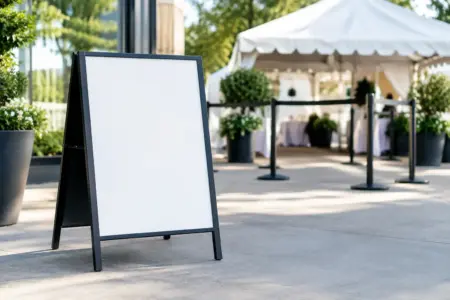
Correx earns its place because it is economical, light and quick to deploy. If you need several signs for an event, property listing, local promotion or temporary work area, it allows you to create clear branded messaging without paying for a long-life board where one is not needed.
The fluted construction makes Correx particularly useful for temporary estate boards and signs fitted to stakes. It is easy to transport in quantity, which helps event organisers, local organisations and businesses running campaigns across several locations. A team can carry a stack of Correx signs far more easily than an equivalent stack of aluminium composite panels.
For short-term outdoor use, Correx performs well when it is fitted securely and used in a suitable location. However, it is more vulnerable to bending, wind movement and accidental knocks. Over time, strong weather and repeated handling can affect its appearance. If the sign must look as good in six or twelve months as it did on day one, aluminium composite is usually the safer choice.
Correx also has a slightly different visual feel. Good-quality printing remains clear and effective, particularly for large text, simple graphics and high-contrast messages. But its fluted face and lighter construction do not give the same solid, permanent impression as aluminium composite.
Best uses for Correx
Correx is well suited to estate agent boards, temporary construction notices, event wayfinding, sponsored event signs, short-term retail promotions, community notices and campaign signage. It is especially useful where quantity, portability and budget matter more than a premium finish or multi-year lifespan.
Compare cost, lifespan and fitting before you order
The initial price is often the first point of comparison, but it should not be the only one. Correx has a lower upfront cost, making it a practical choice for short runs, temporary use and signs that may need to be replaced as details change. Aluminium composite is the higher-cost board, but it often offers better value across a longer installation period.
Think about the full cost of the sign in use. A cheap board can become more expensive if it needs replacing after poor weather, if it looks tired in front of customers, or if the message will remain relevant for years. Equally, paying for aluminium composite for a two-day event can add cost without creating a real benefit.
Fitting is another deciding factor. Correx is light enough for simple temporary installations and can be fixed with suitable ties, stakes or tape depending on the application. Aluminium composite needs a more considered fixing method. Screws, bolts, sign channels or appropriate mounting hardware should support the panel without distorting it.
Always allow for wind exposure. A sign placed on an open roadside, high fence or exposed building elevation experiences far more force than one placed inside a reception area or sheltered courtyard. Larger signs need more support, regardless of the material chosen.
Print quality and brand presentation
Both materials can carry full-colour printed graphics, logos, photographs and text. The difference comes down to the finish you want and the viewing conditions.
Aluminium composite gives a flatter, firmer surface, which makes it a strong choice for signs containing detailed branding, fine lettering and long-term information. It has the sort of finished appearance that works well at entrances, on business premises and around customer-facing areas.
Correx is highly effective for bold communications. Large arrows, phone numbers, event messages, sales wording and simple branded layouts read clearly from a distance. For temporary signs, clarity normally matters more than fine detail. Keep the design direct, use good contrast and avoid overcrowding the board.
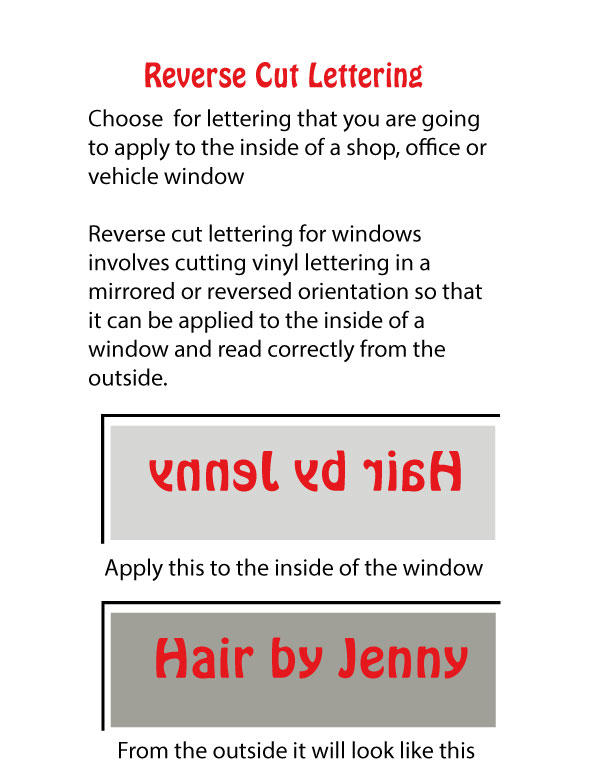
If you are producing a set of signs alongside banners, vinyl lettering, vehicle graphics or branded workwear, use the same logo files, colours and typefaces across each item. Consistent presentation helps customers and visitors recognise the business quickly, whether they first see it at a site entrance, on a van or on a member of staff.
Choosing the right material for common jobs
For a long-term site entrance sign, aluminium composite is normally the practical choice. It looks established, remains flat and is built for a fixed installation. For a temporary construction notice that will change as the project moves on, Correx usually offers the better balance of cost and function.
A retailer promoting a short seasonal offer may prefer Correx for window-adjacent displays, pavement-side messaging or campaign boards, provided the sign is protected and fixed safely. A permanent opening-hours panel, menu board or customer parking notice calls for aluminium composite.
Estate agents and property professionals often benefit from Correx for boards that are installed, moved and replaced regularly. Where a property development needs a larger, longer-term marketing board, aluminium composite is more suitable. Event organisers can use Correx for temporary directions and sponsor visibility, while choosing aluminium composite for reusable entrance signage or venue information.
Get the artwork and sizing right
The material will only do its job if the sign is designed for where it will be seen. Start with the viewing distance. A sign read from a pavement can carry more detail than one viewed from a road or across a car park. Larger text, simple wording and clear contrast are essential for distance viewing.
Include the fixing method in the planning stage. Leave enough clear space around the edge if screw holes or ties are needed, and avoid placing essential text where fittings could cover it. For Correx, consider the direction of the internal flutes when the board will be used with stakes or other supports.
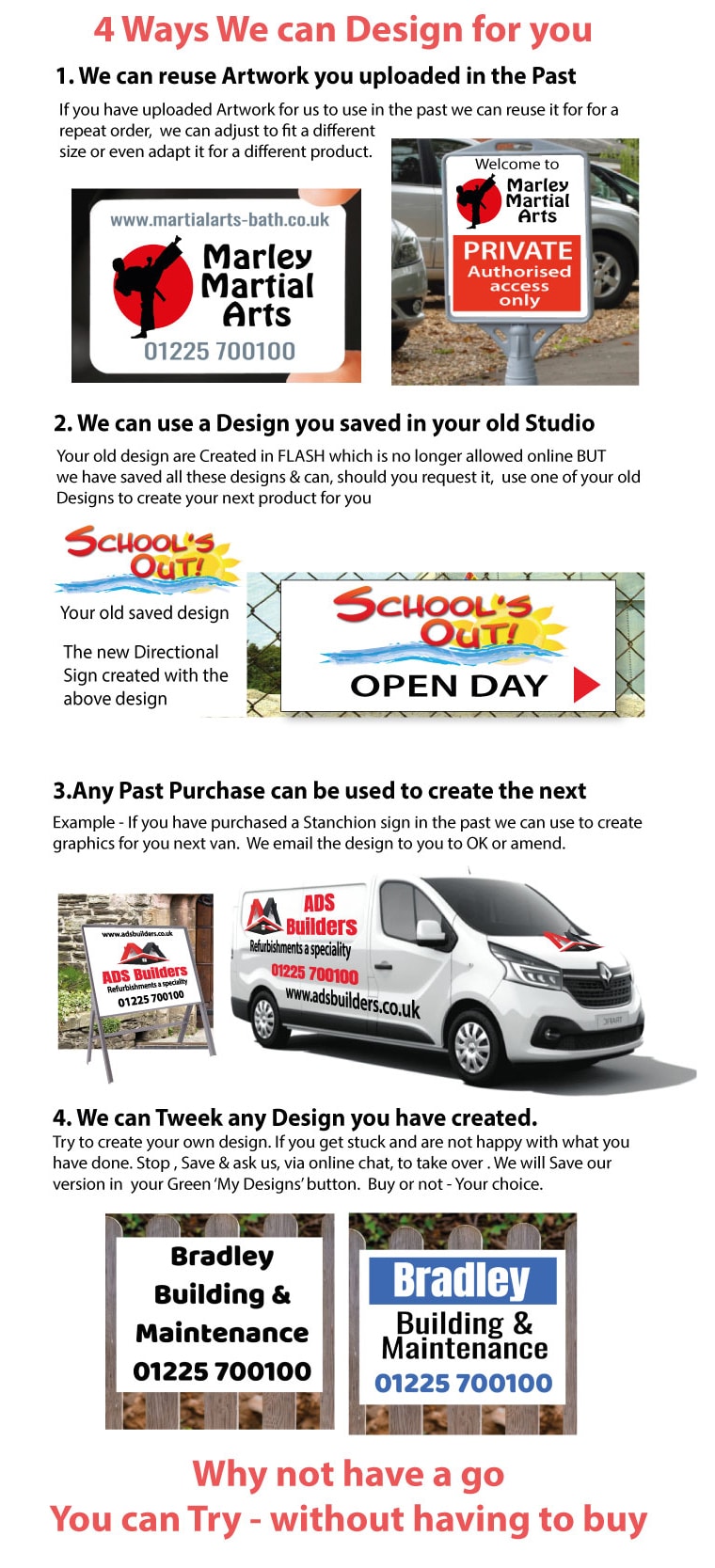
If your artwork is ready, upload it at the correct size and with suitable image quality. If it is not, use an online design option or request design support before production. A quick artwork check can prevent a sign arriving with text too small to read or images that do not print cleanly.
The best material is the one that matches the real working life of the sign. Choose Correx when speed, quantity and short-term value lead the decision. Choose aluminium composite when the sign needs to stay straight, visible and professional through the working months ahead.