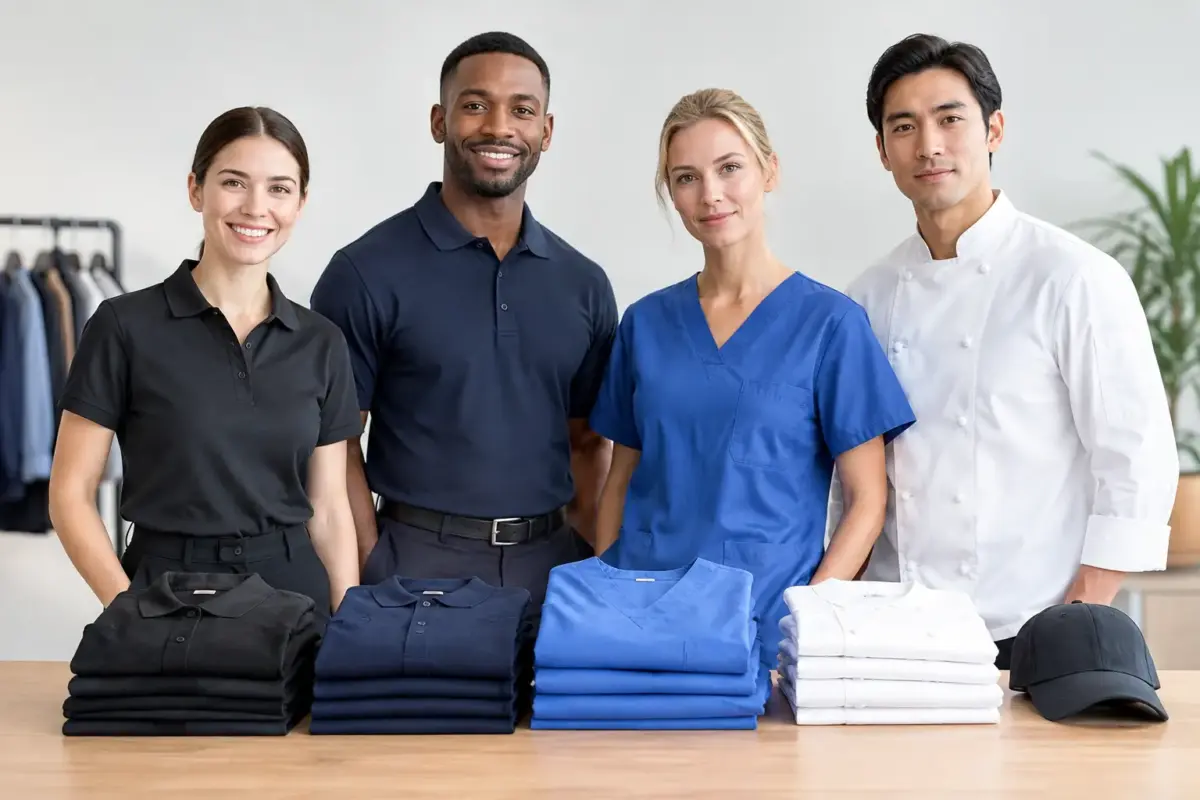
A new starter needs a polo, a supervisor needs a warmer outer layer, and the delivery team needs clothing that stands up to regular wear. Buying each item separately soon becomes slow, inconsistent and difficult to track. Staff uniform bundles give businesses a practical way to supply branded garments in sensible combinations, with the right items available for the roles people actually carry out.
For a small business, a uniform bundle is not about overcomplicating workwear. It is about setting a clear standard, making ordering easier and ensuring staff look ready for the job from their first shift.
Why staff uniform bundles work for busy teams
A bundle turns several purchasing decisions into one clear choice. Rather than deciding on a separate top, jumper, jacket and accessory each time somebody joins the business, you can create a repeatable package for each role. This saves time for the person placing the order and gives staff a more consistent appearance across the team.
Consistency matters in customer-facing settings. A tradesperson arriving at a property, a café team serving customers or a site operative directing visitors should be easy to identify. Branded clothing supports a professional first impression while helping customers know who to approach.
There is also a practical benefit for managers. When garments are selected as a set, it is easier to maintain approved colours, logo placement and garment types. This avoids a gradual mix of mismatched clothing caused by one-off purchases made months apart.
Build staff uniform bundles around the job
The most useful bundle starts with the working day, not a catalogue. Consider where staff work, how active they are, whether they meet customers and what conditions they face. An office-based team may only need branded polos or shirts and a smart layer for cooler days. A mobile team may need harder-wearing garments, weather protection and spare tops for regular use.
A basic starter bundle often includes two or three branded tops, so staff have enough clothing for the working week without constant washing. Adding a sweatshirt, fleece or softshell can make the bundle more flexible across seasons. For roles that involve outdoor work, a suitable jacket may be a better use of budget than adding extra lightweight tops.
The right mix depends on the job. A restaurant may prioritise clean, coordinated front-of-house garments, while a landscaping business may need practical layers that cope with early starts and changing weather. There is no value in supplying clothing that looks smart but sits unused because it is unsuitable for the task.
Separate bundles by role where needed
Not every member of staff needs the same package. One standard bundle is easier to manage, but it can create waste when different roles have different needs. It is often more effective to create two or three defined options, such as customer-facing, site-based and management bundles.
This approach keeps purchasing controlled without treating every employee identically. A supervisor might receive a branded jacket and smarter top, while a warehouse operative receives additional polos and a warm mid-layer. Both still use the same company colours and logo, so the wider team remains recognisable.
For temporary staff, seasonal workers or event crews, a simpler bundle may be enough. A branded T-shirt or polo with one additional layer can provide a coordinated appearance without committing to a full uniform issue that may not be needed after a short period.
Choose garments for comfort and regular wear
Workwear only does its job if people are willing to wear it. Fabric weight, fit and movement should be considered alongside appearance. Staff who lift, drive, walk long distances or work outdoors need garments that are comfortable throughout the shift, not just when first tried on.
Think about washing as well. Frequent laundering is part of normal use for many uniforms, especially in hospitality, retail and trade environments. Choosing garments intended for regular wear helps maintain a clean, presentable look over time. It can be tempting to select the lowest-cost option, but a garment that loses shape quickly or needs replacing sooner may cost more in the long run.
Colour choice deserves practical thought too. Darker colours can be useful for messy or hands-on jobs, while lighter shades may suit indoor, customer-facing environments. Your existing signs, vehicle graphics and printed materials can help guide the palette, but usability should come first. A colour that fits the brand but is difficult to keep clean may not be the best everyday choice.
Keep branding clear and consistent
A uniform bundle should make the business identifiable at a glance. In most cases, a clear logo on the chest or back is more effective than trying to fill every available space with information. The goal is recognition, not clutter.
Use the same approved artwork across garments wherever possible. This protects the quality of the brand and ensures a new order matches existing clothing. If your logo has fine detail, small text or more than one colour, check that the artwork is suitable for the chosen garment and print area before placing a larger order.
The SignBuilder can support straightforward ordering through online design, artwork upload or a request for help with preparing your design. That choice matters when different businesses have different levels of confidence with artwork. A clean, print-ready file usually speeds up approval and makes repeat orders easier to manage.
Get sizing right before placing a larger order
Sizing is one of the main reasons uniform orders become inconvenient. Garment sizes can vary between styles, so do not assume a medium in one product will fit the same as a medium in another. If possible, check size information carefully and allow staff to confirm their preferred fit before ordering.
A small range of spare items can be useful for new starters, damaged garments or unexpected changes in staffing. This is particularly helpful for businesses with frequent recruitment or seasonal demand. Keeping a few standard items on hand can prevent a new team member working without branded clothing while a replacement order is processed.
It is also worth agreeing a simple policy on issue and replacement. Decide whether staff receive a full bundle at the start of employment, when replacements are supplied and whether additional items can be ordered. Clear rules help control spend and avoid uncertainty for both staff and managers.
Balance cost with the value of a complete issue
Bundles make costs easier to forecast because they give each role a defined starting point. Instead of responding to individual requests throughout the month, you know what a new starter package should include and what it is likely to cost. This is useful for businesses managing multiple sites, vehicles or teams.
That said, the cheapest bundle is not always the most economical. A package with too few garments may lead to rushed washing and early wear. A package with too many specialist items may leave stock unused. Start with the minimum number of garments needed for regular work, then adjust after feedback from the team.
For many businesses, branded workwear is part of a wider presentation plan. Matching uniforms with clear site signs, vehicle graphics and customer-facing printed materials creates a more organised appearance. It shows customers that the business pays attention to the details they can see.
Make reordering simple from the start
Once you have chosen your staff uniform bundles, record the exact garment styles, colours, logo artwork and print positions used. Keep this information with staff size records so replacement orders do not rely on memory or old emails. A standard order reference also helps when different people are responsible for buying.
Review the bundle after a few months of real use. Ask whether staff wear every item, which garments wash well and whether particular roles need a different combination. Small changes based on day-to-day experience are more useful than creating a complicated uniform policy before anyone has worn it.
The best uniform bundle is one your team can work in comfortably, your customers can recognise immediately and your business can reorder without delay. Set a practical standard, keep the artwork consistent and make each garment earn its place in the package.