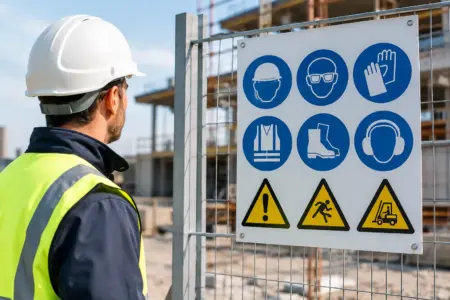
A triangular sign is there to make people pause before they proceed. If you are asking which health and safety signs have a triangle shape, the answer is warning signs: signs that alert staff, visitors and contractors to a hazard that may be ahead or present in the area.
For workplaces across the UK, the familiar format is a yellow triangle with a black border and black safety symbol. It is a quick visual instruction: take care, identify the risk and act accordingly. Choosing the right triangle warning sign is a straightforward but worthwhile part of keeping premises, work areas and routes safer.
Which health and safety signs have a triangle shape?
Triangle-shaped health and safety signs are warning signs. They point out hazards that could cause injury or ill health if they are ignored. Unlike a mandatory sign, which tells someone what they must do, or a prohibition sign, which tells them what they must not do, a warning sign draws attention to a source of danger.
Common examples include warnings for slippery surfaces, forklift lorries, high voltage, hazardous chemicals, moving machinery, hot surfaces, falling objects, low headroom and uneven ground. The exact symbol matters. A general warning triangle may make people more alert, but a specific pictogram tells them what they need to look out for.
This recognised format is set out in the BS EN ISO 7010 safety sign standard. Using standard symbols helps people understand a sign quickly, including visitors who may not know the site layout or speak English as a first language. For most workplace applications, a yellow triangular warning sign with a black border and symbol is the appropriate choice.
What a triangular warning sign means on site
A warning sign does not replace risk control. It supports it. If there is vehicle movement in a warehouse yard, for example, the practical controls may include marked pedestrian routes, speed limits, barriers and trained drivers. A forklift warning sign then reinforces the message at entrances, crossings and blind corners.
The same principle applies indoors. A warning sign for hot water, exposed edges or overhead loads should be used where the risk cannot be fully eliminated and where people need a clear prompt before entering or using an area. It is not enough to put one sign at the main gate and assume the job is done. Signs should be visible at the point where a person can first take safe action.
For temporary risks, a portable or freestanding warning sign can be more suitable. A wet floor sign, for instance, should be placed while cleaning is underway and removed once the surface is dry. Leaving temporary signs in place permanently can make them less effective, as people stop treating them as meaningful warnings.
Typical triangle warning signs for workplaces
The hazards on your premises will determine the signs you need, but these are among the most widely used triangular warning signs:
- Warning slippery surface for entrances, kitchens, washrooms, cleaning areas and external paths.
- Warning forklift lorries for warehouses, loading bays, trade counters and yards where lift lorries operate.
- Warning electrical hazard or high voltage for electrical rooms, switchgear, plant equipment and restricted access points.
- Warning moving machinery for production equipment, workshops and machinery guards.
- Warning hot surface for catering equipment, boilers, heaters and process machinery.
- Warning overhead loads or falling objects for storage areas, construction work and lifting zones.
- Warning low headroom for basements, doorways, stairwells and areas beneath fixed structures.
- Warning hazardous substances where substances pose a workplace danger and access needs controlling.
There are other symbols for particular environments, including laser radiation, biological hazards, compressed gas and deep water. The best sign is the one that accurately reflects the risk people are likely to encounter. Do not select a symbol simply because it looks close enough.
Triangle signs compared with other safety sign shapes
Shape and colour are central to safety sign recognition. Once your team understands the basic categories, it is easier to check whether a sign sends the right instruction.
A yellow triangle warns of a hazard. A blue circle is a mandatory sign, such as “Wear eye protection” or “Keep fire door shut”. A red circle with a diagonal bar prohibits an action, such as “No smoking” or “No unauthorised entry”. A green rectangle or square identifies safe conditions, including emergency exits, first aid points and assembly points. A red rectangle or square is normally used for fire equipment and fire action information.
This distinction is more than a design preference. A sign reading “Wear safety helmet” needs the blue mandatory format because it requires an action. A triangle with a hard-hat symbol would only warn that there is a risk from head injury. In a hard-hat area, you may need both: a triangular warning sign at the approach and a mandatory sign at the point where head protection must be worn.
Where to position triangular safety signs
A sign only works when it can be seen, read and understood in time. Position warning signs on the approach to the risk, at an appropriate height and in a place that is not blocked by stock, open doors, parked vehicles or equipment. For an external yard, consider how the sign will be seen by drivers as well as pedestrians.
Size is equally practical. A small sign may be suitable beside a piece of equipment, but it will not work at the entrance to a large loading area. The viewing distance, lighting and speed at which people are moving all affect the size required. If drivers are approaching a route in a van or lorry, use a sign large enough to be read well before they reach the hazard.
Material choice depends on the environment. Rigid plastic or composite signs are useful for many internal and external applications, while self-adhesive labels can suit equipment, cupboards and smooth indoor surfaces. For areas exposed to weather, cleaning, abrasion or regular handling, choose a durable material and fix it securely. A faded, damaged or peeling warning sign can be missed just when it is needed.
Keep signs clear without relying on them alone
Too many signs in one place can be almost as unhelpful as too few. When every wall is crowded with notices, the most urgent warning becomes part of the background. Review the area from a visitor’s point of view: what do they need to know first, and where will they look for it?
Use warning signs alongside practical measures. Improve lighting around steps, repair uneven surfaces, separate pedestrian and vehicle routes, fit guards to machinery and keep emergency access clear. Signage is a visible part of a safety system, not a substitute for managing the hazard itself.
Text can be added where it provides useful local detail, such as “Forklift lorries operating beyond this point” or “Low beam at rear entrance”. However, the standard symbol should remain prominent. Symbols are faster to recognise than a paragraph of text, particularly in busy areas where people are carrying goods, wearing protective equipment or moving between tasks.
Ordering warning signs for your premises
Start with a walk-round of the areas used by employees, customers, delivery drivers and contractors. Look at entrances, access routes, workstations, storage areas, plant rooms, car parks and loading zones. Compare the risks you see with the controls already in place, then identify where a clear triangular warning sign would give people timely information.
For repeat requirements, keeping the same sign style and sizing across a site creates a more professional, consistent finish. It also makes replacement and reordering simpler. Where a standard sign does not fully explain a local risk, a custom sign can combine a recognised warning symbol with your own clear wording, site name or directional instruction.
The SignBuilder can produce standard and personalised safety signage in formats suited to workplaces, yards and public-facing premises. Supply print-ready artwork where you have it, design a straightforward sign online, or request help preparing a layout that communicates the hazard clearly.
A well-placed triangle does a simple job: it gives someone a moment to spot the danger and make a safer decision. Make that moment count by matching the symbol, size and position to the real conditions on your site.