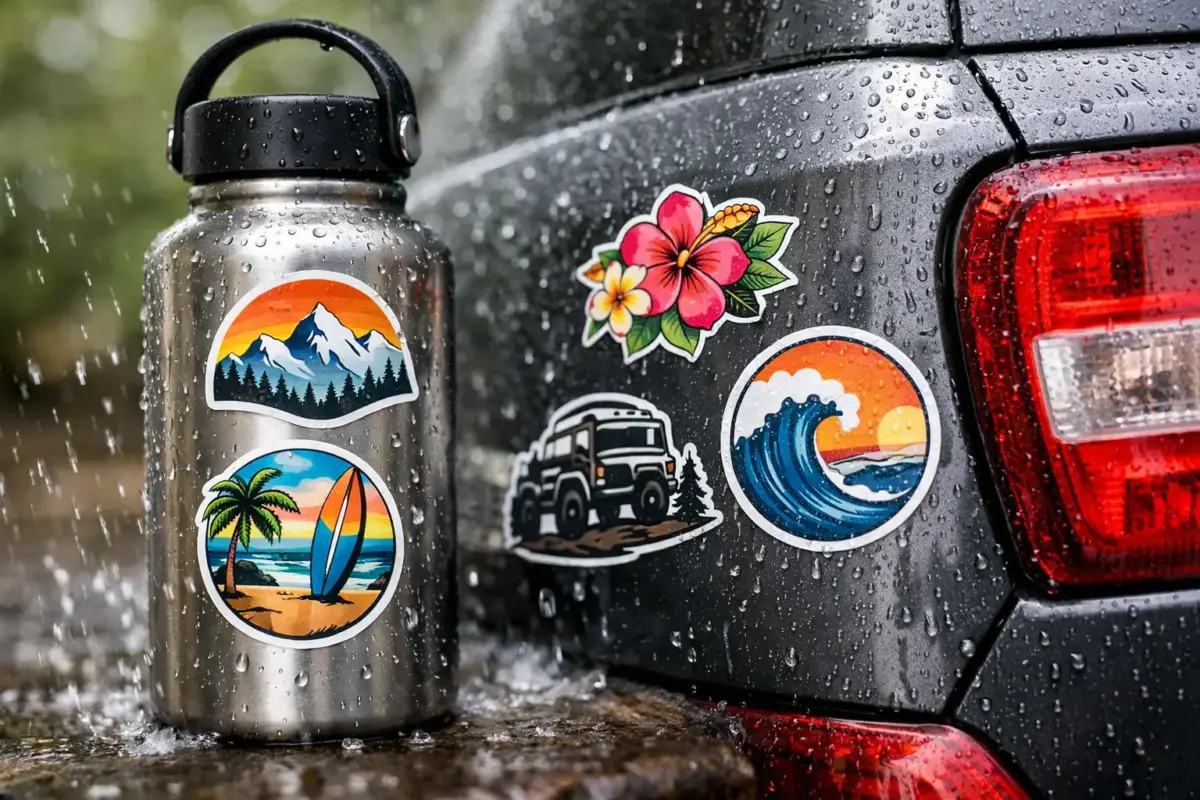
A sticker on a shop window, site board or work vehicle has a job to do long after it leaves the printer. So, are vinyl stickers waterproof? In most cases, yes: properly produced vinyl stickers are water-resistant and suitable for wet conditions. However, their real outdoor performance depends on the vinyl, print method, adhesive, protective finish and the surface they are applied to.
For businesses, that distinction matters. A sticker that survives rain but lifts at the corners after a fortnight is not fit for purpose. Choosing the right specification from the outset helps keep branding, instructions and safety information clear for longer.
Are vinyl stickers waterproof for outdoor use?
Vinyl itself is a plastic material, so it does not absorb water in the way paper labels do. A vinyl sticker can therefore cope with rain, splashes, damp conditions and regular cleaning far better than an unprotected paper alternative.
That does not mean every vinyl sticker is identical. Some are designed mainly for short-term indoor use, while others use durable outdoor-grade adhesive and inks intended to withstand weathering. If a sticker needs to stay on a van, external bin, entrance door, window, equipment case or outdoor sign, specify its intended use when ordering.
Waterproof also should not be confused with permanently weatherproof. Constant exposure to sunlight, road grime, cleaning chemicals, frost and abrasion will eventually affect any printed product. The aim is to select a vinyl and finish with a lifespan that suits the job, rather than expecting one product to cover every application.
What makes a vinyl sticker weather-resistant?
A good outdoor sticker is a combination of materials, not simply a printed piece of vinyl. The face film needs to resist moisture, but the adhesive must also maintain its bond when temperatures change or water reaches the edges. The print needs protection from fading and scuffing as well.
The vinyl film
Self-adhesive vinyl is commonly used because it is flexible, clean-cut and resistant to moisture. White vinyl provides a solid background for logos, text and graphics, while clear vinyl can work well on glass where the surface remains part of the design.
The thickness and quality of the film can affect handling and durability. Thinner vinyl can be useful for smooth, flat applications, whereas more substantial material may give a better result where a sticker receives frequent handling. The best choice depends on where it will be fitted and how long it is expected to remain in place.
The adhesive
Adhesive is often the deciding factor in whether a sticker stays put. Permanent adhesive is suited to long-term labels, vehicle graphics, outdoor notices and product identification. Removable adhesive can be useful for temporary promotions or event information, but it is not usually the first choice for a demanding external application.
A strong adhesive still needs a suitable surface. Vinyl generally bonds best to smooth, clean, non-porous materials such as glass, painted metal, sealed plastic and smooth panels. It is less reliable on rough timber, dusty masonry, flaky paint, silicone-treated surfaces and low-energy plastics. Water can exploit poor contact at the edges, which is why application is as important as the sticker itself.
The print and protective laminate
Printed vinyl can be finished with a clear laminate for added protection. This acts as a barrier against moisture, scratches, dirt and everyday wear, while helping colours remain clearer outdoors. It is particularly worthwhile for stickers used on vehicles, machinery, outdoor equipment or areas that are cleaned regularly.
A laminate is not always necessary. A short-term window promotion under cover may not need the same level of protection as a logo applied to a busy delivery vehicle. Adding a protective layer is a practical investment where replacement would be inconvenient, costly or disruptive.
Rain is not the only test
British weather makes rain an obvious concern, but sunlight can be just as hard on outdoor stickers. Ultraviolet exposure gradually fades inks, especially on south-facing surfaces that receive strong daylight for much of the year. A laminated, outdoor-rated printed vinyl is better suited to these conditions than a basic short-term product.
Temperature also affects performance. In cold weather, adhesive can become less willing to bond during fitting. In very warm conditions, the vinyl may soften slightly and conform more readily, but the surface still needs to be clean and dry. Large swings between winter frost and summer heat put pressure on the adhesive over time.
Then there is physical wear. Stickers on wheelie bins, toolboxes, plant equipment and vehicle doors face knocks, fingernails, brushes, grit and frequent washing. For these uses, choose a durable finish rather than basing the decision on waterproofing alone.
How to apply vinyl stickers so water stays out
Even high-quality vinyl can fail early if it is applied over grease, moisture or dust. Preparation takes only a few minutes and makes a clear difference to adhesion.
Clean the application area with a suitable non-residue cleaner, then allow it to dry fully. Avoid household products that leave a polish or oily film behind. The surface should be smooth, sound and above the recommended application temperature. If paint is peeling or the panel is heavily textured, the sticker may not achieve a dependable bond.
Apply the sticker carefully from one edge, pressing it down as you go to avoid trapped air. Pay particular attention to the perimeter. Firm, even pressure around each edge reduces the chance of water getting beneath the vinyl. On larger decals, using a squeegee helps produce a neater, more consistent finish.
Once fitted, allow the adhesive time to settle before exposing the sticker to heavy rain, washing or harsh conditions. Avoid fitting during rainfall or onto a cold, damp vehicle panel. If a vehicle has just been cleaned, make sure the area is fully dry and free from cleaning residue first.
When vinyl stickers may not be the right answer
Vinyl stickers are highly versatile, but they are not the best solution for every surface. On heavily textured brickwork, untreated timber, rough concrete or surfaces that are constantly wet, a rigid sign or another fixing method may offer a more reliable result.
They may also be unsuitable where the sticker will encounter aggressive solvents, fuel, industrial chemicals or repeated high-pressure cleaning. In these cases, explain the conditions before production so the material can be matched to the task. A standard sticker can be cost-effective, but only if its expected working environment is realistic.
For safety information, consider legibility alongside durability. Small text may remain technically attached yet become difficult to read if it is placed on a worn, dirty or highly exposed surface. Use clear contrast, an appropriate size and a finish that supports the required lifespan.
Choosing the right vinyl sticker for the job
Start with three questions: where will it be applied, how long does it need to last, and what will it come into contact with? A temporary café window offer, an indoor stock label and external vehicle branding all need different levels of material performance.
For outdoor labels and branding, ask for vinyl intended for external use and consider a laminated finish where the sticker will receive frequent handling, washing or sun exposure. For indoor or short-term campaigns, a simpler option may be perfectly adequate and more economical. Supplying accurate artwork and dimensions also helps ensure text, logos and cut lines are produced cleanly.
If you are unsure, it is better to describe the surface and conditions before ordering than to choose solely on price. The SignBuilder can help customers select a practical vinyl sticker specification for straightforward labels, promotional graphics and more demanding commercial applications.
A waterproof vinyl sticker should give you confidence in wet weather, but long-term results come from matching the material to the location and fitting it properly. Choose for the real conditions it will face, and your message will stay visible when it matters.