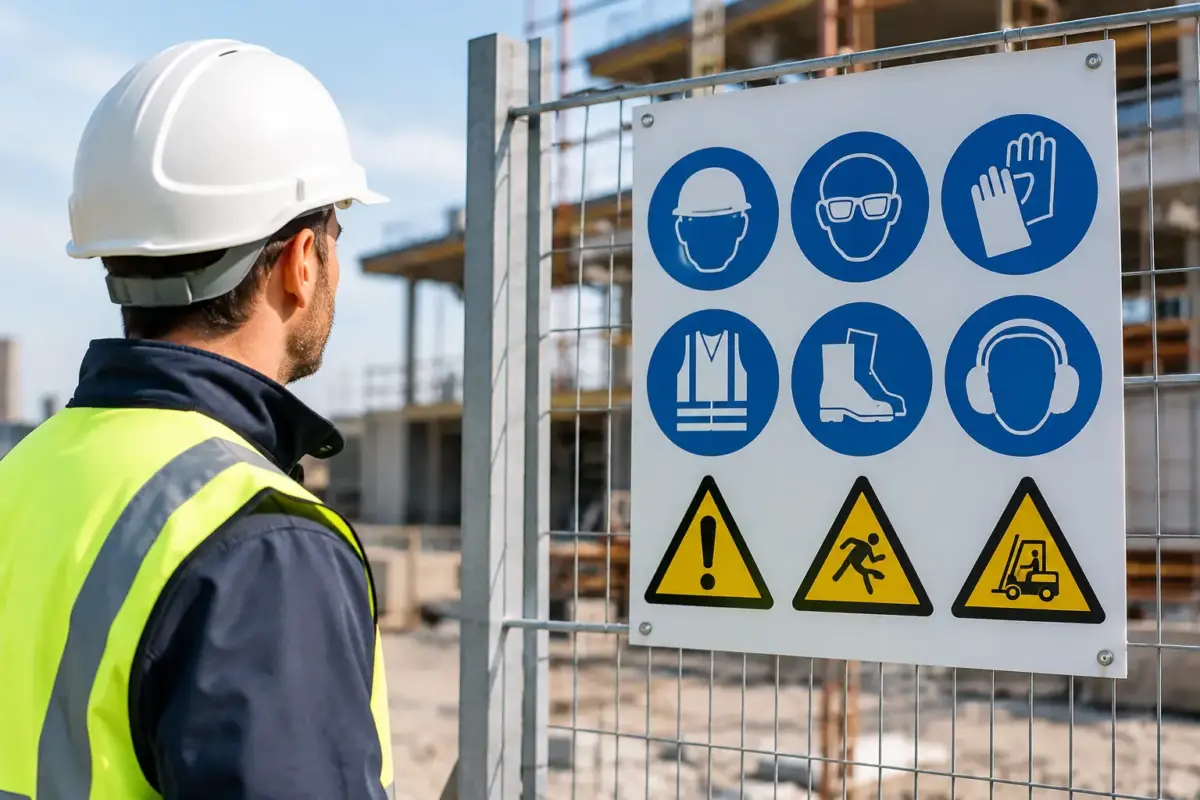
A missing sign can create confusion in seconds: a visitor enters through the wrong gate, a delivery driver parks beside a loading area, or a worker reaches a hazard without the instruction they need. So, what are mandatory site signs? In practical terms, they are the signs a site needs to communicate safety instructions, identify particular hazards, control access and meet applicable legal duties.
The exact signs required will vary. There is no single shopping list that applies to every workplace, yard, retail unit or construction project. The right selection comes from the risks on site, the work taking place, who may enter and whether other controls are already sufficient. Signs support safe working – they do not replace training, supervision, barriers or proper procedures.
What are mandatory site signs in practice?
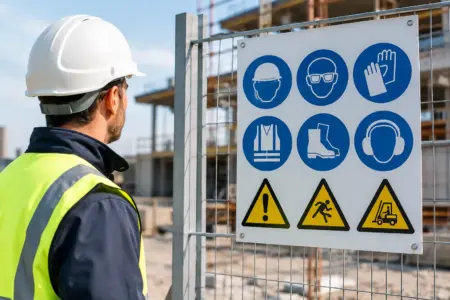
The phrase can mean two slightly different things. A mandatory safety sign is a blue circular sign that tells people what they must do, such as wear eye protection, safety footwear or a hard hat. A mandatory site sign, more broadly, can include any notice that a business is required to display or needs to display to manage a known risk.
For UK workplaces, safety signs are generally considered under the Health and Safety (Safety Signs and Signals) Regulations 1996. Employers must use safety signs where a significant risk remains after other control measures have been considered. The sign must be clear, appropriate for the risk and placed where people can see it in time to act.
That means a generic pack may be a useful starting point, but it is not a substitute for checking the site. A small office with a restricted plant room has very different requirements from a busy building project, warehouse, school or hospitality venue.
The main types of site safety signs
Safety signs use established colours and shapes so that people can recognise the message quickly. Keeping to these conventions matters, particularly where visitors, contractors or agency staff may be unfamiliar with the premises.
Mandatory instruction signs
These are usually blue circles with a white symbol. They give a direct instruction that must be followed before entering an area or carrying out an activity. Common examples include:
- Hard hats must be worn
- High-visibility clothing must be worn
- Safety boots must be worn
- Eye protection must be worn
- Hearing protection must be worn
- Hand protection must be worn
Use mandatory PPE signs at the entrance to the relevant work area, not just at the main gate. If eye protection is required only in a cutting zone, for example, the instruction should be displayed before people enter that zone. Overusing PPE signs across areas where they are not needed can make people less likely to notice the instructions that matter.
Prohibition signs
A red circle with a diagonal bar tells people what they must not do. No smoking, no unauthorised access, no mobile phones and no pedestrian access are familiar examples. These signs are often essential where an action could create a serious hazard, disrupt operations or breach site rules.
A prohibition sign works best when it is specific. “No unauthorised persons” at a secure compound entrance is clearer than a vague warning notice. Where appropriate, pair it with a directional sign explaining where visitors should report.
Warning signs
Warning signs are typically yellow triangles with a black border. They highlight a hazard such as forklift lorries, overhead loads, electricity, slippery surfaces, deep water or asbestos. They warn people to take care, but do not tell them exactly what action to take.
For that reason, warning signs are often used alongside mandatory or prohibition signs. A warehouse doorway might need a warning for forklift traffic, a marked pedestrian route and a speed limit or stop instruction. The combination should make the safe route obvious rather than leave people to interpret the risk for themselves.
Safe condition and emergency signs
Green signs identify escape routes, emergency exits, first aid points, emergency showers and assembly points. These are particularly important because people may need to act quickly in poor visibility or under stress.
Escape route signs must reflect the actual layout of the building and lead people to a place of safety. Check them after internal alterations, shelving changes or temporary partitions. A sign pointing through a locked door or into a storage area is worse than no sign at all.
Fire safety signs
Fire action notices, fire door notices, extinguisher identification signs and evacuation information are common across commercial premises. The detail needed depends on the building’s fire risk assessment and emergency plan.
For example, a “Fire door keep shut” sign helps protect a fire compartment only if the door is actually kept clear and closes properly. Signs should sit alongside routine checks, staff instruction and sensible housekeeping.
Construction site signs: what is commonly required?
Construction sites need clear controls because conditions change frequently and there may be several trades, deliveries and visitors on site. The Construction (Design and Management) Regulations 2015 place duties on those planning and managing construction work, while the signs used should reflect the project’s risk assessment and site rules.
At a typical entrance, a site may need to show who is in control, how visitors report, what PPE is required and which access restrictions apply. Depending on the project, this could include a site safety board, visitor reporting instructions, hard hat and boot requirements, no unauthorised entry, delivery directions and speed limits.
Projects that are notifiable to the Health and Safety Executive require a notification displayed where it can be read by anyone working on the site. This is commonly known as the F10 notice. Whether a project is notifiable depends on its duration and workforce levels, so check the current criteria rather than assuming every project needs one.
Other signs may be required as the work develops. Excavations need suitable barriers and warnings. Areas below lifting operations may need restricted access notices. Temporary traffic routes need clear pedestrian and vehicle separation. If hazardous substances, electrical works or demolition activities are involved, signs should be reviewed as part of the changing site controls.
Other notices your site may need
Not every required sign uses the standard blue, red, yellow or green safety format. A well-run site may also need operational, legal and information notices.
Parking control signs can set out permit rules, disabled bay use, delivery restrictions and private land terms. If you use parking enforcement arrangements, the wording, visibility and positioning must be suitable for the system in place. A small notice hidden behind a hedge will not do the job.
CCTV signage is needed where cameras operate, so people know they are being recorded and who is responsible for the system. Retailers and public-facing venues may also need notices relating to age-restricted sales, toilets, customer access, cash handling or queue management.
Workplaces should also display the approved health and safety law poster or provide employees with the equivalent approved leaflet. This is separate from hazard signage. Keep it somewhere staff can reasonably access, such as a break room, office or staff noticeboard.
How to choose and position the right signs
Start with the risk assessment. Identify the hazard, decide what physical and procedural controls are needed, then establish whether a sign is necessary to reinforce the message. If a risk can be removed or guarded against, that is usually stronger than relying on a warning alone.
Choose a sign size that can be read from the expected viewing distance. A small rigid sign may suit a plant room door, while a large correx board, aluminium composite panel or banner may be more appropriate for a site entrance or vehicle route. For outdoor use, consider weather resistance, fixing method and how often the information is likely to change.
Positioning is just as important as the design. Put signs at decision points: before a person enters a restricted area, before a vehicle reaches a turn, or beside the equipment that creates the risk. Do not place several unrelated messages in one overcrowded panel. When every surface is covered, the most urgent instruction gets lost.
Use clear symbols and concise wording. Where a site has workers or visitors who may not read English confidently, recognised pictograms are especially useful. For bespoke site boards, keep the hierarchy simple: immediate instruction first, supporting detail second, contact information last.
Keep signs current and in good condition
Site signage needs regular checks. Faded print, damaged corners, blocked views and outdated instructions all reduce its value. This is particularly relevant on construction projects, event sites and seasonal premises, where layouts and hazards can change quickly.
Review signs after an incident, a change in process, new equipment, altered traffic routes or a refurbishment. Remove signs that no longer apply. An old “hard hats must be worn” notice left on a completed work area can undermine confidence in the rest of the site rules.
For businesses ordering a mix of standard safety signs and custom boards, consistency helps. Matching colours, readable type, suitable materials and clear layout make a site easier to navigate and easier to manage. The SignBuilder can produce standard safety signage alongside personalised site boards, access notices, parking signs and directional panels where your requirements call for them.
The most useful site signs do one job clearly: they give the right person the right instruction before a mistake becomes an incident. Build your sign schedule around real risks, keep it updated, and make every message easy to see and act on.