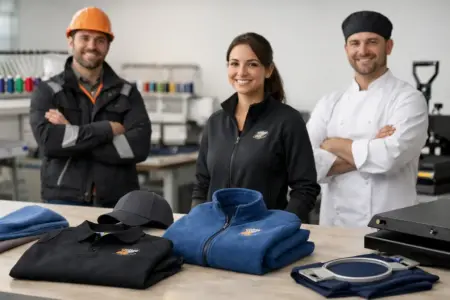
A logo on a basic polo shirt is easy to order. Supplying a team with garments they will wear comfortably, represent your business well and rely on through a working week takes more thought. This guide to personalised workwear covers the decisions that make the difference, from choosing the right garments to preparing artwork that prints clearly.
For trades, retail teams, hospitality venues, event crews and site-based businesses, workwear has a practical job to do. It should help staff look recognisable, suit the conditions they work in and stand up to regular washing. The right choice also makes future orders simpler, because you have an agreed standard for new starters and replacements.
Start with the job, not the logo
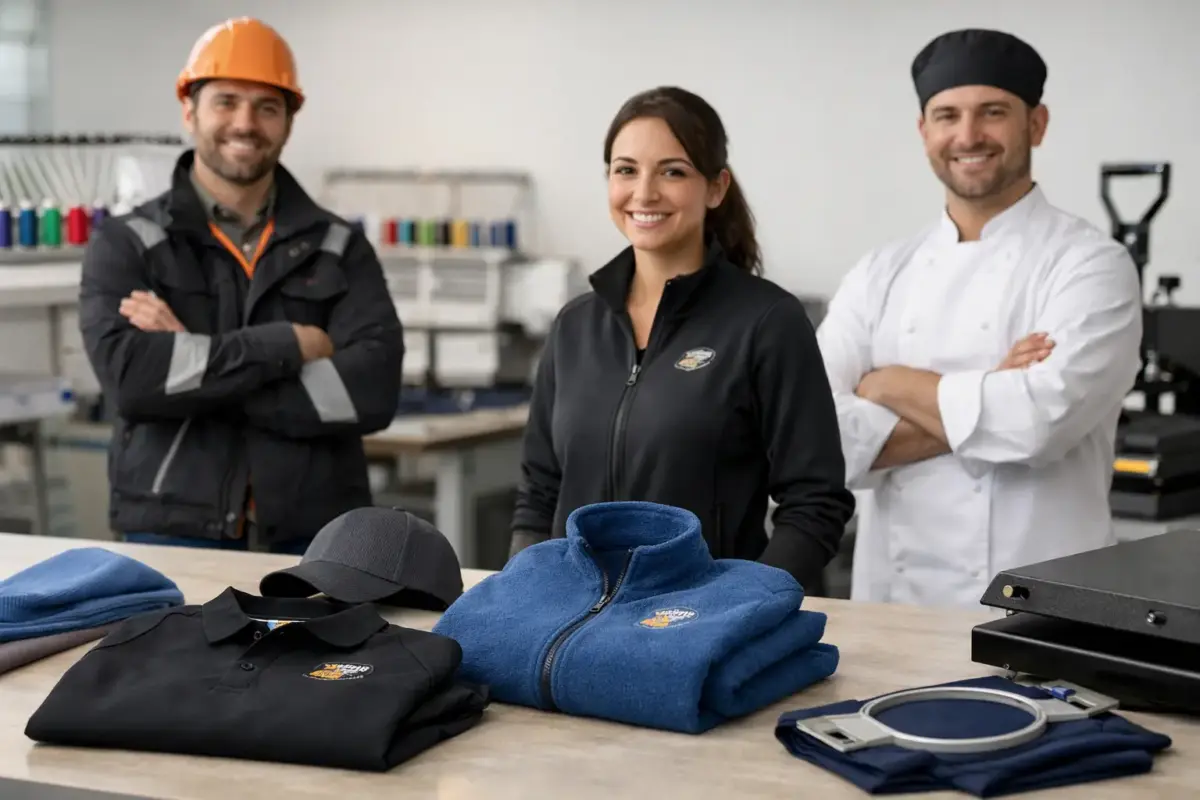
The best garment depends on where and how it will be used. A smart front-of-house team may need lightweight polos, shirts or fleeces that present well indoors. A landscaping, construction or delivery team may need harder-wearing layers that cope with outdoor work, movement and changing weather. Event staff often benefit from simple, visible T-shirts, hoodies or jackets that make them easy to identify quickly.
Think about a normal shift. Is the wearer active, outdoors, customer-facing, working around machinery or moving between warm and cold areas? A garment that looks right on a product page can still be the wrong choice if it is too heavy for a kitchen, too light for a winter site or too restrictive for physical work.
It is usually better to build a small, useful range than to force one item to cover every role. For example, a branded polo may work for everyday customer contact, while a sweatshirt or jacket gives the same team a practical extra layer. Keeping colours and logo placement consistent means the garments still look like one uniform.
Choose garments that will earn their keep
Price matters, particularly when ordering for a larger team, but the cheapest option is not always the most cost-effective. If a garment loses shape quickly, feels uncomfortable or fails to suit the job, it is more likely to be left in a locker than worn on site. That weakens both the value of the purchase and the visibility of your brand.
Check the fabric weight, fit, care guidance and available sizes before ordering. Heavier fabrics can be a sensible choice for demanding work, while lighter options may be more comfortable for active indoor roles or summer events. Consider whether staff need pockets, a collar, a full zip, a hood or high visibility features. These details affect how useful the garment is day to day.
Colour deserves practical attention too. Black, navy and darker greys tend to hide everyday marks and provide a strong background for many logos. Brighter colours can improve visibility and help staff stand out at events or in busy public areas. White can look clean and sharp, but it may be less suitable for messy environments. Your existing signs, vehicle graphics and marketing materials can help guide the choice so everything looks consistent.
Keep sizing straightforward
Workwear is often ordered by one person and worn by many, so sizing needs to be managed carefully. Do not assume that a standard size will fit the same across every garment range. Where possible, use garment size guides and give staff enough time to confirm their preferred size before placing a full order.
For regular teams, keep a record of the garment style, colour, size and print position for each person. This makes replacement orders faster and avoids the common problem of buying a similar-looking item that does not match the original uniform.
Plan your logo placement for real use
A logo should be easy to see without overwhelming the garment. The left chest remains a popular position for a reason: it looks professional, works well on polos, T-shirts, sweatshirts and jackets, and suits most business logos. A larger print on the back can add visibility for staff who work outdoors, attend events or spend time around customers.
The right layout depends on the design itself. A wide company name may suit the back better than a small chest area. A compact emblem can work well on the front, with contact details or a service line on the reverse. Avoid trying to fit too much information onto clothing. A phone number, website address and several service messages may be readable on a large banner, but on a moving garment they can become cluttered.
Before approving artwork, consider where seams, zips, pockets and hoods sit. These can limit the printable area or interrupt fine detail. A practical print layout takes the garment construction into account rather than treating every item as a flat surface.
Use artwork that is ready to print
Clear artwork produces clearer workwear. A high-resolution file or properly prepared vector artwork gives the best starting point, especially for logos with fine lines, small lettering or defined brand colours. Screenshots, low-resolution images and artwork copied from social media may look acceptable on a phone but can lose sharpness when enlarged for print.
Keep small text to a sensible size. If it cannot be read at arm’s length on screen, it is unlikely to be effective on a garment. It is also worth checking that the logo colour contrasts with the garment. Dark artwork on a navy top, for example, may disappear from a few steps away.
If you are not confident about the file, use an artwork-checking service or request design help before production. Resolving a problem at the artwork stage is far easier than discovering it after a full team order has been printed.
Match the print to the garment and order
There is no single print approach that suits every job. The right option depends on the artwork, the material, the number of colours, the quantity required and how the garment will be used. A simple one-colour logo for a larger staff order may call for a different production method from a full-colour design for a small promotional run.
This is where it helps to share the full requirement rather than only sending a logo. State the garment type, quantity, colours, print positions and deadline. If you need names, job roles or individual numbering, make this clear from the start. Personalisation adds useful detail, but it also requires accurate spelling and a final approved list before production begins.
For workwear that will be washed often, follow the supplied care instructions. Washing at an appropriate temperature, turning printed garments inside out where advised and avoiding unnecessarily harsh drying can help preserve the print and garment for longer. Practical care guidance is part of getting proper value from your order.
Build a uniform system you can reorder
A workwear order becomes easier to manage when it is treated as a repeatable system, not a one-off purchase. Decide which garment styles are approved for each role, what colours are used and where the logo sits. Keep the final artwork file and the order details together.
A simple internal record should include:
- garment brand, style and colour
- print locations and approved artwork version
- staff sizes and any individual personalisation
- the date and quantity of the last order
This is especially useful for growing businesses, seasonal staff and organisations with more than one location. It lets you order a few replacement items without changing the look of the whole team. It also makes it easier to keep workwear aligned with your wider visual identity across signs, vehicles and promotional products.
Order with the deadline in mind
Workwear is often needed for a reason: a new contract, staff induction, trade event, opening day or seasonal rush. Leave enough time for artwork approval, garment availability, production and delivery, especially when an order includes multiple sizes, styles or personalised names.
Check stock before committing to a specific garment if your deadline is tight. Having one preferred option and one acceptable alternative can prevent a short delay from holding up the whole order. For larger or ongoing requirements, ordering a small number of spare standard garments can also save time when a new starter joins unexpectedly.
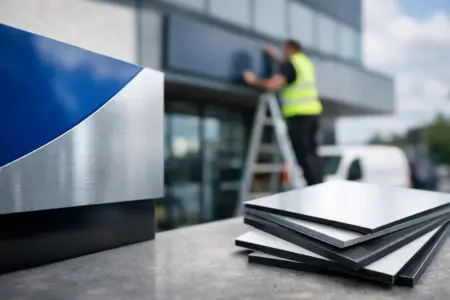
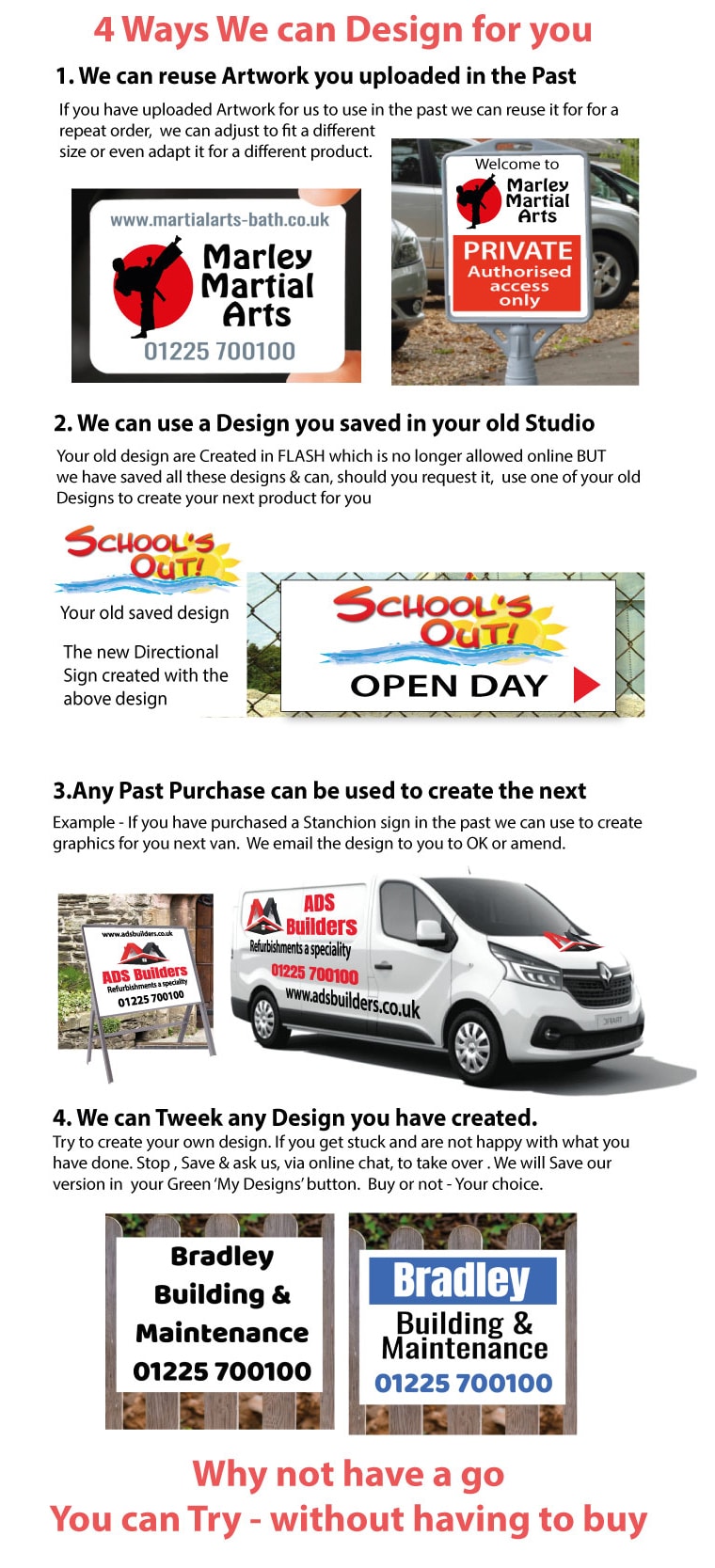
The SignBuilder can help businesses bring printed workwear, site signage, vehicle graphics and promotional products into one consistent ordering plan. Whether you design online, upload approved artwork or ask for help with the layout, the aim should be simple: garments that are practical for the people wearing them and recognisable to the people seeing them.
Good personalised workwear does not need to be complicated. Choose garments for the job, keep the branding clear and record what works. That gives your team a professional standard they can put on every morning, and gives you a reliable way to keep it going as the business grows.