A missing fire exit sign, a faded forklift warning or an unreadable mandatory notice can create confusion at exactly the wrong moment. Health and safety signage UK businesses use should make the safe action clear before someone has to ask, guess or take a risk.
For a busy site, signage is not decoration and it is not a box-ticking exercise. It is a practical control measure that supports staff, visitors, contractors and customers. The right sign needs to be recognisable at a glance, positioned where the decision is made and built to cope with its environment.
When health and safety signage is needed
Under the Health and Safety (Safety Signs and Signals) Regulations 1996, safety signs must be used where a significant risk remains after other suitable controls have been considered. A sign should not be used instead of fixing a hazard where it is reasonably practicable to do so. For example, a slippery entrance needs suitable flooring, cleaning procedures and prompt spill control. A wet floor sign can support those measures, but it cannot replace them.
That distinction matters when reviewing a workplace. Start with the risk assessment and look at the points where people need direction, warning or instruction. This may include fire routes, first aid equipment, restricted areas, vehicle movements, electrical hazards, chemical storage, construction activity and required personal protective equipment.
A sign is particularly useful when people are unfamiliar with the site. Delivery drivers, agency staff, visiting engineers and event attendees do not have the benefit of local knowledge. Clear visual instructions reduce the time spent explaining the same rules and help maintain a consistent standard across shifts.
The four main safety sign categories
Most workplace signs follow standard colours and shapes so their message can be understood quickly. Using the correct category is essential. A custom design can still be useful for site-specific instructions, but it should not blur the established visual meaning of safety signage.
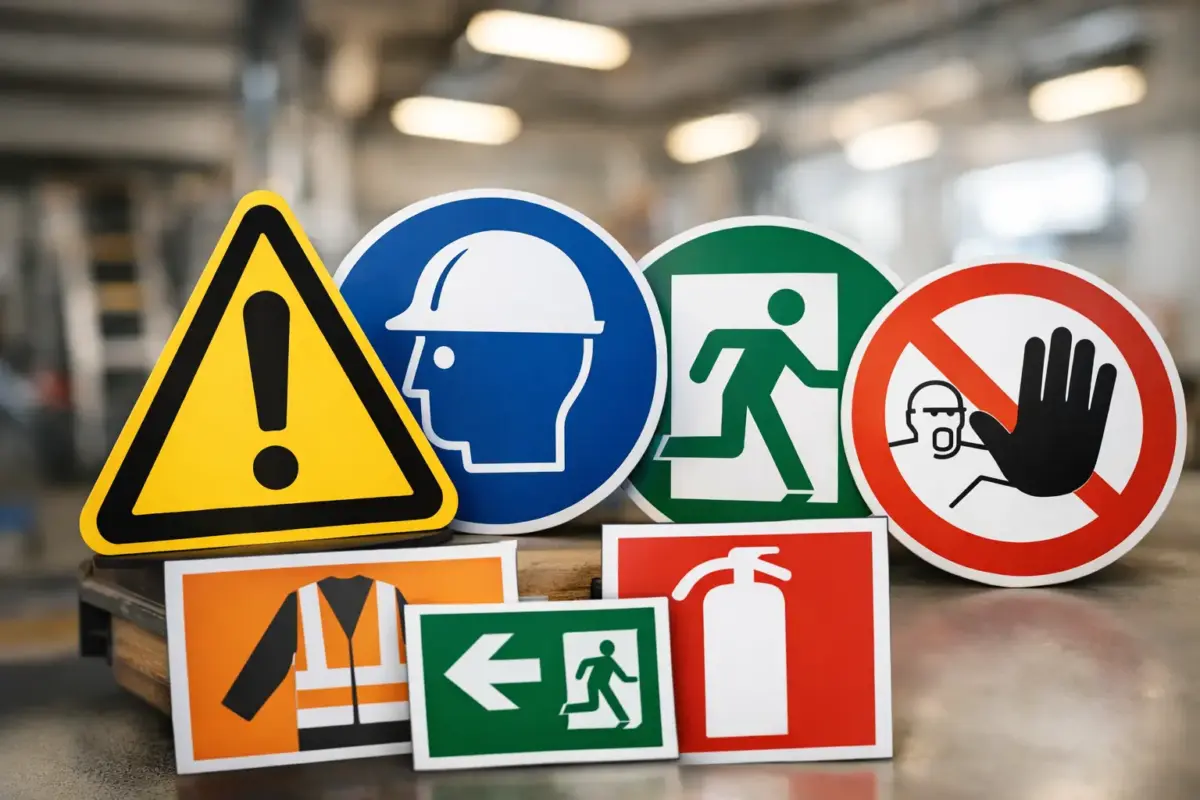
- Prohibition signs are circular, with a red border and diagonal bar. They indicate an action that must not be taken, such as No Smoking, No Entry or No Unauthorised Persons.
- Warning signs are triangular with a yellow background and black symbol. They alert people to a hazard, including Forklift Lorries, High Voltage, Slippery Surface and Fragile Roof.
- Mandatory signs are blue and circular. They state an action that must be followed, such as Wear Eye Protection, Safety Footwear Must Be Worn or Keep Fire Door Shut.
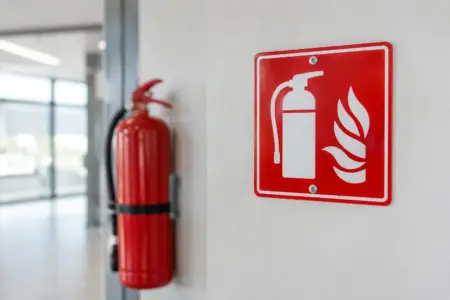
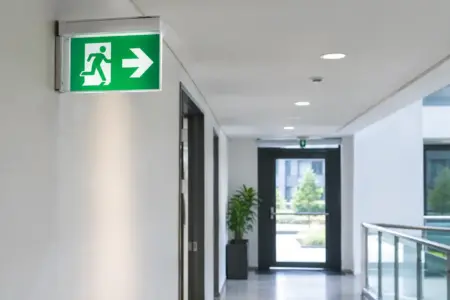
- Safe condition and fire equipment signs are generally green or red respectively. Green signs direct people to a safe route, emergency exit, first aid point or assembly point. Red signs identify fire alarms, extinguishers and other fire-fighting equipment.
Supplementary text can make a sign more useful, especially on a complex site. The symbol should remain the first visual cue, with wording that adds a clear instruction rather than a lengthy explanation. “Forklift route – pedestrians use marked walkway” is more effective than a paragraph of rules at a warehouse entrance.
Choose signs around real site behaviour
The most useful health and safety signage UK sites install is based on what people actually do, not a generic bundle alone. Ready-made signs provide a fast starting point, but a walk-through often identifies where tailored wording, additional arrows or larger sizes are required.
Think about the journey through the premises. At the entrance, visitors may need to report to reception, wear specified PPE or observe traffic restrictions. In the car park and yard, signs may need to separate pedestrians from delivery vehicles, show speed limits and identify designated loading areas. Inside, the priorities change to fire evacuation, first aid, machinery hazards and restricted access.
In a retail setting, this could mean a clear staff-only notice on stockroom doors, temporary cleaning warnings and visible fire exit signs that are not obscured by displays. For trades and construction work, durable site notices can identify hard-hat areas, welfare facilities, emergency contacts and changing conditions. In hospitality, staff may need clear kitchen safety instructions, while customers need easily understood emergency route information.
Avoid the temptation to place every possible warning at one gate or noticeboard. A crowded board is often ignored. Put the instruction close to the hazard or action point: hearing protection before the noisy work area, hand-washing reminders at the wash station and a warning about overhead work before someone enters the zone.
Make viewing distance part of the specification
Sign size is not simply a matter of choosing the largest option. It depends on viewing distance, lighting, speed of movement and the amount of information shown. A small door sign can work at arm’s length, while a warehouse aisle sign needs to be read from much further away. Vehicle routes and outdoor yards usually need larger formats because people may be moving quickly or looking through windscreens.
Mounting height matters too. Signs should sit within the normal line of sight and remain visible when doors are open, stock is stacked or vehicles are parked. Where a route turns or splits, repeat directional signs rather than assuming the first one will be remembered.
Select a material that suits the environment
A sign that curls, fades or comes loose is not doing its job. Material choice should reflect whether the sign is used indoors, outside, temporarily or in an area exposed to regular cleaning, moisture and impact.
Self-adhesive vinyl is a practical choice for smooth, clean surfaces such as internal doors, cabinets and equipment. It offers a neat, low-profile finish, but it needs a properly prepared surface and is not always suitable for rough walls or locations where it will be repeatedly knocked.
Rigid plastic signs suit many indoor and outdoor applications. They are lightweight, economical and easy to fix to walls, fences and posts. For demanding external locations, an aluminium composite sign can offer a more durable, rigid option. It is often a sensible choice for car parks, site entrances, yards and long-term notices.
Temporary hazards need temporary solutions. Floor signs, cones, portable boards and short-term notices can be useful during cleaning, maintenance or events. The trade-off is that temporary signs need active management. They should be placed promptly, remain stable and be removed once the hazard no longer exists. Leaving old notices in place teaches people to ignore them.
Consider fixing and surface preparation
The most accurate sign is ineffective if it falls down. Check whether the surface is flat, clean and suitable for adhesive, or whether drilled fixings, cable ties or another method are needed. For external signs, allow for wind exposure and make sure edges and corners are securely fixed.
Before ordering, measure the available space and check for obstructions. A sign positioned behind a permanently open door, a pallet stack or a promotional display is easily missed. Taking a few site photographs and measurements before choosing a product prevents unnecessary reorders.
Keep emergency information current
Fire exit signs, assembly point markers, first aid notices and emergency contact information should be reviewed whenever the building layout, occupancy or procedures change. A refurbishment, relocated first aid kit or altered traffic route can make an existing sign inaccurate overnight.
The same applies to temporary changes. If a normal fire exit is unavailable during works, the alternative route must be clear and appropriate notices must be in place. Do not rely on verbal updates alone, particularly where different teams, visitors or contractors are using the premises.
A scheduled inspection is the simplest way to keep control. Walk the site at regular intervals and check that signs are visible, clean, legible, relevant and securely fixed. Include it in induction feedback too. If new starters regularly ask where to go or what PPE is required, the signage may need improving.
Ordering custom safety signs without delay
Standard signs cover many common requirements, but bespoke signs are useful where your site needs a particular location name, directional arrow, access instruction, contact number or combination of messages. Keep the wording brief and practical. State the action, identify the area and use recognised symbols where appropriate.
A production-ready order is easier when you have the sign size, material, quantity, fixing method and artwork route agreed in advance. You may design online, upload supplied artwork or ask for a layout to be prepared from your wording. For repeat locations, keeping approved artwork on file also helps maintain consistent signs across multiple sites.
The SignBuilder can produce both familiar compliance signs and custom site notices, giving businesses a straightforward way to match safety information to the job at hand. Start with the hazard, the people who will see it and the conditions it must withstand – then choose signage that stays clear when it matters.