A magnetic sign that is fitted properly can turn a working vehicle into clear, removable advertising in a matter of minutes. Get the fitting wrong, however, and dirt can mark the paintwork, edges can lift or the sign may not stay in place at road speed. Knowing how to fit car magnets correctly is therefore as much about preparation as it is about positioning.
Car magnets are a practical choice for tradespeople, mobile businesses and organisations that use personal, hired or multi-purpose vehicles. They allow you to display a business name, contact details or temporary message without a permanent application. The key is to use them only on suitable vehicle panels and to keep both the magnet and paint surface clean.
Check that your vehicle is suitable for magnetic signs
Before applying anything, test the intended area with a small ordinary magnet. Magnetic vehicle signs need a flat or gently curved panel made from ferrous metal, usually steel. Many newer cars, vans and pickups use aluminium, plastic or composite panels in places where you might expect steel, particularly on doors, bonnets and tailgates.
If the test magnet does not hold firmly across the full area, do not fit a vehicle magnet there. A sign that attaches only partly, or bridges a non-magnetic section, is not secure. It may move in the wind and could come away while driving.
Avoid fitting magnets over sharp body lines, pronounced curves, decorative mouldings, handles, fuel flaps, panel gaps or damaged paintwork. A smooth, uninterrupted section of the door is usually the best position. On a van, the central area of a flat side panel often offers the clearest and most secure placement.
It is also worth considering the size of the sign against the panel. Larger magnets create more wind resistance and need more surface contact. A sign should sit fully on the metal panel, with no corners or edges extending beyond it.
Prepare the panel and magnet before fitting
Cleanliness is not optional. Fine grit, road salt, dust and moisture trapped behind a magnetic sign can rub against the paintwork as the vehicle moves. Over time, this can leave dull patches or light scratches. The risk is greater on vehicles used daily on building sites, rural routes or wet roads.
Wash the fitting area with clean water and a mild vehicle shampoo, then dry it thoroughly with a clean, lint-free cloth. Do not apply a magnet to a wet panel. Moisture behind the sign can affect its hold and encourage dirt to collect.
Wipe the back of the car magnet as well. It should be clean, dry and free from creases, grit or other material. If the sign has been stored rolled up, lay it flat at room temperature until it relaxes fully. Never force a curled magnet onto a vehicle, as raised edges are more likely to lift when travelling.
Freshly painted or newly lacquered vehicles need extra care. Allow the paintwork to cure fully in line with the body shop’s advice before using magnetic signs. Placing a magnet on uncured paint can mark the finish or affect the paint beneath it.
How to fit car magnets step by step
Choose a dry day or fit the sign under cover where possible. Cold, wet or windy conditions make it harder to achieve a clean, flat application.
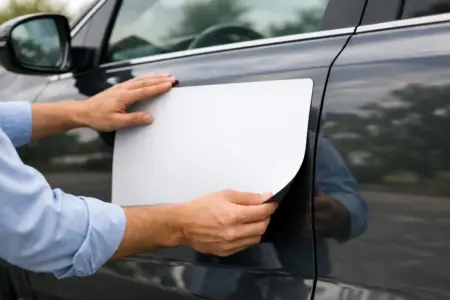
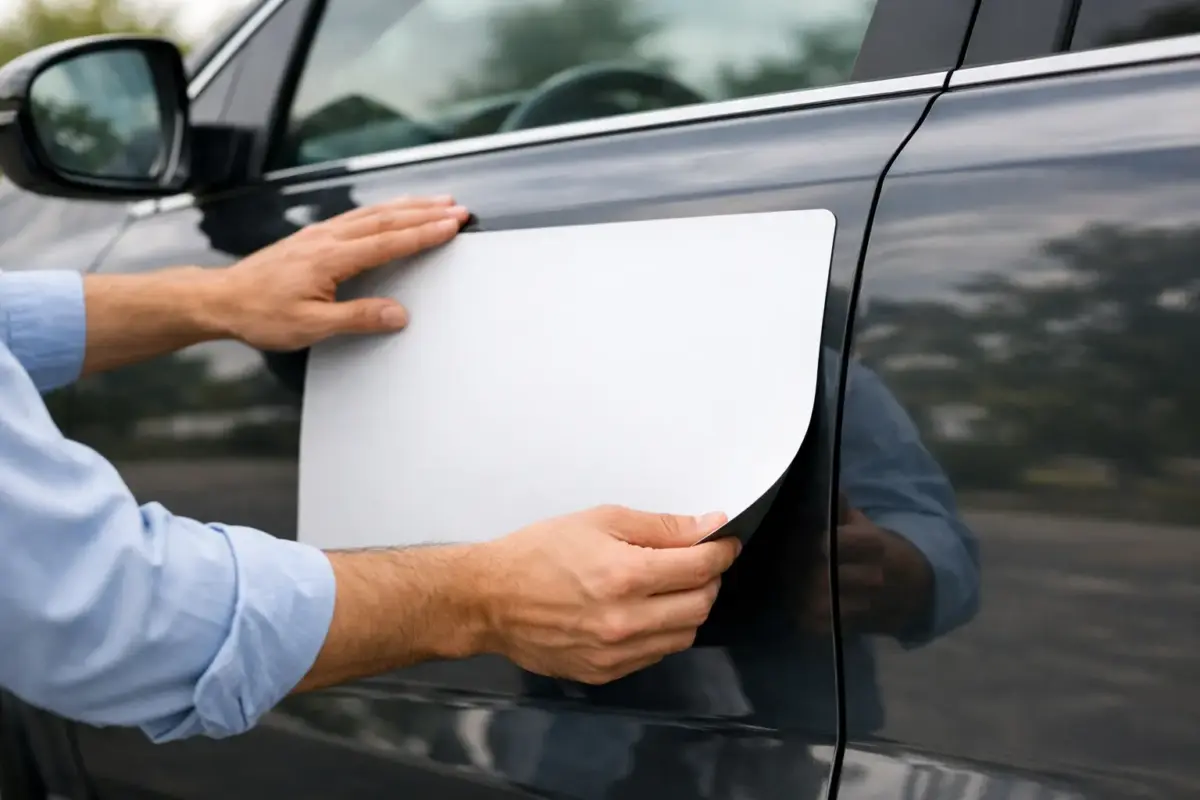
Hold the magnet by its edges and place the top edge against the chosen panel first. Let the sign attach gradually from top to bottom, rather than dropping the whole magnet onto the vehicle at once. This helps prevent trapped air, dust and uneven positioning.
Once it is in place, use the flat of your hand to press across the complete surface, working from the centre out towards the edges. Check every corner carefully. The magnet must lie completely flat, with no bubbles, folds, raised corners or sections sitting across a curve.
Do not slide the magnet across the paintwork to adjust its position. Lift it away fully, reposition it, then apply it again. Sliding can drag trapped grit over the vehicle finish and cause unnecessary marks.
Stand back and check the sign from several metres away. On a business vehicle, consistent placement matters. If you have a pair of door magnets, fit them at the same height on each side where the panel shape allows. Make sure text is level and easy to read, and that the sign does not obstruct windows, lights, number plates, reflectors or any required vehicle markings.
A quick security check before driving
Before setting off, run your hand around each edge. There should be no gap between the magnet and the panel. If a corner lifts easily, remove the sign and inspect the panel, the magnet and the chosen position again.
Do not rely on an apparently strong hold in the driveway. Air pressure increases as speed rises, especially in crosswinds and on exposed roads. A fully flat, clean-fitting sign is the best defence against movement.
Position magnetic signs where customers can read them
The most secure position is not always the most effective for advertising. Aim for a flat steel panel that is also visible when the vehicle is parked or passing through traffic. Side doors are generally the strongest choice because they give your business name and telephone number a broad, eye-level display area.
Keep important information away from door seams and lower sections of the vehicle, where mud and spray can quickly reduce visibility. If your design includes several details, prioritise the business name, service and a simple contact method. Small text may look sharp when viewed close up but be difficult to read from the pavement or another vehicle.
For businesses operating across the UK and Ireland, removable signs can be particularly useful for staff using their own cars for occasional appointments, surveys or events. They can be fitted for work use and removed afterwards, provided the vehicle and the application conditions are suitable.
Remove and clean car magnets regularly
Car magnets are designed to be removable, but they should not be treated as fit-and-forget signage. Take them off regularly to clean behind them and inspect both surfaces. How often depends on how the vehicle is used, where it is parked and the weather conditions it faces. A vehicle used on dusty sites or through winter road grime needs more frequent attention than one kept clean and garaged.
Lift a corner gently and peel the magnet away from the panel. Do not pull it sharply or use tools that could damage the paint. Clean and dry the vehicle area and the magnetic backing before refitting.
If you notice moisture, staining, grit, cracking or any loss of flexibility, stop using the sign until it has been cleaned and checked. A distorted or damaged magnet should be replaced rather than forced back onto the vehicle.
When the signs are not in use, store them flat in a clean, dry place. Do not fold them, leave heavy items on top of them or keep them against a heat source. If space requires them to be rolled, use a wide, loose roll with the printed side facing out, then flatten them before the next use.
Common fitting mistakes to avoid
Most problems come down to unsuitable panels, poor cleaning or rushed application. Fitting over dirt is the most common cause of paintwork marks, while placing a magnet across a curve or panel edge is the usual reason for lifting.
Another mistake is using car magnets on vehicles with recently applied coatings or finishes without checking the supplier’s recommendations. Ceramic coatings, protective films and specialist paint treatments may affect how a magnet sits or how the finish responds beneath it. If you are unsure, test a discreet area and seek advice from the coating provider.
It is also sensible to remove magnetic signs before automatic car washes. Brushes, high-pressure water and cleaning chemicals can catch an edge or force water behind the sign. Remove them before any wash, clean both sides afterwards and refit only when the panel is dry.
Finally, do not cover anything that affects safe driving or legal identification. Your signs must not obscure the driver’s view, vehicle lights, registration plates or any safety information that needs to remain visible. If your work requires specific company details, hazard notices or operator markings, make sure the magnetic sign complements rather than hides them.
A well-made magnetic sign is a simple working tool: clean it, fit it flat, inspect it often and remove it when conditions call for it. That routine protects your vehicle, keeps your message looking professional and helps every journey do useful work for your business.