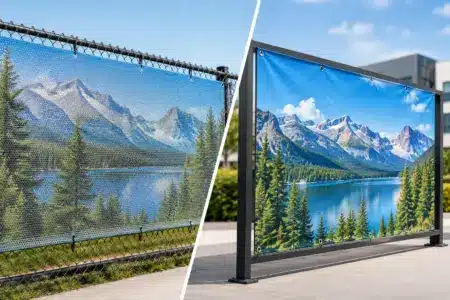
A banner fixed to temporary fencing can quickly become a problem in exposed weather. If the wind cannot pass through it, the material pulls against eyelets, cable ties and the fence itself. That is where the choice between mesh banners vs pvc matters. Both give you large-format, full-colour advertising, but they are built for different conditions.
For a shop front promotion, event backdrop or indoor display, solid PVC often gives the sharper, more solid-looking result. For Heras fencing, scaffold runs and windy sites, mesh is usually the safer and more practical option. The right choice comes down to location, wind exposure, viewing distance and how long the banner needs to stay in place.
Mesh banners vs PVC: the key difference
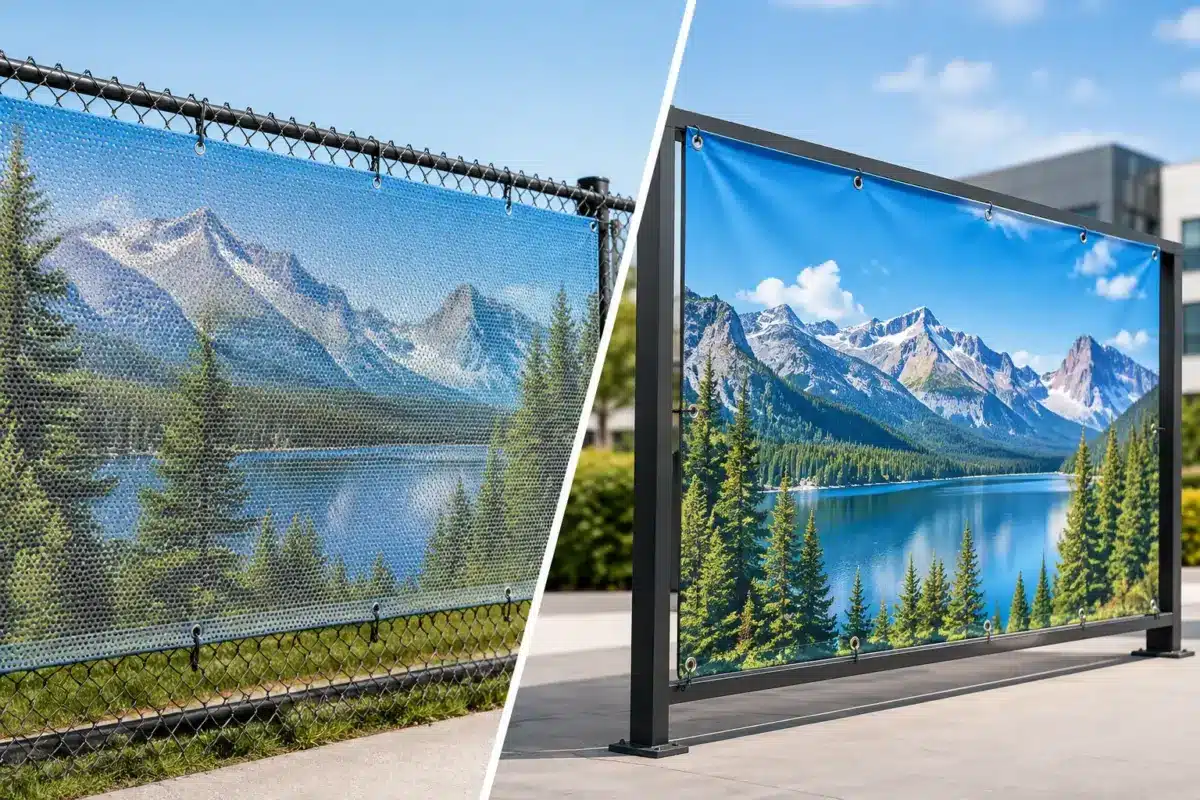
A standard PVC banner is a solid, coated banner material. It provides a continuous printed surface, so colours tend to look stronger and fine text is easier to read from close range. It is a dependable choice for promotional banners, retail messages, sports clubs, market stalls and events where the banner is mounted to a wall, frame or sheltered barrier.
Mesh banner material is perforated with small holes. These openings allow air to pass through while still carrying your printed design on the face of the material. From a normal viewing distance, the holes are far less noticeable than they appear close up. The trade-off is that a mesh banner will never look quite as dense or vivid as solid PVC, particularly with large areas of dark colour or detailed imagery.
Neither material is automatically better. The installation environment should make the decision for you.
When to choose mesh banners
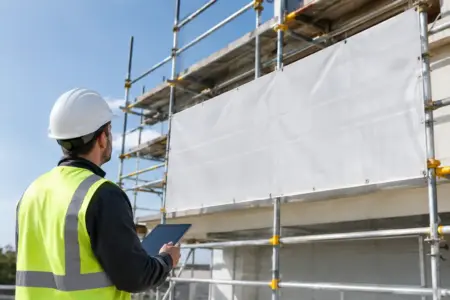
Mesh banners are designed for places where wind load is a real concern. They are commonly used across construction fencing, perimeter hoarding, scaffolding and open event sites. By allowing wind to travel through the banner, mesh reduces the pressure placed on fixings and supporting structures.
This can make a considerable difference on an exposed building site or along a long run of temporary fence panels. A solid banner may act like a sail in gusty conditions. A mesh banner reduces that sail effect, helping the display stay neater and putting less strain on the fence.
Mesh is particularly suitable when your banner will be:
- fitted to Heras fencing or other temporary site fencing
- installed on scaffolding or exposed railings
- used around outdoor sporting events or festivals
- displayed over a large area where wind can build up across the surface
For site managers, mesh also offers a practical branding opportunity. It can screen off work areas, improve the appearance of a perimeter and promote the contractor, developer or project without creating unnecessary wind resistance. For best results, use a clear logo, a short message and high-contrast text. Fine details are less effective on a perforated surface, especially when viewed from a distance.
When a PVC banner is the better option
PVC is usually the stronger choice where print impact matters more than airflow. If people will be standing close to the banner, reading a timetable, price message, offer or event information, the solid surface gives you more clarity. It is also well suited to locations that are sheltered from strong wind, such as internal walls, retail units, covered entrances and display frames.
A PVC banner is often the better fit for a short-term promotion because it gives bold colour and an uninterrupted finish. It works well for café and pub promotions, showroom sales, charity events, school fairs, exhibitions and roadside advertising where the banner is securely mounted.
Choose PVC where the banner needs to carry small text, detailed artwork, photographs or solid blocks of colour. A tradesperson advertising services at a local event, for example, may get more visual impact from PVC if the banner is displayed behind a table or against a gazebo wall. A retailer announcing a seasonal offer can use a solid PVC banner to make pricing and calls to action easy to read.
That does not mean PVC is unsuitable outdoors. It performs well outside when correctly fitted and used in a sensible position. The key is not to use it across an exposed fence line without considering wind pressure and the condition of the support structure.
Print quality, visibility and design considerations
Both materials can be printed in full colour, but your artwork should reflect the material and viewing distance. A PVC banner presents the closest match to a solid printed sign. Colours appear more complete because there are no perforations breaking up the inked surface.
On mesh, the small holes mean there is naturally less printable area. At close range, text and images can appear slightly softer. From several metres away, this difference is often minor, which is why mesh works so well for perimeter branding and large external displays.
Keep the design simple if you are ordering mesh. Use larger lettering, clear typefaces and good contrast between the background and important information. Avoid relying on thin lines, small contact details or subtle colour changes. Your company name, service message and telephone number should still be recognisable to someone walking or driving past.
With PVC, you have more freedom for detail, but clarity still wins. A banner is usually seen quickly. One strong message is more useful than a crowded layout containing every service you offer. If your artwork is ready, upload it at the correct size and quality. If it is not, a simple, well-spaced design is easier to prepare and more effective once printed.
Durability and fixing matter as much as material
The life of an outdoor banner depends on more than whether it is mesh or PVC. Exposure, fixing method, banner size and maintenance all affect how it performs. A banner fitted tightly but sensibly, with suitable fixings at regular points, is less likely to flap, tear or place strain on its eyelets.
Use the fixing points provided and secure the banner around the full edge rather than relying only on the corners. For fencing, cable ties are commonly used, but they should be checked periodically and replaced if they become brittle or loose. Do not overtighten the material. A small amount of give helps avoid excessive tension around the eyelets.
Large banners deserve extra attention. The bigger the surface area, the more force wind can exert on it. This is another reason mesh is usually preferred for long fence runs and exposed locations. If you are unsure which option is appropriate, consider the position on the windiest day rather than the calm day you happen to be ordering it.
Cost and value for different jobs
The lowest initial price is not always the best value. A solid PVC banner may be ideal for a one-off indoor event or sheltered promotion, where its stronger print finish gives you exactly what you need. Paying for mesh in that situation may offer little practical benefit.
On the other hand, choosing PVC for a windy construction perimeter can be a false economy if it needs frequent refitting or causes problems with temporary fencing. Mesh may be the more suitable investment because it is designed for that application.
Think about reuse as well. If a banner promotes a recurring event, a service business or a development project, choose a design without dates or temporary offers so it can be used again. Store it clean and dry, loosely rolled rather than sharply folded, and inspect the eyelets before the next installation.
A quick way to make the right choice
Start with the fixing location. If it is open, elevated or fitted to temporary fencing, choose mesh. If it is sheltered and needs a bold, solid print finish, choose PVC. Then consider the artwork: mesh suits large branding and simple messages, while PVC is better for close-up information and detail.
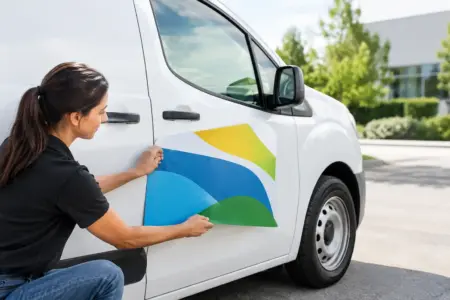
For businesses that need signs, banners, vehicle graphics and branded workwear to look consistent, using the same core colours and logo across materials helps the whole job look more professional. The SignBuilder can help turn supplied artwork into a banner format that is appropriate for the location.
Before ordering, measure the available space, check how the banner will be fixed and look at the site from the viewer’s position. A banner that suits the conditions will stay presentable for longer and make your message easier to see when it counts.