A sign at a site entrance, on a shopfront or beside a car park has to cope with far more than a quick glance. It may face rain, road dirt, hand contact, changing temperatures and regular cleaning. This aluminium composite sign review looks at whether this popular rigid sign material is the practical choice for businesses that need clear, professional signage without replacing it every few months.
Aluminium composite is widely used for printed signs because it offers a useful balance of appearance, stiffness and cost. It is not the right answer for every job, but it is often a strong starting point for outdoor information signs, branded boards, directional signs and safety notices.
What is an aluminium composite sign?
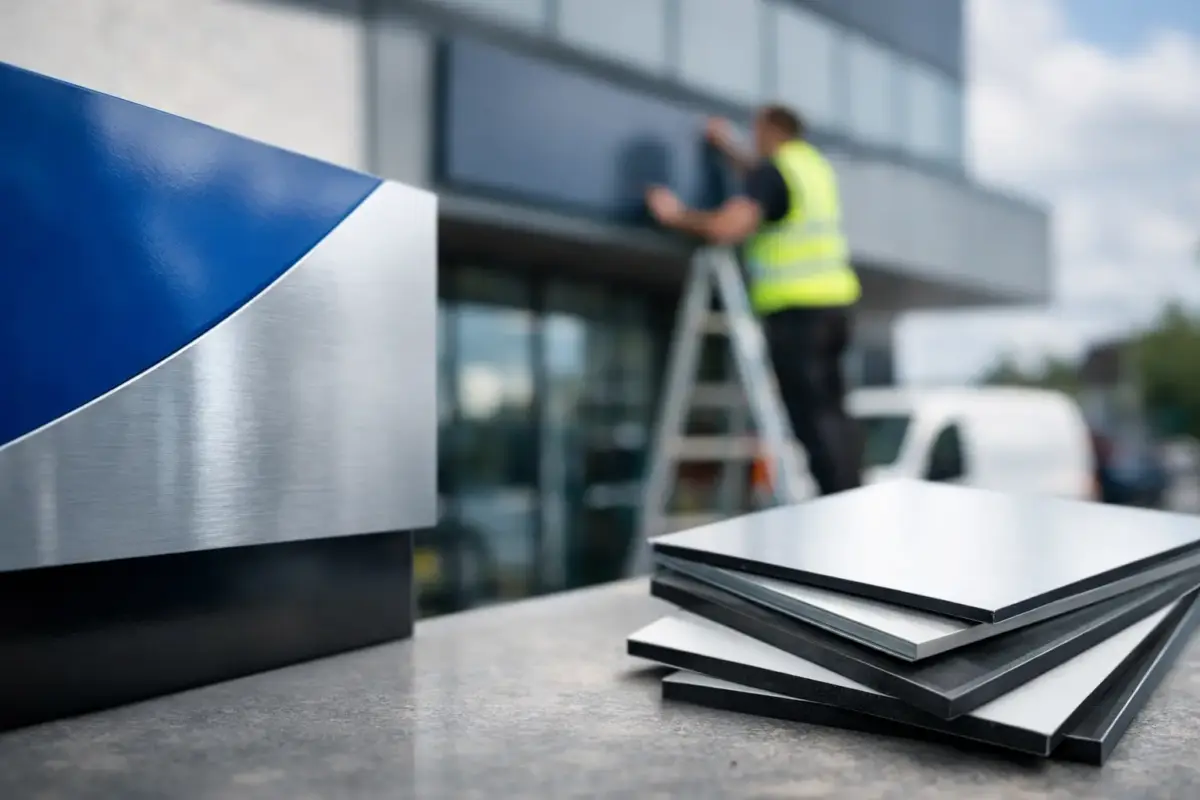
Aluminium composite, often shortened to ACM, is a rigid panel made from two thin aluminium faces bonded to a solid plastic core. This construction gives the board a smooth printed surface and a firm feel, while keeping it lighter than a solid metal sheet.
For signage, the panel is normally printed directly or finished with printed vinyl, depending on the product and artwork requirements. The result is a flat, smart-looking sign that can carry photographs, logos, coloured backgrounds, text and detailed graphics effectively.
It is commonly chosen for estate agent boards, construction site notices, parking signs, business premises, wayfinding, menu boards and branded displays. The material suits jobs where a paper poster is too temporary and a heavier fabricated sign would add unnecessary cost.
Aluminium composite sign review: the main strengths
The main advantage is outdoor suitability. Unlike corrugated plastic board, aluminium composite has a solid face and does not rely on flutes that can trap moisture or lose their shape. It holds up well in exposed positions when fitted properly, making it a sensible option for signs intended to remain in place for the medium to long term.
Its rigidity also matters. A properly supported panel stays flatter than many lightweight alternatives, so text remains easy to read and a branded design looks more considered. This is especially useful for reception signs, property boards and directional signage, where presentation reflects on the business behind it.
Print quality is another reason buyers select it. The smooth surface supports sharp lettering, clean blocks of colour and detailed artwork. A logo that looks fine on a screen can lose impact on a rough or flexible board. Aluminium composite gives it a more consistent base.
There is also a practical handling benefit. The board has enough strength for fixed signage but is still manageable for most installers, tradespeople and facilities teams. For standard-sized panels, fitting is usually straightforward with screws, suitable fixings or a sign frame. Larger boards need more care during transport and installation, particularly in windy conditions.
Where it works best
Aluminium composite earns its keep where the sign needs to look permanent, remain legible and stand up to day-to-day use. A café can use it for an exterior menu board. A depot can use it for delivery instructions and driver notices. A school, sports club or community venue can use it for directional panels that need to stay presentable through the seasons.
For trades and site management, it is particularly useful for health and safety signs, access instructions, mandatory PPE notices and contact boards. These messages need to be visible, and a rigid panel is easier to mount securely to fencing, gates, hoarding or walls than a banner or self-adhesive notice.
Retailers and hospitality venues may prefer it for opening hours, collection points, outdoor brand panels and parking guidance. In these settings, matching the sign size to the viewing distance is as important as choosing the material. A durable board cannot compensate for text that is too small to read from the pavement or car park.
The trade-offs to consider before ordering
Aluminium composite is durable, but it is not indestructible. A hard impact can dent the face, crease an edge or mark the print. In a busy loading area or at ground level where trolleys and equipment may strike the sign, position it carefully or use protective mounting methods.
It is also more substantial than temporary sign materials. That is a benefit once installed, but it means you need to plan the fixing point. Thin wire ties may be fine for a lightweight temporary board, whereas aluminium composite usually needs screw holes, rails, posts or a suitable frame. If you are attaching it to a wall, check the surface and use fixings designed for brick, concrete, timber or cladding as appropriate.
Cost is another factor. It normally costs more than corrugated plastic or poster-style signage, so it is not always the best value for a one-day event or a short promotion. For temporary use, a banner may provide a better return. For a sign that will remain on display for months or years, paying more for a rigid composite panel can reduce replacement costs and improve the overall finish.
Choosing the right size, design and finish
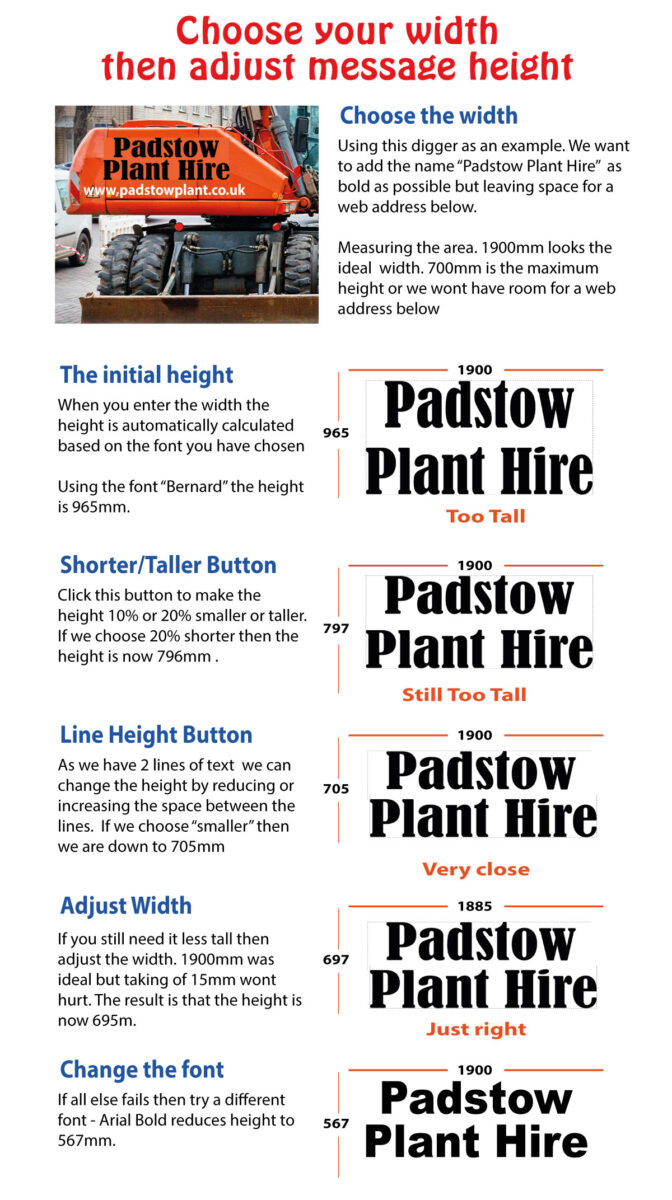
Start with the job the sign has to do. A close-up door sign can be compact and detailed. A directional sign for drivers needs larger text, stronger contrast and less information. If the viewer has only a few seconds to take in the message, keep it focused on the instruction, destination or key contact detail.
Use high-contrast colours for essential information. Dark text on a pale background, or pale text on a dark background, is generally easier to read than two similar tones. Avoid placing important wording over a busy photograph unless it sits within a clear colour block.
Artwork quality affects the final result. Low-resolution logos, screenshots and images copied from social media can appear soft or pixelated when enlarged. Vector artwork such as PDF, AI or EPS is often best for logos and lettering, while high-resolution print-ready files work well for photographic designs. If you are not confident preparing artwork, choose a supplier that can check files or help build the layout.
Think about fixing holes before production. Pre-drilled holes can make installation quicker and give the sign a neater finish, but their position must suit the intended mounting surface. Keep important text and logos away from corners and edges so they are not interrupted by fixings.
Fitting and looking after the sign
A good panel can still fail early if it is poorly fitted. Use enough fixing points to support the size of the board and prevent movement in the wind. For wall-mounted signs, a fixing near each corner is common for smaller panels, while larger signs may need additional central support. Do not overtighten screws, as excessive pressure can distort the board around the hole.
If the sign is being fitted to posts, use a rail system or washers where suitable to spread the load. Check that the panel is level before fully tightening the fixings. A slightly crooked sign is noticeable long before anyone reads the message on it.
Maintenance is simple. Wash the surface occasionally with warm water, mild detergent and a soft cloth to remove grime. Avoid abrasive pads, harsh solvents and aggressive cleaning products, as these can damage the printed surface or leave visible marks. Check the fixings periodically, especially after high winds or if the sign is in a busy public area.
Is aluminium composite the right choice?
Choose aluminium composite when you need a flat, professional rigid sign for regular outdoor use and want stronger longevity than a temporary board can offer. It suits branded premises signage, site information, parking instructions, safety boards and wayfinding particularly well.
Choose a different material if the sign is only needed briefly, must be carried around frequently, or will be displayed in a location where it is likely to receive repeated heavy impacts. The best material is not simply the toughest one. It is the one that suits the sign’s lifespan, location, viewing distance and fixing method.
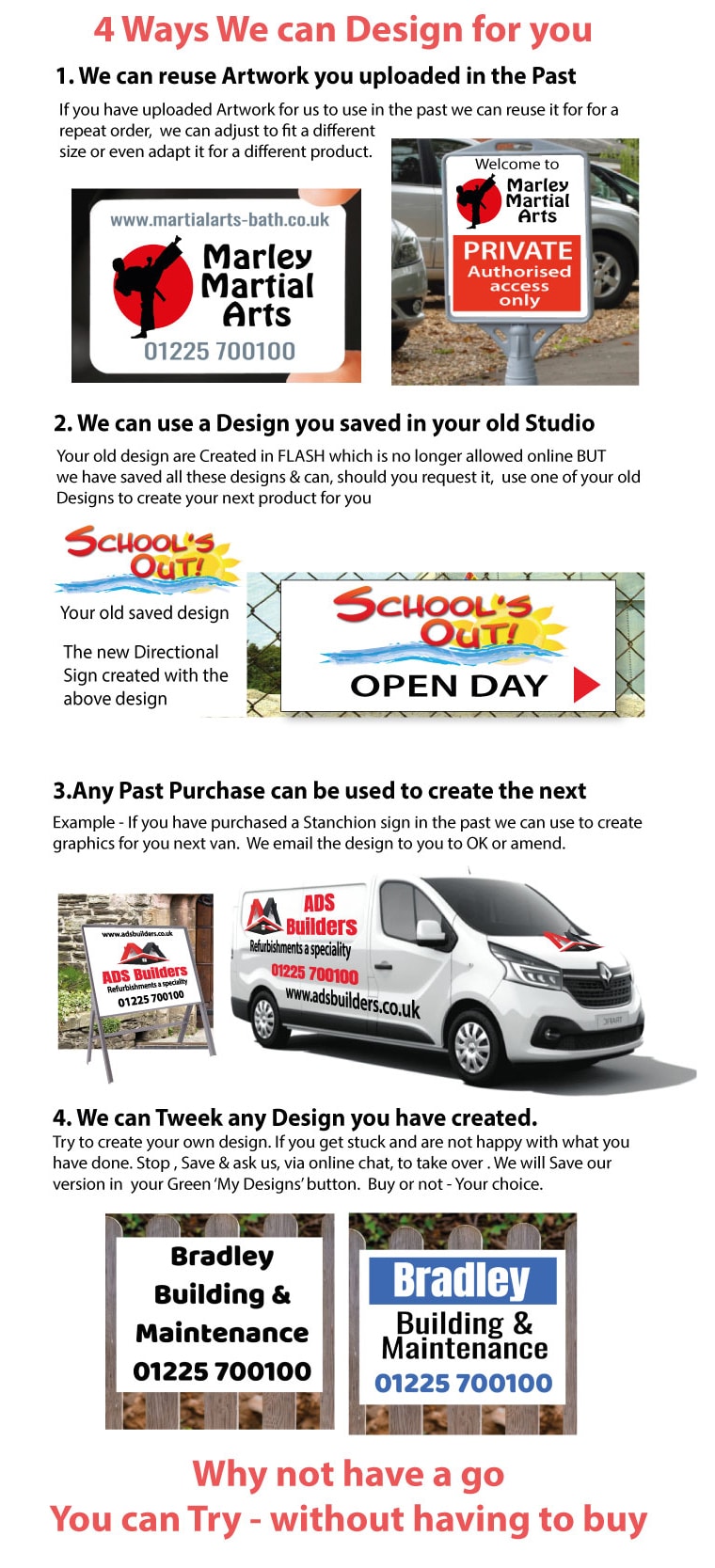
For businesses ordering several signs at once, standardising sizes, colours and layouts can make future replacements and re-orders much simpler. The SignBuilder can help turn that practical approach into a consistent set of signs that are easier to specify, fit and maintain as your site changes.