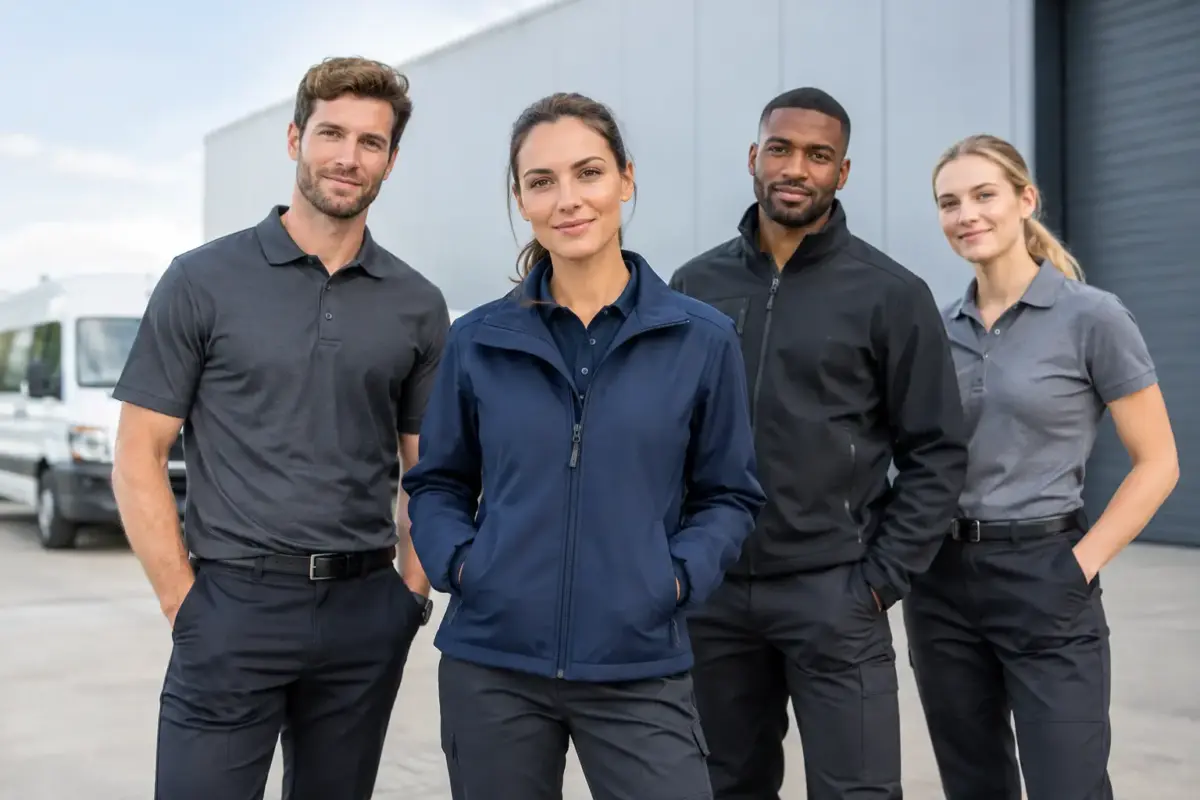
A new starter’s polo, a site team’s hi-vis layer or a set of branded hoodies for a busy café can all shape how customers see your business. Affordable branded workwear gives staff a clear, consistent appearance without turning a practical purchase into an unnecessary overhead. The best value comes from choosing garments that suit the job, branding them clearly and ordering with future re-orders in mind.
For small businesses, trades and growing teams, workwear has to earn its place. It needs to be comfortable enough for a full shift, suitable for the working environment and easy for customers to recognise. Price matters, but the lowest ticket price is not always the most economical option if garments fade quickly, fit poorly or need replacing after limited use.
What makes affordable branded workwear good value?
Affordable does not mean choosing the thinnest garment or reducing every order to a single colour. It means spending where it makes a visible difference and avoiding costs that do not improve the finished result. A clean logo in a sensible position on a dependable garment will often do more for your presentation than an overcomplicated design across several areas.
Start by considering where and how each item will be worn. A landscaper working outdoors has different needs from a retail assistant, while a hospitality team may prioritise a tidy fit and easy laundering over heavier fabrics. Match the garment to the role before deciding on colours, logo size and quantity.
The real cost is also measured over time. A slightly better polo shirt that stays presentable through repeated washing can be better value than a cheaper alternative that soon looks tired. Equally, there is little benefit in buying premium heavyweight clothing for a short-term event team. The right choice depends on use, not just unit price.
Keep the branding clear and purposeful
Your logo should be readable at a normal working distance. In most cases, a left-chest print is a practical starting point because it looks professional, keeps the garment comfortable and works across polos, T-shirts, sweatshirts, jackets and fleeces.
Larger back prints can be useful for tradespeople, delivery teams and event staff who are often seen from behind. They give your business name, service or contact details more visibility on site, in car parks and around town. However, larger print areas normally add cost, so use them where they have a genuine purpose.
A one-colour logo can be a cost-effective option, particularly on larger orders, provided it remains recognisable. If your brand relies on several colours, do not force it into a single-colour version without checking how it will look. A simplified logo can work well, but it should still feel like your business.
Choose workwear by the job, not by the catalogue
A practical workwear range usually begins with a small number of core garments. This makes ordering simpler, keeps your team looking consistent and reduces the risk of holding stock that nobody wants to wear.
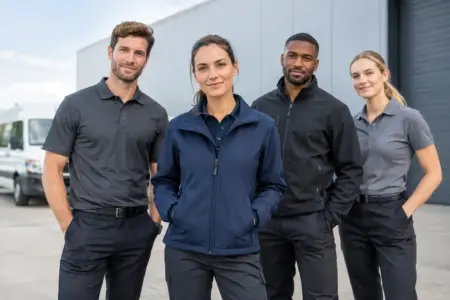
For active teams and warmer workplaces, printed T-shirts and polos are a reliable choice. T-shirts are straightforward and cost-effective for labouring, events and promotional use. Polos offer a slightly smarter appearance for customer-facing staff, supervisors and tradespeople visiting occupied homes or business premises.
Sweatshirts, hoodies and fleeces add useful warmth for outdoor work, warehouses and early starts. Consider whether staff need layers they can remove as temperatures change. A warm outer layer is useful, but it should not replace a practical base garment underneath.
For high-visibility requirements, select garments appropriate to the site rules and working conditions. Visibility clothing is not just another branding surface. If the item is needed for safety, its suitability must come first. Keep any print placement clear of reflective areas and confirm the finished product meets the requirements of the workplace.
Trousers, shorts, jackets and waterproof outerwear can complete a uniform, although they are not always necessary for every team. If budgets are tight, begin with the garments customers see most often. A branded polo and sweatshirt may create a more consistent first impression than unbranded layers added simply to make up a larger order.
Standardise colours where it helps
A defined colour scheme makes branded clothing easier to manage. Black, navy, charcoal and bottle green are common working colours because they are practical and tend to hide everyday marks better than lighter shades. They also provide a strong background for many logos.
That said, the garment colour should support your existing identity. If your vans, signs and business cards use a recognisable colour, carrying that through to workwear creates a more joined-up appearance. There is no need to match every item exactly, but customers should be able to see that the uniform belongs to the same business.
When choosing colours, think about availability for future orders. A core colour in a regularly stocked garment is easier to re-order than a seasonal shade or a one-off style. This matters when you take on new staff six months later and need their clothing to match the rest of the team.
Make artwork ready before you order
Clear artwork avoids delays and prevents avoidable changes at proof stage. A high-quality vector file is often ideal for logos because it can be resized without losing definition. Common file types include PDF, AI, EPS and SVG. A sharp, high-resolution PNG may also be suitable for some printed garment designs.
Avoid sending a logo copied from a social media profile, a photograph of a business card or a small image taken from a website. These files may look acceptable on a phone screen but can become blurred or pixelated when printed.
If you do not have suitable artwork, do not guess. Use the original files supplied by your designer where possible, or request help preparing a usable version. It is usually quicker to resolve this before production than to correct a print after garments have been made.
Keep the design focused too. Fine lines, small text and complex colour fades may not reproduce as clearly as a bolder logo. The most effective workwear branding is often simple: a recognisable mark, a readable business name and, where needed, a brief service description or phone number.
Order quantities with re-orders in mind
Ordering in larger quantities can reduce the price per item, but buying too much can create wasted spend. A sensible first order is based on your current team, a small allowance for new starters and the likelihood of regular replacements. High-turnover roles may need a different approach from a stable office or management team.
Before placing an order, decide whether staff will receive one garment, a weekly set or seasonal layers. Someone working outdoors five days a week is likely to need more than one polo or T-shirt. Providing enough garments for washing and rotation helps staff stay presentable and can extend the life of each item.
Keep a record of the garment brand, style, colour, print positions and approved artwork. This turns future purchases into a straightforward re-order rather than a fresh setup each time. It also helps maintain consistency if different managers are responsible for buying workwear.
Size collection deserves the same care. Do not rely on broad assumptions such as one medium for every new employee. Ask staff for their preferred size, use supplied size guides and consider ordering a small selection for fitting if your team is large enough. Clothing that fits well is more likely to be worn properly and treated with care.
Protect the finished look
Affordable branded workwear lasts longer when staff know how to look after it. Follow the care label, wash garments inside out where appropriate and avoid unnecessarily high wash temperatures. Harsh treatment can affect both fabric and printed areas, especially on items that are washed frequently.
It is worth setting a simple replacement rule. Replace heavily stained, damaged or faded garments before they become the uniform customers associate with your business. This does not mean replacing clothing at the first mark – workwear is made for work – but it does mean keeping standards consistent where customers, clients and the public can see your team.
For businesses managing signs, vehicles and staff clothing together, consistency is particularly valuable. The same logo, colours and straightforward message can carry across a site board, a van graphic and a work polo. The SignBuilder can help bring those practical brand elements together through printed garments and business signage.
A well-planned order does not need to be elaborate to look professional. Choose garments your team will actually use, make the logo easy to read and keep the specification ready for the next order. That approach keeps costs controlled while ensuring every member of staff represents the business well.