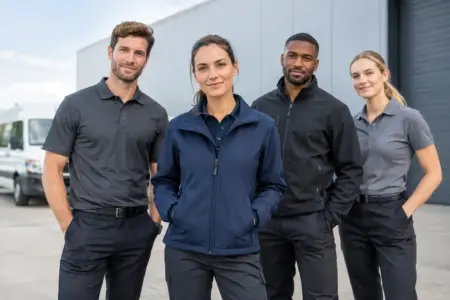
A cold early start can quickly show whether staff clothing has been chosen for the job or simply bought because it was cheap. A t-shirt and sweatshirt workwear pack gives teams a practical layer for changing conditions while keeping their presentation consistent on site, at customer premises, in a shop or on the road.
For small businesses and growing teams, buying garments as a pack is also easier to manage than sourcing each item separately. You can set a clear standard for colour, logo position and staff appearance, then order the same combination again when new starters join or replacement clothing is needed.
What a T-Shirt and Sweatshirt Workwear Pack Should Do
The right pack needs to work across a normal week, not just look good when it first arrives. T-shirts are useful for active work, warmer days and indoor shifts. Sweatshirts add warmth for early mornings, unheated units, delivery rounds and outdoor jobs where a jacket would be too much.
Together, they give staff an option without creating an inconsistent mix of old promotional clothing, plain personal garments and different shades of company colour. That matters when your team is meeting customers. A clear, repeated logo and a tidy garment colour make it easier for people to recognise who they are dealing with.
The best choice depends on the work. A landscaping team may need a darker colour that is more forgiving of dirt, while a café or retail team may prioritise a cleaner, more customer-facing finish. Tradespeople often need garments that are comfortable under outer layers and hold their shape through frequent washing. There is no single fabric weight or colour that suits every workplace.
Start With the Working Environment
Before choosing sizes or artwork, consider where and how the garments will be worn. This prevents a common ordering problem: selecting a pack based on a screen image, then finding it does not suit the actual job.
For physically active roles, breathable t-shirts are often the everyday foundation. Staff who move between indoor and outdoor tasks can keep a sweatshirt close by for an extra layer. In customer-facing environments, matching garments help the whole team look organised even when staff have different roles or working hours.
Think about the washing routine too. Workwear is only useful if it remains presentable after repeated wear. Darker colours can be practical for trades, warehousing and installation work, whereas lighter colours can suit hospitality, visitor-facing teams and promotional staff. If your brand uses a pale logo on a dark garment, make sure there is enough contrast for it to remain easy to read from a sensible distance.
Seasonality is another reason packs work well. A t-shirt-only order may be enough for a summer event, but it leaves staff without a consistent extra layer when the weather changes. Ordering both items at once gives you a more usable issue of clothing without having to make a separate purchase later.
Choose Colours for Recognition, Not Just Preference
A company colour can be a strong starting point, but practical use should guide the final decision. Bright colours can improve team visibility and make staff easier to identify at an event or busy site. Black, navy and charcoal are popular where garments are likely to pick up dust, marks or general wear.
Where several departments work together, one garment colour across the business is usually easier to manage. If roles need to be distinguished, use carefully selected colours rather than changing the whole design approach. The logo, typeface and placement should remain consistent so every item still belongs to the same business.
Getting Your Printed Logo Right
Workwear often has limited space, so clarity is more valuable than squeezing in every service, phone number and social media detail. A simple logo on the left chest is a familiar, professional option. Larger back prints can be useful for teams working on site, at exhibitions or around vehicles, where people may see them from behind.
Use artwork that is clean and ready for production. Low-resolution images, screenshots and copied logos can produce soft edges or unclear text when enlarged. Vector artwork is often the best option for logos, but a high-quality image file may also be suitable depending on the design. If you are unsure, have the artwork checked before ordering rather than risking a result that does not represent the business properly.
Small details need particular care. Fine lines, very small lettering and low-contrast colours may look acceptable on a computer but become difficult to read on fabric. Simplifying the design can produce a stronger garment. In most cases, a visible company name and recognisable logo are more useful than a crowded layout.
You should also decide whether every garment needs the same print. For example, field staff may benefit from a larger back design, while office or shop staff may only need a chest logo. Keeping the core identity the same lets you tailor garments to the role without losing consistency.
Plan Sizes Before You Place the Order
Sizing is where practical preparation saves time. Do not rely only on standard clothing sizes staff usually buy for themselves, as fit can vary between garment styles. Use the available size guide and ask staff to confirm their preferred fit before submitting the order.
Order quantities should reflect real staffing, not just the number of people currently on payroll. Consider probationary staff, part-time workers, regular subcontractors and likely new starters. It is often sensible to keep a small number of plain replacement garments available, particularly in the most common sizes, then arrange printing when required.
A basic issue might be two t-shirts and one sweatshirt per person, but that is not always enough. Staff who work outdoors, carry out messy tasks or have limited laundry time may need additional t-shirts. Teams that only wear branded garments for appointments, events or occasional site visits may need fewer. The sensible quantity is the one that allows staff to stay clean, comfortable and presentable across their normal working pattern.
Avoid False Savings on Quantity
Buying the minimum number of garments can seem cost-effective, but it can lead to inconsistent presentation when items are waiting to be washed or replaced. On the other hand, ordering too much of a highly specific design may leave you with unused stock if branding changes.
A balanced approach is to order a core pack for each staff member and keep the design straightforward enough to remain relevant. Avoid adding temporary campaign messages or date-specific information to everyday workwear unless the garments are for a one-off event.
Make Reordering Part of the Plan
Workwear becomes easier to manage when it is treated as an ongoing business item rather than a one-time purchase. Keep a record of the garment colours, sizes, logo version and print positions used for the first order. This makes it far simpler to maintain a matching standard later.
If staff are issued clothing, note what each person receives. A basic record helps when someone needs a replacement, moves to a different role or leaves the business. It also gives you a clearer view of what is being used and where extra stock may be needed.
For repeat orders, using the same approved artwork avoids accidental changes to logos, colours or wording. If your business has vehicles, site signs and workwear, the same visual identity should carry across them all. Customers may only see one touchpoint at a time, but they notice when the business looks joined up.
Order With a Clear Production Brief
A smooth order starts with clear decisions: garment style, colour, sizes, quantity, logo placement and artwork. If you have a finished design, upload your own design with the details ready. If you need to build something simple, design online. Where the artwork needs preparation or you are unsure about the best layout, ask for help before production begins.
Check spellings, contact details and logo versions carefully. A workwear order is intended to be worn repeatedly, so a small mistake can stay visible for a long time. Taking a few minutes to approve the design and size breakdown is usually the fastest route to getting the right result.
A t-shirt and sweatshirt workwear pack is a straightforward way to give staff clothing that earns its place in the working week. Choose garments for the conditions, keep the branding clear and record the specification. When the next person joins the team, you will have a practical standard ready to repeat.