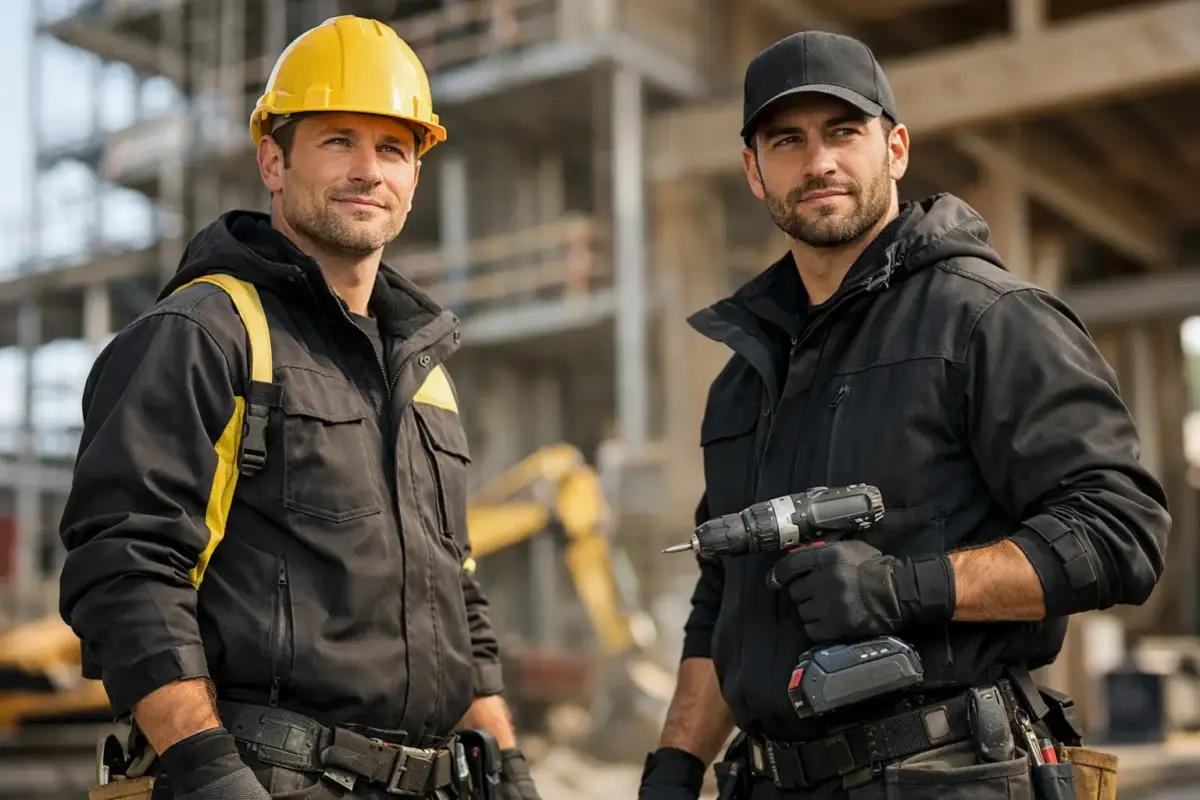
A work hoodie that loses its shape after a month, trousers that catch on every ladder, or a logo that fades after a few washes all cost more than they first appear to. The right Trade & Construction Workwear helps teams look professional, stay comfortable through a full shift and represent the business properly wherever the job takes them.
For tradespeople, contractors and site teams, workwear is not simply a uniform. It is daily equipment. It needs to suit the work, the weather and the person wearing it, while making your company easy to recognise on site, at a customer’s property or when collecting materials.
Start with the job, not the garment
The best workwear order begins by looking at what the team actually does. A painter and decorator may need lightweight, easy-moving clothing that can handle frequent washing. A groundworks team will usually need tougher fabrics, more weather protection and practical pockets. An electrical contractor working indoors may place greater value on smart branded polos, fleeces and softshell jackets that work well in front of customers.
It is tempting to choose one garment for every member of staff. That can be sensible for a small team with similar work, but it is not always the most practical route. Consider creating a core uniform, such as a branded T-shirt or polo shirt, then allowing outer layers and trousers to match the role and season.
Think through the working day. Does the wearer spend long periods bending, kneeling, climbing steps or moving between indoor and outdoor jobs? Are tools, phones and notebooks carried regularly? Does the job involve early starts in cold conditions or hot work during summer? These details determine whether a basic garment will do the job or whether a more specialised option is worth the additional spend.
What good construction workwear should deliver
Hard-wearing fabric matters, but durability is not just about thickness. Reinforced seams, reliable fastenings and fabric that holds its colour after repeated washing all make a difference. A garment that survives site use but feels stiff or overheats the wearer may sit in the van rather than get worn.
Comfort affects presentation as well as morale. If staff are comfortable, they are more likely to wear the correct layers throughout the day and keep branded clothing clean and presentable. Look for sensible sizing, room to move and breathable options where physical work is involved.
Practicality comes next. Cargo trousers, for example, can be useful for carrying everyday items, but too many bulky pockets may be unnecessary for a customer-facing installer. Similarly, a heavyweight sweatshirt is excellent for cold mornings but may not be suitable as the only top layer for active work in warmer months.
A dependable starter range for many trade businesses includes branded T-shirts or polos, sweatshirts or hoodies, work trousers, fleeces and jackets. The exact combination depends on the work, but this gives staff flexible layers rather than asking one item to cover every condition.
Build a branded uniform people will wear
Clear branding turns everyday clothing into a consistent part of your business identity. A recognisable logo on the chest, back or sleeve makes a team easier to identify and gives customers reassurance that the people arriving at their premises are there for the job.
Keep the design straightforward. A logo on the left chest is a familiar, professional choice for polos, T-shirts, sweatshirts and jackets. A larger version across the back can improve visibility when staff are working outdoors, moving around a site or unloading equipment. Adding a phone number or service description can be useful, but only where the lettering remains easy to read from a sensible distance.
Colour choice should work for the trade as well as the brand. Darker colours often hide everyday marks better, while high-visibility colours may be appropriate where the risk assessment requires them. White or light-coloured garments can look sharp for customer-facing teams, but they demand more frequent replacement in dusty, oily or wet environments.
Consistency is more valuable than making every garment identical. Using the same logo, core colours and placement across clothing, vehicle graphics and site signage creates a joined-up appearance without forcing one product choice on every employee.
Choosing print or embroidery for workwear
The right decoration method depends on the garment, artwork and intended use. Printed logos can be a practical option for detailed designs, smaller runs and garments where a smooth finish is preferred. They can reproduce fine text and multiple colours clearly when the artwork is prepared correctly.
Embroidery gives a textured, durable finish that is popular on polos, fleeces, sweatshirts and jackets. It is particularly effective for simple logos and bold lettering. Very small text, fine lines and complex colour gradients may be less suitable, as stitching has physical limits that print does not.
There is no single correct answer. A simple company logo may work well embroidered on a fleece and printed on a lightweight T-shirt. The key is to supply clean artwork, consider the garment fabric and choose a decoration size that stays legible. If in doubt, artwork checking before production can prevent issues such as text that is too small or a design that loses detail.
Do not treat safety clothing as ordinary uniform
Some jobs require clothing with specific protective or visibility properties. Standard branded garments should not be assumed to meet those requirements just because they are bright in colour or made from a heavy fabric.
Where a site, client or risk assessment calls for certified high-visibility, flame-resistant, anti-static or other specialist PPE clothing, confirm the required standard before ordering. Branding methods and logo placement can also affect compliance, particularly on high-visibility garments where reflective areas and background material must remain visible.
It is also worth separating site-required safety clothing from general branded uniform in your purchasing plan. That makes it easier to control what is issued for each role and helps employees understand which items are mandatory for particular tasks.
Get sizing right before placing a larger order
Poor sizing is one of the most common causes of unused workwear. Ordering by standard small, medium and large labels alone can be unreliable because garment fits differ between ranges. A medium in a fitted polo may not feel the same as a medium in a heavyweight hoodie.
For a first order, use garment size guides and, where possible, allow staff to check fit before committing to larger quantities. Ask whether garments will be worn over base layers, shirts or additional insulation. A jacket that fits neatly over a T-shirt can be restrictive once a sweatshirt is added underneath.
Keep a simple record of each employee’s preferred sizes and previous orders. This saves time when replacing worn items, onboarding a new starter or ordering seasonal layers. It also makes repeat orders more accurate, particularly where different teams use different garment ranges.
Plan workwear around the year
A single bulk order can be efficient, but it should account for seasonal use. Lightweight T-shirts and polos are everyday essentials for many trades, while fleeces, hoodies and waterproof outer layers become more important from autumn onwards. Staff who work outdoors may need several changes of top layer during one week, especially when garments need washing and drying between shifts.
Consider holding a small stock of the most common sizes for new starters and urgent replacements. This avoids the situation where an employee arrives on site without branded clothing because a single item has been damaged or misplaced.
For businesses with regular recruitment, phased orders can be easier to manage than buying too far ahead. They reduce the risk of holding garments with outdated contact details, an old logo or sizes that are no longer needed.
Make ordering and re-ordering straightforward
Workwear ordering should not create extra admin for a busy business. Prepare your logo in a suitable format, decide which garments form the core range and agree standard logo positions before the first order. Once those choices are set, future orders become much quicker and more consistent.
The SignBuilder can support different ordering routes depending on what suits your team: use an existing design, upload finished artwork or request help preparing it. For repeat orders, keeping the garment and branding specification consistent is often the simplest way to maintain a professional standard across the workforce.
Well-chosen workwear is a practical investment in comfort, recognition and day-to-day credibility. Start with the demands of the job, keep the branding clear, and choose garments your team will be happy to put on every morning.