A blank shopfront rarely stays blank for long. Opening hours, branding, contact details and promotional messages all need to go somewhere, and glass is often the most visible space you have. That is where custom vinyl window lettering earns its place. It gives you a clean, professional way to turn windows into working signage without taking over the whole frontage.
For many businesses, the appeal is simple. Vinyl lettering is quick to apply, easy to read and far more polished than temporary paper notices taped to the inside of the glass. Whether you run a salon, café, office, gym or trade counter, it can help customers find you, understand what you offer and trust that your premises are properly set up.
Why custom vinyl window lettering is such a practical choice
Window graphics need to do more than look good. They need to suit the space, stay legible from the right distance and hold up in daily use. Custom vinyl window lettering works well because it covers all three.
The biggest advantage is precision. You are not limited to pre-made labels or generic stickers. You can choose the exact wording, size, typeface and layout to match your business. That makes it useful for everything from permanent branding on the front door to seasonal sales messages and simple health and safety information.
It also uses space efficiently. Glass panels, entrance doors and internal partitions often go underused, especially in smaller premises where wall space is already committed. Lettering lets you add information where people naturally look as they approach. In retail and hospitality, that can mean opening hours, booking details or accepted payment methods. In offices and shared buildings, it can mean room names, privacy bands or directional text.
There is also a cost point worth mentioning. Compared with larger printed signage, cut vinyl lettering is often a more economical option when you only need text, numbers or simple graphic elements. If your message is straightforward, there is no need to pay for full printed coverage.
Where vinyl window lettering works best
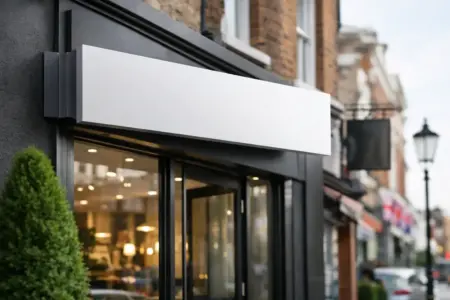
The most common use is external shopfront branding. Business names, logos, web addresses and opening times are often applied directly to front windows or glazed doors. This gives passers-by immediate information without needing an extra sign panel.
It also works well inside. Offices use it on meeting room glass, reception screens and internal doors to add branding or identify spaces. Clinics, salons and studios often use frosted-effect lettering or cut text to create a more private feel while keeping the area smart and professional.
For temporary promotions, window lettering can be a sensible middle ground. If you need to advertise a sale, event or new service, vinyl can deliver a clear message without looking makeshift. The trade-off is that short-term campaigns may need a different adhesive or material choice if you want easy removal later. That is why the intended lifespan matters at the ordering stage.
Choosing the right message for custom vinyl window lettering
Good window lettering is concise. Glass is not the place for long explanations or crowded layouts. People are usually reading from a pavement, a car park or while walking past, so the message needs to be immediate.
Start with what a customer genuinely needs to know. For a shop, that may be the business name, opening hours and a short list of services. For a trade business, it may be contact details and key specialisms. For an office or organisation, it may simply be the company name and suite information.
This is where many designs go off track. Too much text reduces impact. Small lettering may look fine on a screen proof but become difficult to read on site. It is usually better to prioritise one main message and support it with only essential detail.
If your branding already uses a set typeface and colour palette, keep that consistency. If not, choose something clear over something decorative. A simple sans serif font often performs better on glass, especially from a distance. Script fonts can work, but only if the wording is short and the application is more style-led than informational.
Design choices that affect the result
Not all window lettering looks the same once installed. The finish, size and placement all change how it performs.
Colour is the first practical decision. Strong contrast matters. White or light vinyl can work well on darker interiors, while black or dark grey often suits bright spaces where the glass has plenty of natural light behind it. Metallic finishes can look smart, but readability should still come first.
Placement matters just as much. Eye-level positioning is usually the safest option for key details, but that depends on the shape of the window and how people approach the entrance. Lettering placed too low can be blocked by display items or parked vehicles. Too high, and it may be missed altogether.
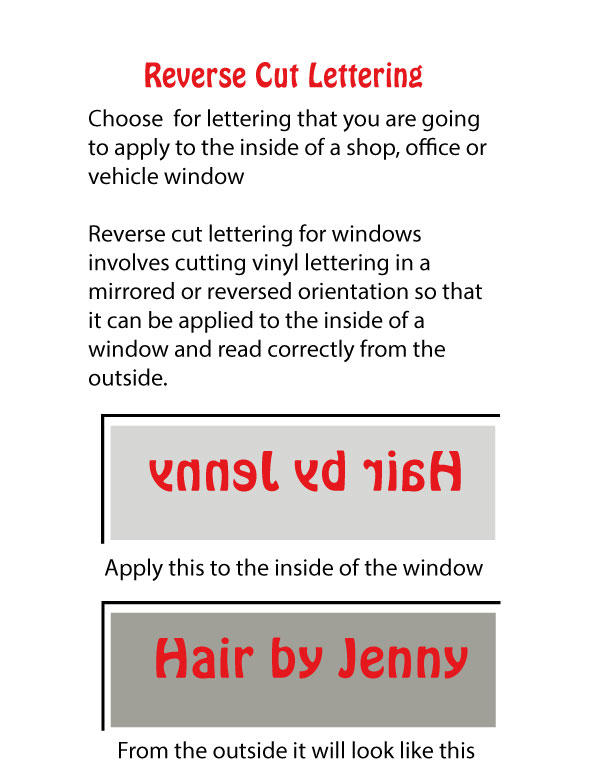
Inside or outside application is another detail that depends on the site. Applying lettering to the inside of the glass can protect it from weather and tampering, but the glass itself may affect clarity depending on reflections and tint. Outside application can give stronger visibility in some cases, particularly when you need the lettering to read cleanly from the street. There is no single right answer. It depends on the window, the environment and how the design will be viewed.
Ordering custom vinyl window lettering without delays
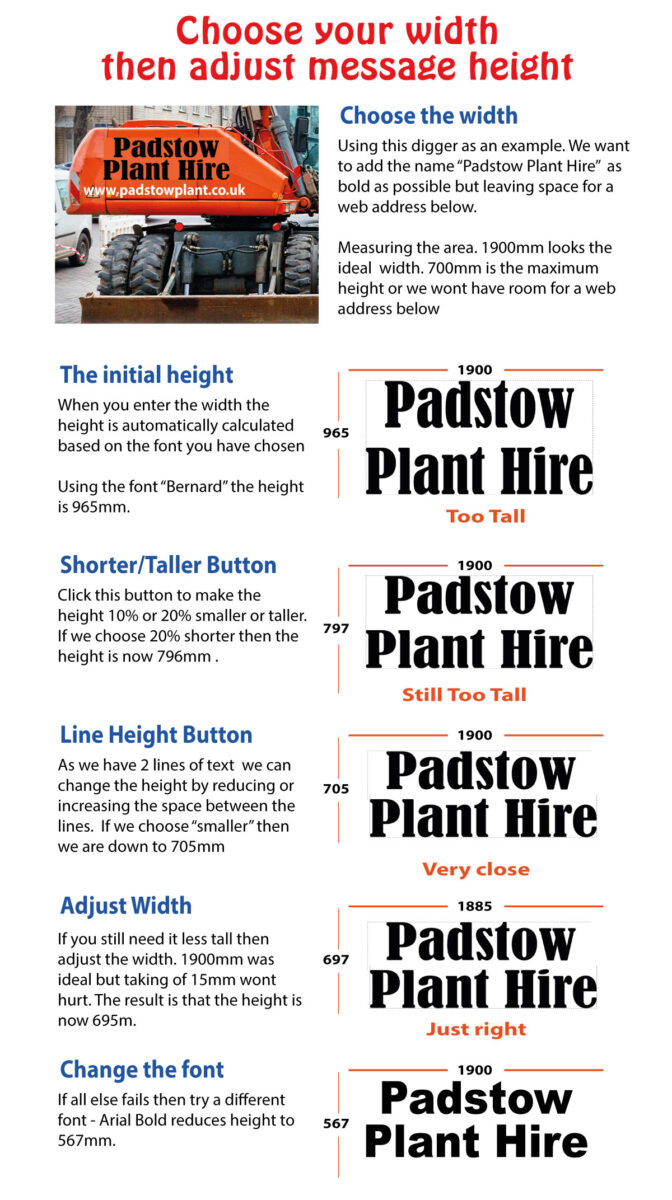
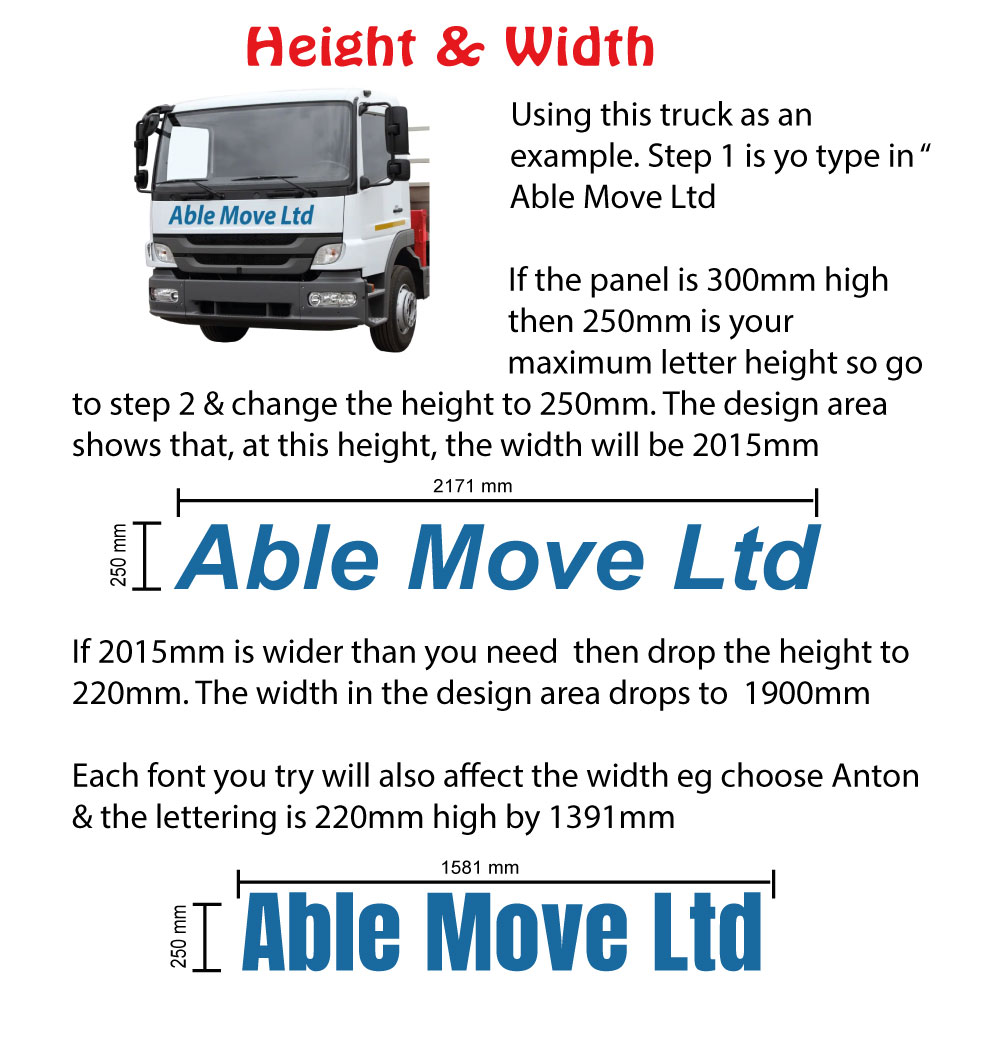
The quickest orders are usually the clearest ones. Before placing an order, measure the glazing area properly and decide which part of the window the lettering needs to occupy. This avoids the common issue of choosing a size based on guesswork and then finding it does not fit the frame or compete well with other signage.
If you already have artwork, it should be supplied in a usable format with text set up clearly and dimensions confirmed. If you do not, a simple brief still goes a long way. State the wording, preferred size, colour and whether the lettering is intended for inside or outside application. If you have a photo of the window, that can help with layout decisions even before production starts.
This is one area where a practical supplier makes a difference. A proper artwork check can catch spacing issues, unreadable line weights and sizing problems before anything is cut. That is especially useful for first-time buyers who know what they want to say but are less sure how it should be prepared for production.
Fitting and maintenance
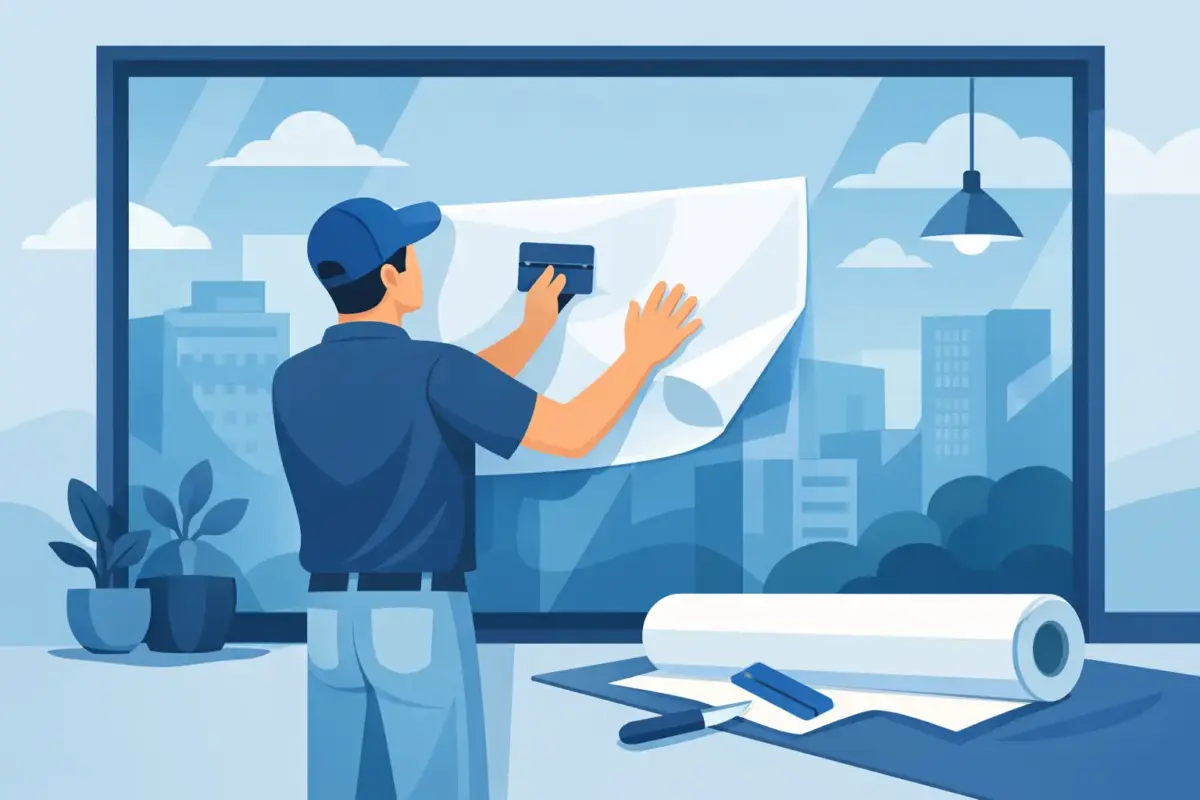
One reason custom vinyl window lettering remains popular is that it is relatively easy to fit compared with more complex sign systems. For straightforward text applications, many customers are happy to install it themselves. Clean glass, careful alignment and steady application are what count most.
That said, fitting still needs attention. Dust, grease and moisture can all affect adhesion. A rushed application is often where bubbles, creases or misalignment appear. If the lettering is large or the layout is split across multiple elements, taking time with positioning is worth it.
Once fitted, maintenance is minimal. Regular cleaning with suitable non-abrasive products usually keeps the lettering looking sharp. Harsh scraping or aggressive chemicals are best avoided, especially around edges. Longevity will vary with exposure, material choice and placement, but for everyday business use, vinyl lettering is generally a dependable low-maintenance option.
When it is the right choice – and when it is not
Vinyl lettering is ideal when your message is mainly text-based and you want a clean, businesslike finish. It is well suited to branding, opening hours, directional information and promotional wording where clarity matters more than imagery.
It may be less suitable if you need large full-colour visuals, photographic elements or privacy coverage across the entire pane. In those cases, a different style of window graphic may be more effective. The point is not to force one product into every job. It is to choose the option that suits the message, the glass and the way the space is used.
For many businesses, custom vinyl window lettering sits in the sweet spot. It is neat, durable, flexible and cost-effective. It helps a premises look established without complicating the ordering process, and it gives you a practical way to make glass space work harder. If your window needs to inform, direct or promote, a well-planned lettering design usually does the job better than a temporary fix ever will.
A good window sign should make life easier for the people arriving at your door. If it tells them who you are, what they need to know and what to do next, it is doing exactly what it should.