A vehicle is often the most visible part of a local business. It is parked outside customers’ homes, travelling between jobs and sitting at trade counters, sites and suppliers. When choosing magnetic signs versus adhesive graphics, the practical question is not which looks best in isolation. It is which option suits how the vehicle is used, how long the branding needs to stay in place and who needs to remove or update it.
Both products can put your business name, contact details and services in front of potential customers. The right choice comes down to flexibility, finish, vehicle condition and the demands of daily work.
Magnetic Signs Versus Adhesive Graphics: The Main Difference
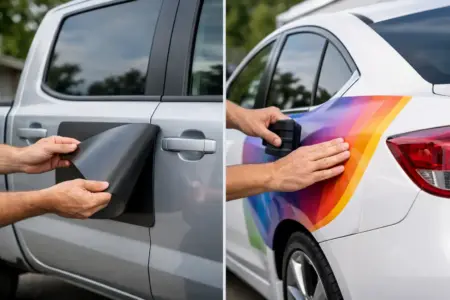
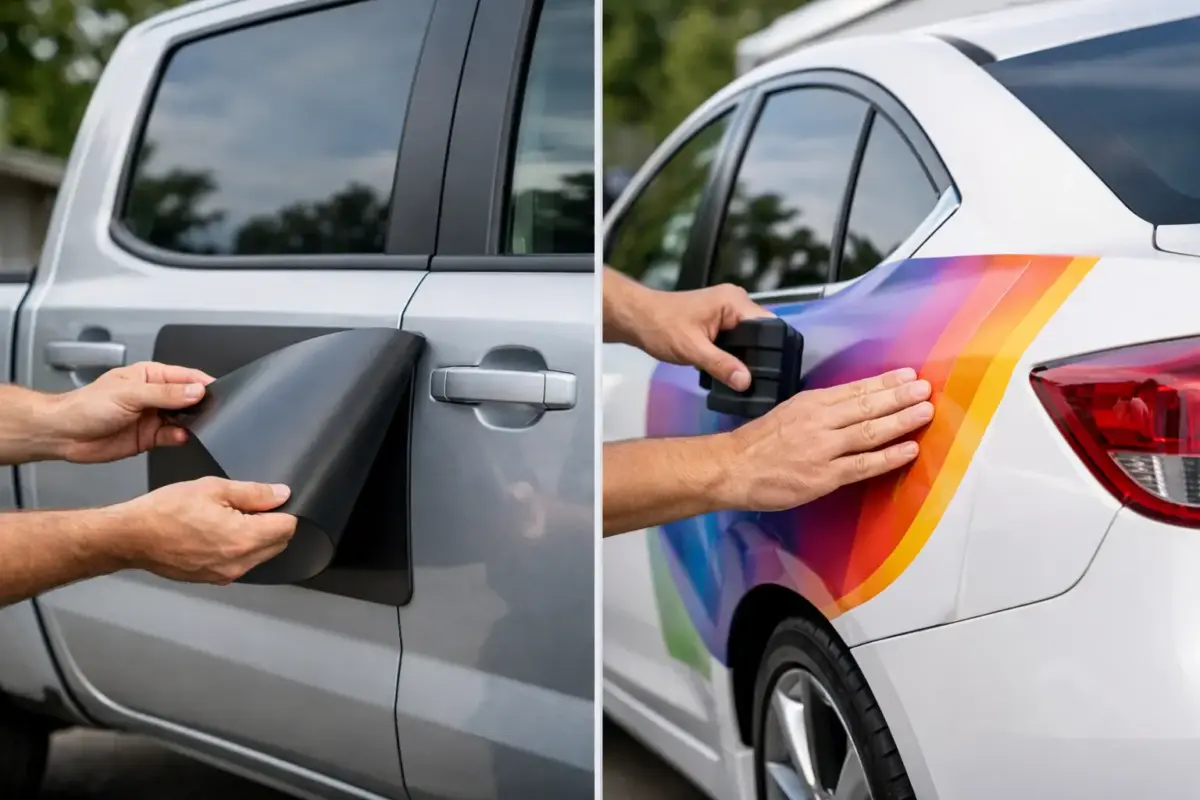
Magnetic signs are printed panels with a magnetic backing. They attach to clean, flat metal areas of a vehicle, usually car doors, van doors or rear panels. They can be fitted and removed without tools, making them a useful option when branding is temporary, shared between vehicles or only needed during working hours.
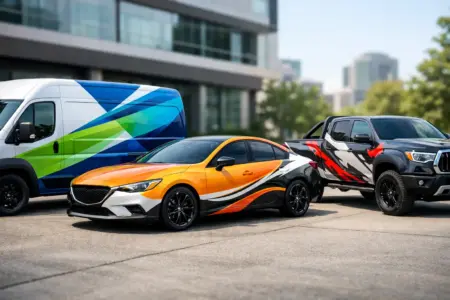
Adhesive graphics are self-adhesive vinyl graphics applied directly to the vehicle surface. They can be printed with full-colour designs, cut into lettering or produced as individual logos and contact details. Once fitted correctly, they are designed to remain in place for the longer term.
The decision is therefore often straightforward. Choose magnetic signs when removability is the priority. Choose adhesive graphics when you want a more permanent, integrated finish that is ready every time the vehicle leaves the driveway or depot.
When Magnetic Vehicle Signs Make Sense
Magnetic signs suit businesses that need clear branding without committing a vehicle to one role. A sole trader using a personal car for work, for example, may not want company details displayed at weekends. The signs can be applied before the working day and stored flat when not required.
They are also useful for temporary staff vehicles, short-term promotions and organisations with changing vehicle allocations. If a sales representative, event team or site visitor needs branding for a few days, a magnetic sign avoids permanent application.
The advantages of magnetic signs
The biggest benefit is flexibility. Magnetic signs can be moved from one suitable vehicle to another, removed for cleaning or taken off before a vehicle is sold. This can make them a cost-effective choice for small businesses with occasional branding needs.
They are quick to fit, provided the vehicle surface and the magnetic panel are clean and dry. No specialist tools are needed, and there is no waiting for an adhesive to settle before the vehicle can be used.
Magnetic panels can also work well for simple, high-impact designs. A company name, phone number, website address and a short service description are often enough to make a van or car identifiable from a sensible distance.
The limitations to consider
Magnetic signs must be removed and refitted regularly to clean both surfaces. Dirt, moisture and road film trapped underneath can mark paintwork over time, particularly if the panel is left in place for long periods. Regular cleaning also helps the sign stay securely attached.
They only work on magnetic metal panels. Many modern vehicles have aluminium, plastic or composite body sections that will not hold a magnet. Even where most of a vehicle is steel, a particular door or panel may not be suitable. Check the intended fitting area before ordering.
They are less suited to heavily contoured panels, recessed areas and vehicles that spend long periods at motorway speeds or in harsh conditions. A good-quality magnetic sign fitted to a clean, flat surface can perform well, but it needs more user attention than a fitted vinyl graphic.
When Adhesive Graphics Are the Better Choice
Adhesive graphics are the practical option for businesses that use their vehicles every day and want branding that stays visible without a daily fitting routine. They are commonly used by tradespeople, delivery businesses, fleet operators, estate agents, care providers and organisations with regular site or customer visits.
Because the graphics follow the vehicle panel rather than sitting on top of it, the finished result is usually neater and more professional. Vinyl lettering can be subtle and tidy, while printed graphics allow for photographs, colour fades, service icons and more detailed brand elements where appropriate.
A stronger long-term finish
Applied graphics are better able to cope with routine driving, weather and vehicle washing when the correct material is selected and the surface is properly prepared. They do not need to be removed each evening, and staff do not need to remember to fit them before leaving for a job.
That consistency matters. A branded vehicle seen repeatedly around the same towns, industrial estates and customer areas builds recognition. For a business that relies on local trust, permanent vehicle graphics can make an ordinary van look established and organised.
Adhesive graphics can be tailored more precisely than magnetic panels. Cut vinyl lettering is ideal for contact details and simple logos, while printed vinyl can carry more complex artwork. Different panel sizes can be used to make the best use of available space without overcrowding the vehicle.
The trade-offs with adhesive graphics
Adhesive graphics are not intended to be removed and reapplied elsewhere. They can be taken off when a vehicle is replaced or rebranded, but the process is more involved than lifting off a magnetic panel. If you regularly change business details, phone numbers or service areas, plan the design so individual elements can be updated where possible.
Application also matters more. The vehicle needs to be clean, dry and free from wax, polish and surface contamination. Poor fitting can lead to bubbles, lifted edges or reduced lifespan, so large or detailed graphics may be best applied carefully by someone experienced.
Vehicle paint condition should be considered before fitting. Well-maintained original paintwork is generally the best starting point. On older vehicles with failing lacquer, rust or previous paint repairs, removing graphics later may reveal existing weaknesses in the finish.
Compare the Options by Day-to-Day Use
For a personal car used for both work and family life, magnetic signs are often the more convenient route. They allow the driver to show a professional business identity during appointments, then return the vehicle to private use afterwards.
For a dedicated work van, adhesive graphics usually offer better value over time. They are always in place, look more integrated and remove one task from the start of the day. This is particularly useful where several employees drive the vehicle and branding needs to remain consistent.
For fleets, the answer can be mixed. Permanent graphics are normally best for company-owned vehicles with a fixed role. Magnetic signs can support temporary additions to the fleet, hired vehicles or occasional campaign messages. There is no need to force one method across every vehicle if the operational need differs.
Design Choices That Improve Either Option
Whether you choose magnets or vinyl, a clear layout is more effective than trying to include every detail. A vehicle is usually read in seconds, often while moving. Your company name should be prominent, followed by the service you provide and one reliable contact method.
Use strong contrast between lettering and the vehicle colour. Avoid small text, long paragraphs and low-contrast colours that disappear at a distance. If customers are likely to see the vehicle from the side while parked, prioritise the door panels. Rear graphics are valuable in traffic, where a phone number or web address can be seen by drivers behind.
Keep branding consistent across your vehicles, site signs, banners and workwear. Matching colours, typefaces and logos helps customers recognise the same business wherever they encounter it. It also makes future orders easier because approved artwork is already established.
Ordering the Right Product First Time
Measure the usable panel area rather than the entire door. Account for handles, trims, fuel caps, body lines and sliding-door movement. For magnetic signs, confirm that the exact panel is magnetic and sufficiently flat. For adhesive graphics, take photographs of the vehicle and note its make, model and year if you need help planning a suitable layout.
Prepare artwork at good quality and make sure phone numbers, email addresses and spelling are checked before production. If your design is not ready, start with the essentials: logo, business name, key service and contact details. A simple design that is legible will usually work harder than a busy design no one can read.
The SignBuilder can support straightforward online designs, supplied artwork and custom requirements, helping businesses order vehicle branding that fits the job rather than adding unnecessary complication.
Choose magnetic signs if you need the freedom to remove, transfer or use branding only when working. Choose adhesive graphics if your vehicle is a permanent part of your business presence. Whichever route you take, keep the message clear, fit the product to the right surface and treat every journey as an opportunity to be recognised.