A smart reception sign and a long-lasting site notice may both carry your logo, but they do not need the same material. When choosing acrylic versus dibond, the right answer depends on where the sign will sit, how it needs to look and how much daily wear it will face. Acrylic brings a polished, premium finish. Dibond is a practical workhorse for outdoor, commercial and display signage.
The material affects more than appearance. It changes how the sign is fixed, how it handles weather, whether it suits cut lettering or full-colour printing, and what it will cost at larger sizes. Choosing well at the start helps avoid replacing a sign before its time.
Acrylic versus Dibond for business signs
Acrylic and Dibond are both popular rigid sign materials, but they are made differently and serve different purposes.
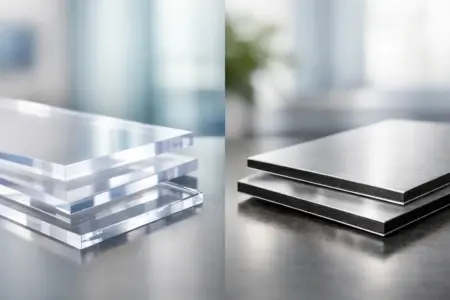
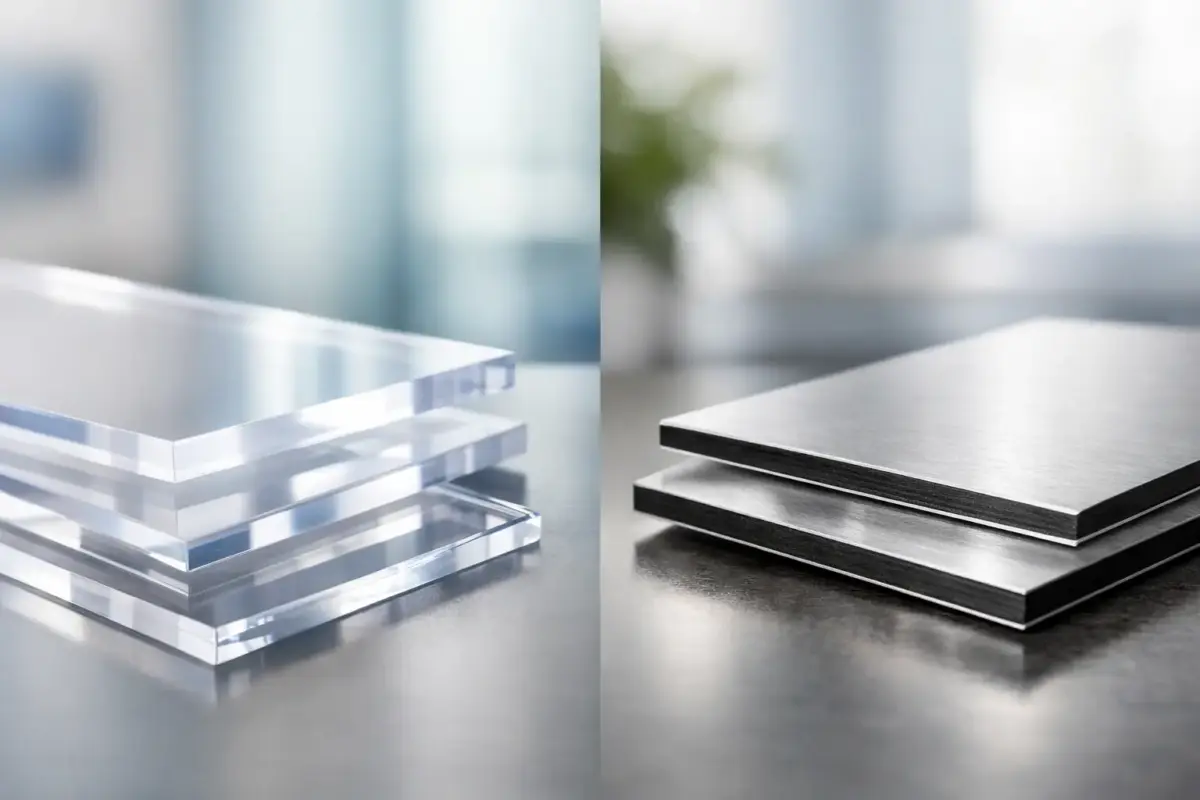
Acrylic is a solid plastic sheet, often available in clear, white, black or coloured finishes. It has a smooth surface and clean edges, making it a strong choice where presentation matters. Clear acrylic can create a glass-like look without the weight or fragility of glass, while coloured acrylic provides a neat, contemporary base for lettering and graphics.
Dibond is an aluminium composite panel. It has thin aluminium faces bonded to a solid plastic core, creating a rigid but comparatively lightweight board. It is widely used for printed signs because it is stable, weather-resistant and well suited to larger formats.
Neither is automatically better. A premium office plaque may benefit from acrylic, while an estate board, construction sign or shop fascia is often better suited to Dibond.
When acrylic is the better choice
Acrylic works best where a sign is part of the customer experience rather than simply a source of information. Think reception walls, meeting rooms, salon price lists, branded displays, directional signs in offices and plaques at entrances.
Its main advantage is finish. The surface has a depth and shine that can make even simple lettering look more considered. Clear acrylic is especially effective when mounted on stand-off fixings, leaving a small gap between the sign and wall. This creates a shadow line and gives the sign a raised, professional appearance.
Acrylic is also useful for layered signs. For example, a printed or coloured back panel can sit behind a clear acrylic face, with raised lettering added to the front. That approach can give a logo more presence in a reception, showroom or retail setting.
However, acrylic is not the first choice for every outdoor job. It can be used outside, but it is more prone to visible scratching than Dibond and needs careful handling during fitting. Large acrylic panels are also heavier than equivalent Dibond panels, which can affect the type of fixing and the suitability of the wall.
When Dibond is the better choice
Dibond is the practical choice for signs that need to work hard. Its rigid construction makes it suitable for external signs, hoarding panels, property boards, site notices, wayfinding signs, retail displays and branded boards for trades and service businesses.
For full-colour printed graphics, Dibond gives a clean, flat base. It does not flex easily, which helps large signs stay neat once fitted. It can also be drilled, cut and mounted in a range of ways, making it adaptable for walls, posts, frames and display systems.
Weather performance is a major reason businesses choose Dibond. The aluminium faces help it cope well with rain, changing temperatures and general outdoor exposure. It is not indestructible – hard impacts can dent the surface – but it is designed for dependable everyday use in commercial environments.
If you need several signs across a site, Dibond can also offer a sensible balance of durability, print quality and cost. That matters for businesses ordering health and safety boards, parking signs, directional panels or repeated branding across multiple locations.
Comparing acrylic and Dibond by application
The easiest way to decide is to start with the job the sign must do.
For a reception logo, acrylic usually has the stronger visual effect. Its smooth finish and potential for stand-off mounting make it suitable for customer-facing interiors. If the sign will be viewed closely, the extra finish can be worthwhile.
For a shopfront board, Dibond is often the safer all-round material. It is stable, handles printed branding well and is suited to outdoor fixing. Acrylic can still work for smaller shop signage, particularly where a glossy or raised look is part of the design, but it needs more care in installation and maintenance.
For construction sites, yards, car parks and industrial premises, Dibond is generally the better fit. These environments call for durable, legible signs that can be produced at useful sizes without becoming overly heavy. Printed Dibond boards work well for safety instructions, access notices, parking controls and temporary site branding.
For internal wayfinding, either material can work. Dibond is cost-effective for door signs, directional boards and information panels. Acrylic is worth considering for front-of-house areas, professional practices, hospitality venues and places where the sign forms part of the interior design.
For event signage, think about duration and handling. Dibond is a good option for reusable rigid display boards, especially outdoors. Acrylic can look excellent on a stand or display wall, but may not be the best value where signs are only needed for a short event.
Appearance, print and finishing options
Acrylic has a naturally premium surface, but the design must suit the material. Clear acrylic can be printed in reverse so the design is viewed through the face of the sheet. This protects the printed surface and creates a refined finish. White ink can be used behind colours where needed, helping graphics remain visible rather than appearing translucent.
Dibond is usually chosen for direct printed designs, vinyl graphics or cut lettering. It offers strong colour reproduction and a tidy, flat finish. Matte and gloss laminate options can alter the final look and provide additional surface protection depending on the application.
Consider viewing distance before choosing. Fine detail and small text can look sharp on both materials when artwork is prepared correctly, but outdoor signs should prioritise legibility over decorative effects. A clear logo, high-contrast text and sensible letter sizing will do more for a sign’s effectiveness than an expensive material alone.
If you are supplying artwork, make sure it is set up at the correct size and is clear enough for print. Vector logos are ideal for cut lettering and crisp graphics. High-resolution files are needed for photographic images or detailed printed designs. Artwork checking before production can identify issues such as low-resolution logos, thin lines or text that is too small to read at the intended distance.
Weight, fixing and installation
Fixing is often overlooked when comparing materials. A sign may look right on screen but need a different material once the installation surface is considered.
Dibond is lighter than acrylic at similar sizes, which makes it more manageable for large wall panels and external boards. It can be fixed with screws, washers, adhesive systems or mounted into frames, depending on the location and the need for future removal.
Acrylic is heavier and can crack if drilled or tightened incorrectly. Holes should be positioned with enough clearance from the edge, and fixings should not be overtightened. Stand-off fixings are a popular choice because they support the panel securely while enhancing the finished look.
For either material, assess the wall before ordering. Brick, blockwork, cladding, timber, glass and plasterboard each need appropriate fixings. Outdoor installations also need consideration for wind exposure, especially with larger panels. A lightweight board still creates force in strong weather when it has a large surface area.
Cost and long-term value
Dibond is usually the more cost-effective option for straightforward printed signs, particularly at medium and large sizes. Its durability and versatility make it a sensible choice for businesses that need practical signage without paying for a decorative finish they do not need.
Acrylic often costs more because of the material itself and the production or fixing methods involved. It earns its place where presentation has a direct value – for example, a customer entrance, branded reception or polished internal display.
It is worth considering the whole job rather than the panel price alone. A sign that is difficult to fit, unsuitable for the environment or visually out of step with your premises can become poor value quickly. The best material is the one that meets the required lifespan, finish and installation method without overcomplicating the order.
Make the choice around the sign’s job
Choose acrylic when you want a polished, glass-like or layered look for customer-facing interiors and smaller premium displays. Choose Dibond when you need a stable, weather-ready printed panel for outdoor signs, site information, shopfronts or larger-format branding.
If your project includes several types of signage, there is no need to use one material everywhere. A Dibond exterior board and an acrylic reception sign can work together, using the same colours, logo and message while giving each location the finish it needs. Start with where the sign will be used, how long it needs to last and how it will be fixed – then the material choice becomes much clearer.