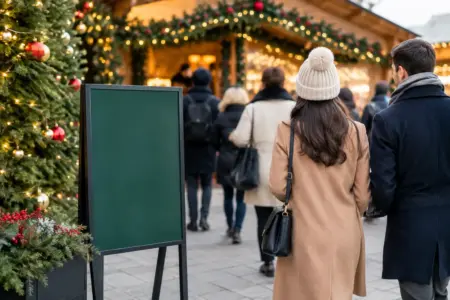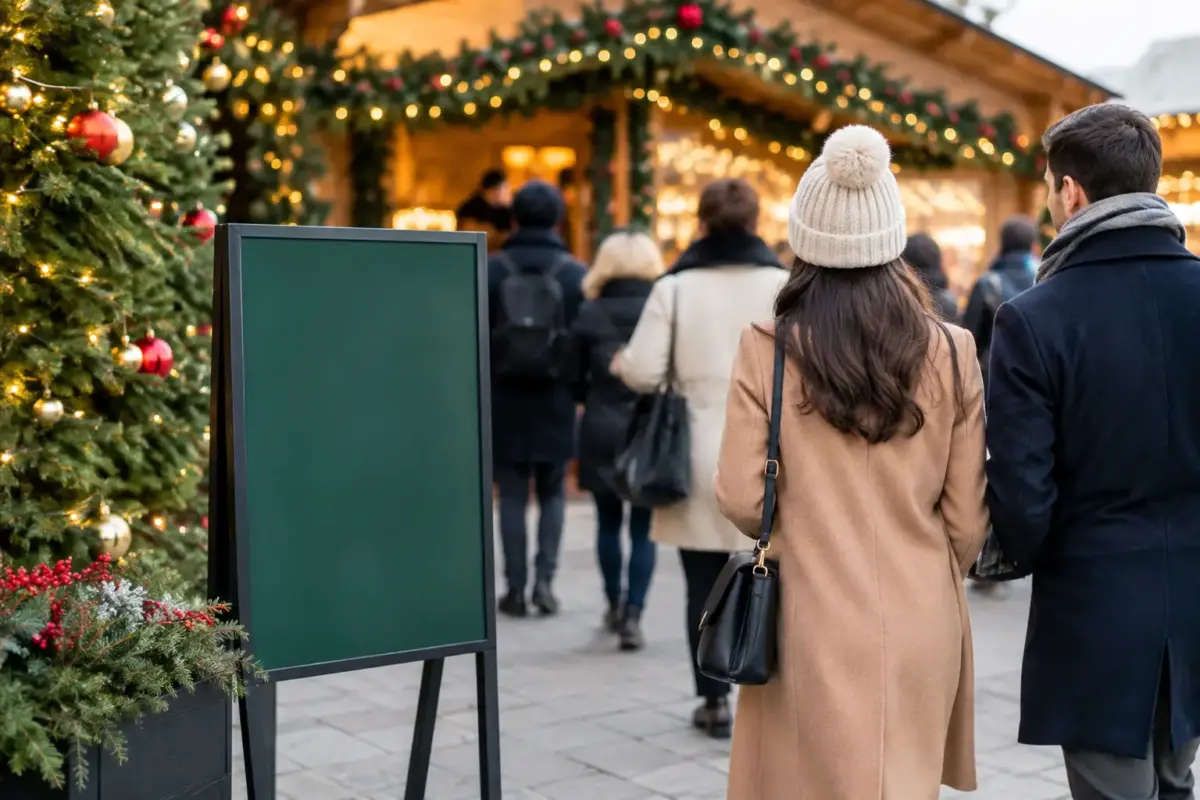
A busy Christmas market can go from welcoming to confusing in minutes. Cars arrive at once, visitors look for the entrance, stallholders need access, and queues form where nobody expected them. Well-planned Christmas events signs give people clear direction before they need to ask, helping your venue run smoothly while keeping the festive atmosphere intact.
For a school fair, town-centre market, workplace party or ticketed attraction, signs should do more than display a seasonal message. They need to manage movement, identify key areas, communicate safety information and make the whole event easier to navigate. The right mix depends on your site, expected footfall and how long the event will run.
Start with the visitor journey
The most useful event signage starts before a visitor reaches the door. Think through the route from the nearest road or car park to the final exit. At each stage, ask what a person needs to know in that moment. If the answer is obvious, the sign has done its job.
For outdoor events, this often begins with advance directional signs for parking, accessible parking, drop-off points and deliveries. At the venue, entrance signs, ticket collection notices and queue information reduce uncertainty and prevent staff from repeating the same instructions all evening. Inside, visitors need to find stalls, food areas, toilets, seating, first aid and exits without searching.
Temporary events can change shape quickly, particularly when weather, vehicle access or crowd levels affect the layout. Use signs that can be positioned where they are needed, rather than relying entirely on a printed map at the entrance. A map is useful for orientation, but clear directional signs at decision points do the practical work.
Identify the pressure points
Walk the site as if you are attending for the first time. Entrances, junctions, narrow paths and queue lines are likely to need the clearest instructions. If a route splits, place the sign before the split, not after it. If an area has limited capacity, state this plainly and make the next step clear.
It is also worth considering separate routes for visitors, staff, traders and delivery vehicles. A large festive banner may create a strong arrival point, but it should not be the only information people see. Pair promotional signage with functional signs that direct each group safely to the right place.
Choose Christmas events signs by job, not just size
A sign is most effective when its format suits its location and purpose. One large sign cannot replace a series of smaller instructions placed where people make decisions. Equally, too many messages in one area can be ignored, especially during busy periods.
Directional and wayfinding signs
Directional signs should use short wording, clear arrows and high contrast. “Main Entrance”, “Toilets”, “Santa’s Grotto” and “Food Court” are quicker to understand than full sentences. Where possible, keep the wording consistent across the site. If you call an area “Gift Stalls” on the map, do not label it “Retail Area” elsewhere.
Rigid signs are a practical choice for fixed points such as gates, barriers, walls and entrances. For routes that may move during set-up, freestanding signs can be easier to position and relocate. Large-format banners work well for arrival points, stage areas and visible event branding, particularly where the message needs to be read from a distance.
Safety and access signs
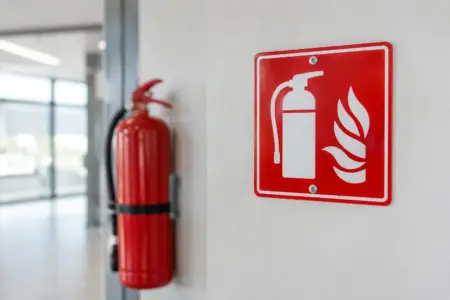
Festive decoration should never reduce the clarity of safety information. Emergency exits, fire points, first aid, restricted areas and vehicle routes need signs that remain visible in low light and bad weather. Use recognised safety colours and symbols where required, and do not place promotional graphics over essential notices.
Consider the conditions around the sign too. A message positioned behind a queue, near bright lights or beneath a canopy may be difficult to read. Outdoor signs should be suitable for the expected weather, securely fixed and checked throughout the event. A sign that has blown over or become obscured is not helping visitors or your team.
Accessible routes, step-free entrances and accessible toilets should be clearly marked from the moment visitors arrive. This is not an extra detail to add at the end of planning. It affects whether people can use the event comfortably and independently.
Stall, zone and activity signs
Named stall signs make a market look more organised and help visitors find a trader again later. Numbered pitches can also simplify management for organisers, especially where traders arrive early and need quick direction during set-up.
Use coordinated signs for activity areas such as children’s crafts, live music, prize draws, refreshments and photo points. A simple format works best: area name, a clear visual hierarchy and, where needed, opening times or booking instructions. If an activity has an age limit, capacity limit or timed entry, state it at the point where visitors join the queue.
Make festive design work hard
Christmas graphics can create a welcoming feel, but readability comes first. Seasonal colours, illustrations and logos should frame the message rather than compete with it. White text on a pale snowy background, for example, may look attractive on screen but perform poorly outdoors or after dark.
Use a limited colour palette and one or two typefaces across your signs. This makes a temporary event feel professionally organised, even when it uses several sign types. Your event name, colour scheme and key directional style can be carried across entrance banners, stall signs, parking notices, staff clothing and printed information.
There is a trade-off between festive detail and fast comprehension. A decorative welcome banner can carry more personality because visitors have time to take it in. A “Way Out” sign needs to be immediate. Keep practical messages clean, large and uncluttered.
Plan for daylight, darkness and weather
Many Christmas events take place in short winter days, so signs that look clear at midday may not be readable at 5 pm. Check key messages under the lighting conditions your visitors will experience. Position signs near existing illumination where possible, and avoid glare from floodlights, shop windows or reflective surfaces.
Material choice matters too. Indoor signs for a one-evening office event may only need a lightweight, temporary format. A month-long outdoor market needs tougher signage that can cope with rain, wind, mud and frequent handling. Larger signs need stable fixing methods and should not create trip hazards or block routes.
Think about what will happen during set-up and take-down. Signs that are easy to identify, move and store save time for staff and volunteers. If the event returns every year, keeping a core set of reusable directional and safety signs can reduce repeat planning. Date-specific banners and promotional notices can then be produced separately.
Get the wording right before production
Artwork changes close to an event date can create avoidable pressure. Before ordering, check names, dates, opening times, postcode details, arrows, contact numbers and any ticket instructions. Ask someone who has not been involved in planning to read the signs. If they hesitate over a route or message, simplify it.
Keep information current. A sign saying “Parking Full” is only useful when it is true, while a reusable “Parking” sign remains useful across the event. For changeable information such as programme times or stall locations, build in a clear way to update the message without replacing every sign.
If you have finished artwork, upload your own design for production. If not, start with a simple layout and provide the essential wording, logos, dimensions and intended use. The SignBuilder can help prepare print-ready signage so the final product is suited to where and how it will be used.
Order with placement in mind
Before placing an order, create a basic sign schedule. Record each message, size, quantity, location, material and fixing requirement. This avoids the common problem of ordering an excellent entrance banner but missing the smaller signs that guide visitors through the rest of the site.
Allow enough time for artwork approval, production and installation. It is better to have signs ready before site set-up begins than to make last-minute decisions with queues already forming. Keep spare cable ties, suitable fixings and a small number of blank or editable signs available for unforeseen changes on the day.
The best Christmas event signage is rarely the most elaborate. It is the signage visitors barely notice because it gives them the right information at the right moment. Plan it around real journeys, make every message easy to read, and your team will spend less time directing people and more time running a Christmas event worth returning to.